Skyrocket U.S. Leads: Interactive Content Marketing Trends 2026

In the rapidly evolving landscape of digital marketing, the quest for effective lead generation remains a paramount concern for businesses across the United States. As consumer attention spans dwindle and traditional marketing tactics lose their luster, a new, more engaging paradigm is emerging: interactive content marketing. This isn’t just a fleeting trend; it’s a strategic imperative poised to revolutionize how U.S. businesses acquire and nurture leads, with projections indicating a potential 5x increase in U.S. leads by 2026 for those who master its application. The future of lead generation is dynamic, personalized, and, most importantly, interactive.
The shift towards Interactive Content Leads is driven by a fundamental change in consumer behavior. Modern audiences crave experiences, not just information. They want to be part of the narrative, to actively participate, and to feel a sense of ownership over their digital journey. Static content, while still having its place, often fails to cut through the noise and capture the sustained attention required to convert a casual visitor into a qualified lead. Interactive content, on the other hand, demands engagement, provides immediate value, and offers a unique opportunity for brands to gather invaluable data about their audience’s preferences and pain points.
This comprehensive guide will delve into the transformative power of Interactive Content Leads, exploring the key trends, strategies, and tools that will enable your business to not only keep pace with the competition but to surge ahead. We’ll examine why interactive content is so effective, how to implement it strategically, and what the future holds for this exciting facet of content marketing. By 2026, the businesses that have successfully integrated interactive experiences into their marketing mix will be the ones reaping the rewards of significantly higher lead generation rates in the U.S. market.
The Imperative of Interactive Content in the Modern Marketing Era
Why are we emphasizing Interactive Content Leads so heavily for the U.S. market? The answer lies in several converging factors:
Declining Attention Spans and Information Overload
In an age of constant digital bombardment, consumers are overwhelmed with information. Their attention spans are shorter than ever, making it incredibly challenging for brands to stand out. Interactive content, by its very nature, demands active participation, which naturally captures and holds attention for longer periods than passive consumption. Quizzes, polls, calculators, and interactive infographics transform passive reading into an engaging experience, compelling users to invest more time and focus.
The Demand for Personalization
Generic content no longer suffices. Modern consumers expect personalized experiences that cater to their specific needs and interests. Interactive content is inherently personalizable. A quiz can lead to tailored product recommendations, a calculator can provide instant, relevant financial insights, and an interactive assessment can offer customized advice. This level of personalization not only enhances the user experience but also builds trust and demonstrates that a brand understands its audience.
Increased Engagement and Memorability
When users interact with content, they are more likely to remember it. The act of clicking, typing, dragging, or selecting creates a stronger cognitive link than simply reading or watching. This increased memorability translates into better brand recall and a higher likelihood of conversion down the line. Brands that offer memorable, engaging experiences are the ones that forge lasting connections with their audience.
Valuable Data Collection for Lead Qualification
Perhaps one of the most powerful benefits of Interactive Content Leads is the rich data it provides. Every interaction, every choice a user makes, offers insights into their preferences, pain points, and stage in the buyer’s journey. A quiz can reveal a user’s knowledge gaps, a calculator can highlight their budget constraints, and a poll can indicate their priorities. This first-party data is invaluable for lead qualification, allowing sales and marketing teams to tailor their follow-up communications and offer truly relevant solutions, thereby significantly improving conversion rates.
Competitive Differentiation
While interactive content is gaining traction, it’s still not universally adopted. This presents a significant opportunity for early adopters to differentiate themselves from competitors who are still relying on traditional, static content. By offering unique, engaging experiences, businesses can position themselves as innovative, customer-centric, and forward-thinking, attracting a larger share of the U.S. market.
Key Interactive Content Trends Fueling 5x U.S. Lead Growth by 2026
To achieve the ambitious goal of a 5x increase in U.S. leads by 2026, businesses must strategically embrace and implement the following interactive content trends:
1. Hyper-Personalized Quizzes and Assessments
Quizzes and assessments have always been popular, but their evolution towards hyper-personalization is what will drive significant lead growth. Instead of generic results, future quizzes will leverage AI and machine learning to provide highly specific recommendations, insights, and next steps based on a multitude of user inputs. Imagine a ‘What’s Your Ideal Marketing Strategy?’ quiz that not not only tells you your archetype but also generates a custom mini-report with actionable advice and links to relevant resources, all while capturing crucial lead data.
2. Dynamic Calculators and Configurators
Financial calculators, ROI calculators, product configurators, and savings estimators are powerful tools for B2B and B2C alike. They provide immediate, tangible value to users by solving a specific problem or answering a burning question. For instance, a ‘How Much Can You Save with Our Software?’ calculator offers a personalized projection, directly linking the user’s input to the brand’s solution. These tools are excellent for capturing high-intent leads who are actively seeking solutions.
3. Interactive Infographics and Data Visualizations
Static infographics are informative, but interactive ones are captivating. Users can click on different data points, filter information, or explore various scenarios, making the data more digestible and memorable. This trend is particularly effective for presenting complex industry reports, market research, or product specifications in an engaging and accessible format, turning data consumption into an active discovery process and capturing Interactive Content Leads.

4. Interactive Videos and Branching Narratives
Video content is already king, but interactive video takes it a step further. Viewers can make choices within the video that alter the narrative, explore different product features, or answer questions that lead to personalized content paths. This creates a deeply immersive experience, allowing users to control their learning or discovery journey, and providing brands with valuable insights into their preferences.
5. Polls, Surveys, and Contests with Immediate Feedback
Simple yet effective, polls and surveys offer quick engagement and valuable data. When combined with immediate, personalized feedback or insights, their lead generation potential skyrockets. Contests, especially those requiring some level of interaction or skill, can also be powerful lead magnets. The key is to offer perceived value in exchange for participation, whether it’s a chance to win, a personalized report, or an exclusive piece of content.
6. Gamification Elements
Integrating game-like elements into content can significantly boost engagement. Leaderboards, points, badges, progress bars, and challenges make the interaction more fun and rewarding. This approach is particularly effective for educational content, onboarding processes, or even complex product demos, transforming mundane tasks into enjoyable experiences that encourage completion and lead submission.
7. Augmented Reality (AR) and Virtual Reality (VR) Experiences
While still in their nascent stages for widespread content marketing, AR and VR are poised to offer unprecedented interactive experiences. Imagine trying on clothes virtually, test-driving a car from your living room, or exploring a new property in 3D. These immersive technologies offer a ‘try before you buy’ experience that can significantly reduce friction in the buyer’s journey and generate highly qualified leads, especially in sectors like retail, real estate, and automotive. This is where Interactive Content Leads reach their pinnacle.
Strategic Implementation: Turning Interaction into Leads
It’s not enough to simply create interactive content; strategic implementation is crucial for converting engagement into qualified Interactive Content Leads. Here’s how:
1. Define Clear Goals and Target Audience
Before creating any interactive content, clearly define what you want to achieve (e.g., increase email subscribers, qualify leads for a specific product, gather market research) and who your target audience is. Understanding your audience’s pain points, motivations, and preferred content formats will guide your content creation and ensure relevance.
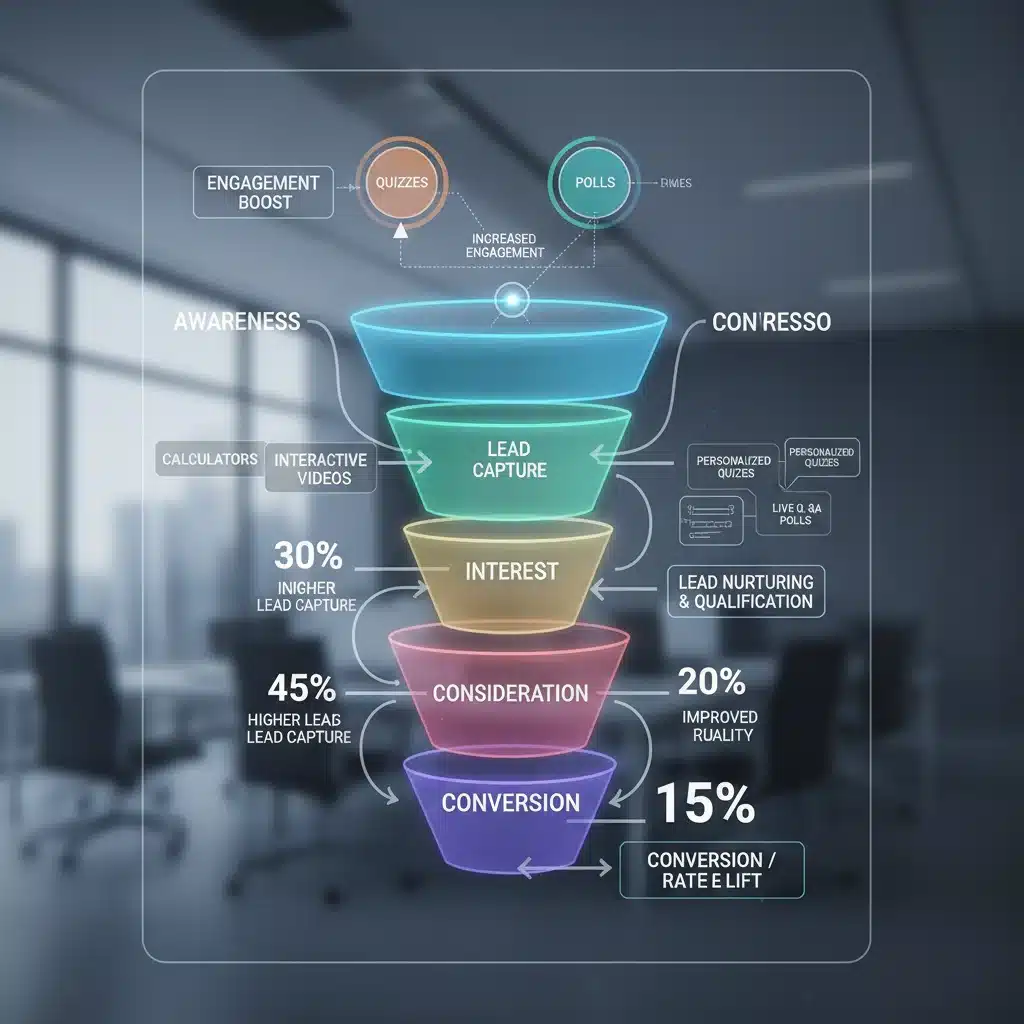
2. Map Interactive Content to the Buyer’s Journey
Different types of interactive content are effective at different stages of the buyer’s journey:
- Awareness: Quizzes, polls, interactive infographics to capture attention and introduce your brand.
- Consideration: Calculators, assessments, interactive videos to provide value, educate, and address specific pain points.
- Decision: Product configurators, AR/VR experiences, personalized recommendations to help users make informed choices and move towards conversion.
3. Optimize for Mobile First
A significant portion of U.S. online activity occurs on mobile devices. Ensure your interactive content is fully responsive, loads quickly, and offers a seamless experience on smartphones and tablets. Poor mobile performance will negate all the benefits of interactivity.
4. Integrate with CRM and Marketing Automation
The data collected through interactive content is gold. Integrate your interactive content platforms with your CRM and marketing automation systems. This allows for seamless lead capture, segmentation, and personalized follow-up campaigns. For example, a user who scores high on a ‘Product X Readiness’ assessment can be automatically added to a specific nurture sequence.
5. Craft Compelling CTAs and Lead Capture Forms
While the interaction itself is engaging, you still need clear calls to action (CTAs) to convert users into leads. These should be strategically placed and offer a compelling value proposition (e.g., ‘Get Your Personalized Report,’ ‘Unlock Your Savings Projection,’ ‘Start Your Free Trial’). Keep lead capture forms concise and ask for only essential information initially.
6. Promote Your Interactive Content Effectively
Even the best interactive content won’t generate leads if no one sees it. Promote it across all your marketing channels: social media, email newsletters, paid ads, and your website. Consider repurposing static content into interactive formats to breathe new life into existing assets.
7. Analyze and Optimize
Regularly track the performance of your interactive content. Key metrics include engagement rates (time spent, completion rates), lead conversion rates, and the quality of leads generated. Use these insights to refine your content, test different approaches, and continuously optimize for better results. A/B testing different quiz questions or calculator inputs can yield significant improvements in Interactive Content Leads.
Tools and Technologies Empowering Interactive Content
The good news is that creating sophisticated interactive content doesn’t require advanced coding skills. A growing ecosystem of tools simplifies the process:
- Interactive Content Platforms: Tools like Outgrow, Ceros, Apester, and Qzzr provide drag-and-drop interfaces for creating quizzes, calculators, assessments, interactive infographics, and more.
- Video Interactivity Tools: Platforms like H5P, HapYak, and Wirewax allow you to add clickable elements, questions, and branching paths to your videos.
- Survey and Poll Tools: While basic survey tools exist, look for those with advanced logic and integration capabilities for lead capture, such as Typeform or SurveyMonkey with robust API options.
- AR/VR Development Kits: For more advanced immersive experiences, platforms like Unity and Unreal Engine, along with AR/VR SDKs (e.g., ARCore, ARKit), are essential, often requiring specialized development.
- AI and Machine Learning: These technologies will increasingly power personalization, dynamic content generation, and predictive analytics within interactive experiences, making the content even more relevant and effective at generating AI marketing leads.
Measuring Success: Beyond Vanity Metrics
While engagement metrics like views and shares are important, true success in generating Interactive Content Leads is measured by more concrete outcomes:
- Lead Volume: The sheer number of new leads generated directly attributable to interactive content.
- Lead Quality: Are these leads qualified? Do they fit your ideal customer profile? Track their progression through the sales funnel.
- Conversion Rates: What is the conversion rate from interactive content participant to MQL (Marketing Qualified Lead) or SQL (Sales Qualified Lead)?
- Cost Per Lead (CPL): How does the CPL for interactive content compare to other lead generation channels?
- Engagement Duration: How long do users spend interacting with your content? Longer duration often correlates with higher interest.
- Data Insights: What valuable customer insights have you gathered that can inform other marketing and product development efforts?
By focusing on these metrics, businesses can accurately assess the ROI of their interactive content strategies and make data-driven decisions to optimize their campaigns for maximum lead generation.
Challenges and Considerations for Interactive Content Implementation
While the benefits are substantial, implementing interactive content isn’t without its challenges. Businesses looking to achieve 5x U.S. lead growth by 2026 must be mindful of these considerations:
Resource Investment
Creating high-quality interactive content often requires more resources – time, budget, and creative expertise – than producing static content. This includes planning, design, development (or tool subscription), and testing. Businesses need to allocate these resources strategically and understand that the higher upfront investment is justified by the potential for significantly higher returns in Interactive Content Leads.
Technical Complexity
While many platforms simplify the process, some interactive experiences, especially those involving advanced AI, AR, or VR, can still be technically complex. Ensuring seamless functionality across various devices and browsers, integrating with existing systems, and managing data flows can require technical know-how. Businesses may need to invest in skilled personnel or partner with specialized agencies.
Content Strategy Alignment
Interactive content cannot exist in a vacuum. It must be a cohesive part of an overarching content marketing strategy. Each piece of interactive content should serve a specific purpose within the buyer’s journey and align with broader business objectives. A disjointed approach will dilute its effectiveness.
Data Privacy and Compliance
Collecting user data through interactive experiences is a powerful advantage, but it also comes with significant responsibility. Businesses must ensure they are fully compliant with data privacy regulations (e.g., CCPA in California, various state-specific laws) and transparent about how user data is collected, stored, and used. Trust is paramount for sustained engagement and lead generation.
Maintenance and Updates
Interactive content, especially data-driven calculators or assessments, may require periodic updates to remain accurate and relevant. Stale or outdated interactive content can quickly lose its appeal and even damage brand credibility. A plan for ongoing maintenance is essential.
The Future of Interactive Content and U.S. Lead Generation
Looking towards 2026 and beyond, the trajectory for Interactive Content Leads is clear: it will become an indispensable component of any successful digital marketing strategy, particularly in the competitive U.S. market.
AI-Driven Personalization at Scale
Artificial intelligence will continue to refine and scale personalization. AI will not only suggest the next best piece of interactive content for a user but also dynamically adapt the content itself based on real-time behavior and previously gathered data. This will lead to hyper-relevant experiences that feel less like marketing and more like a tailored service.
Voice and Conversational Interfaces
The rise of voice search and conversational AI assistants will open new avenues for interactive content. Imagine quizzes or product configurators that you can complete entirely through voice commands, making the experience even more natural and accessible. The integration of chatbots with interactive elements will also become more sophisticated, offering personalized guidance and lead qualification.
Integrated Omnichannel Experiences
Interactive content will seamlessly integrate across all touchpoints – from smart displays in physical retail spaces to augmented reality filters on social media, and personalized recommendations on websites and apps. The goal is to create a unified, interactive customer journey regardless of the channel.
Ethical AI and Trust Building
As interactive content becomes more intelligent and data-intensive, ethical AI practices and transparent data handling will be crucial. Brands that prioritize user trust, provide clear value in exchange for data, and offer control over personal information will build stronger relationships and generate more, higher-quality leads.
Conclusion: Seizing the 5x Lead Growth Opportunity
The opportunity to achieve a 5x increase in U.S. leads by 2026 through interactive content is not merely aspirational; it is an achievable reality for businesses willing to adapt and innovate. By embracing the trends of hyper-personalization, dynamic tools, immersive experiences, and strategic implementation, companies can transform their lead generation efforts from passive outreach to active engagement.
The shift towards Interactive Content Leads represents a fundamental recalibration of the brand-consumer relationship. It moves away from broadcasting messages and towards facilitating meaningful, two-way conversations. This approach not only yields a higher volume of leads but also generates leads that are better qualified, more engaged, and more likely to convert into loyal customers.
As the digital landscape continues to evolve, the businesses that prioritize creating valuable, interactive experiences will be the ones that capture the attention, trust, and ultimately, the market share of the future. Begin your journey today by integrating interactive content into your marketing strategy, and position your business at the forefront of lead generation innovation in the U.S.