
In the rapidly evolving landscape of digital technology, staying ahead of the curve is not just an advantage; it’s a necessity. As we look towards 2026, a significant platform update is on the horizon, bringing with it a suite of new API Integrations 2026 that promise to redefine how businesses operate and interact within the digital ecosystem. This alert serves as your comprehensive guide to understanding these upcoming changes and, more importantly, how to leverage them to gain a crucial 3-month implementation advantage.
The pace of innovation dictates that platforms must continually evolve, offering more robust, flexible, and secure ways for systems to communicate. The impending update is a testament to this, introducing advanced Application Programming Interfaces (APIs) designed to streamline workflows, enhance data exchange, and unlock new possibilities for automation and connectivity. For forward-thinking organizations, this isn’t just a technical upgrade; it’s a strategic opportunity to optimize operations, improve customer experiences, and foster greater innovation.
This article will delve deep into the specifics of these new API Integrations 2026, providing insights into their architecture, functionalities, and the profound impact they are expected to have. We will explore the critical steps businesses need to take now to prepare for these changes, ensuring a smooth transition and capitalizing on the early adoption benefits. From technical preparation to strategic planning, our goal is to equip you with the knowledge and tools necessary to transform this platform update into a significant competitive edge.
The Dawn of New API Integrations 2026: What to Expect
The landscape of enterprise software and digital services is constantly being reshaped by advancements in API technology. The upcoming API Integrations 2026 represent a significant leap forward, not merely incremental improvements. These integrations are designed to address current limitations, enhance scalability, and provide richer, more nuanced data exchange capabilities. Understanding the core changes is the first step towards successful implementation.
Key Architectural Shifts and Design Principles
One of the most notable aspects of the new API Integrations 2026 is a move towards more standardized and resilient architectural patterns. We anticipate a stronger emphasis on event-driven architectures, allowing for real-time data processing and more responsive applications. This shift means that instead of traditional request-response cycles, systems will be able to react instantaneously to events, leading to more dynamic and agile operations. Furthermore, there’s a clear trend towards GraphQL or similar query languages, offering developers more flexibility in fetching precisely the data they need, thereby reducing over-fetching and improving performance.
Security is another paramount concern addressed in the new design principles. Expect enhanced authentication and authorization mechanisms, likely incorporating more robust OAuth 2.0 flows, OpenID Connect, and potentially even decentralized identity solutions. Data encryption at rest and in transit will be a default, ensuring that sensitive information remains protected across all integrated systems. These security enhancements are crucial in an era where data breaches pose significant risks to businesses and their customers.
Enhanced Functionalities and Use Cases
The new API Integrations 2026 will unlock a plethora of new functionalities. Imagine seamless integration with advanced AI and machine learning services, allowing for predictive analytics, intelligent automation, and hyper-personalized customer experiences directly within your existing applications. For instance, a customer support platform could leverage new AI APIs to automatically categorize and route inquiries, suggest solutions to agents, or even resolve common issues autonomously.
Cross-platform data synchronization will also reach new levels of sophistication. Businesses relying on multiple SaaS solutions (CRM, ERP, marketing automation, e-commerce) will find it easier to maintain a single, consistent view of their data, eliminating silos and improving operational efficiency. Think of a scenario where a customer update in your CRM automatically propagates to your marketing platform, e-commerce site, and support ticketing system, all in real-time, without manual intervention or complex custom scripts.
Another exciting area is the expanded support for IoT (Internet of Things) devices. The API Integrations 2026 are expected to provide more streamlined ways to connect, manage, and extract data from a diverse range of IoT sensors and devices. This opens up opportunities for smart manufacturing, predictive maintenance, intelligent logistics, and creating truly interconnected physical and digital environments.
Why a 3-Month Implementation Advantage is Crucial
In the competitive business landscape, an early adoption advantage can translate directly into market leadership, increased efficiency, and superior customer satisfaction. The 3-month head start on the new API Integrations 2026 is not just a nice-to-have; it’s a strategic imperative that can yield significant returns.
Competitive Edge and Market Positioning
Being among the first to fully integrate the new APIs means your business can offer enhanced services or products before competitors. This could manifest as faster service delivery, more innovative features, or a more seamless customer journey. Imagine launching a new feature powered by these advanced APIs three months before your rivals. This allows you to capture market share, gain valuable user feedback, and refine your offerings while others are still in the planning stages. This initial lead can be incredibly difficult for competitors to overcome, cementing your position as an industry innovator.
Operational Efficiency and Cost Savings
The new API Integrations 2026 are designed to streamline processes and automate tasks that previously required manual intervention or complex middleware. Early implementation means you can start realizing these efficiencies sooner. Reduced manual effort, fewer errors, and faster data processing directly translate into cost savings. Furthermore, optimized integrations often lead to better resource utilization, allowing your teams to focus on higher-value activities rather than repetitive tasks or troubleshooting integration issues.
Enhanced Data Insights and Decision Making
With more robust and real-time data exchange capabilities, businesses can gain deeper insights into their operations, customer behavior, and market trends. An early adopter of the API Integrations 2026 will have a head start in collecting, analyzing, and acting upon this enriched data. This means more informed strategic decisions, quicker responses to market changes, and the ability to proactively identify opportunities and mitigate risks. The ability to leverage superior data analytics can be a game-changer in today’s data-driven economy.
Improved Customer Experience and Retention
Ultimately, many API integrations aim to improve the end-user experience. Faster load times, more personalized interactions, seamless multi-channel experiences, and more reliable service are all direct benefits. By implementing the new API Integrations 2026 early, you can start delivering these enhanced experiences sooner, leading to higher customer satisfaction, increased loyalty, and reduced churn. In an age where customer experience is a primary differentiator, a 3-month lead in this area is invaluable.
Preparing for the API Integrations 2026: A Strategic Roadmap
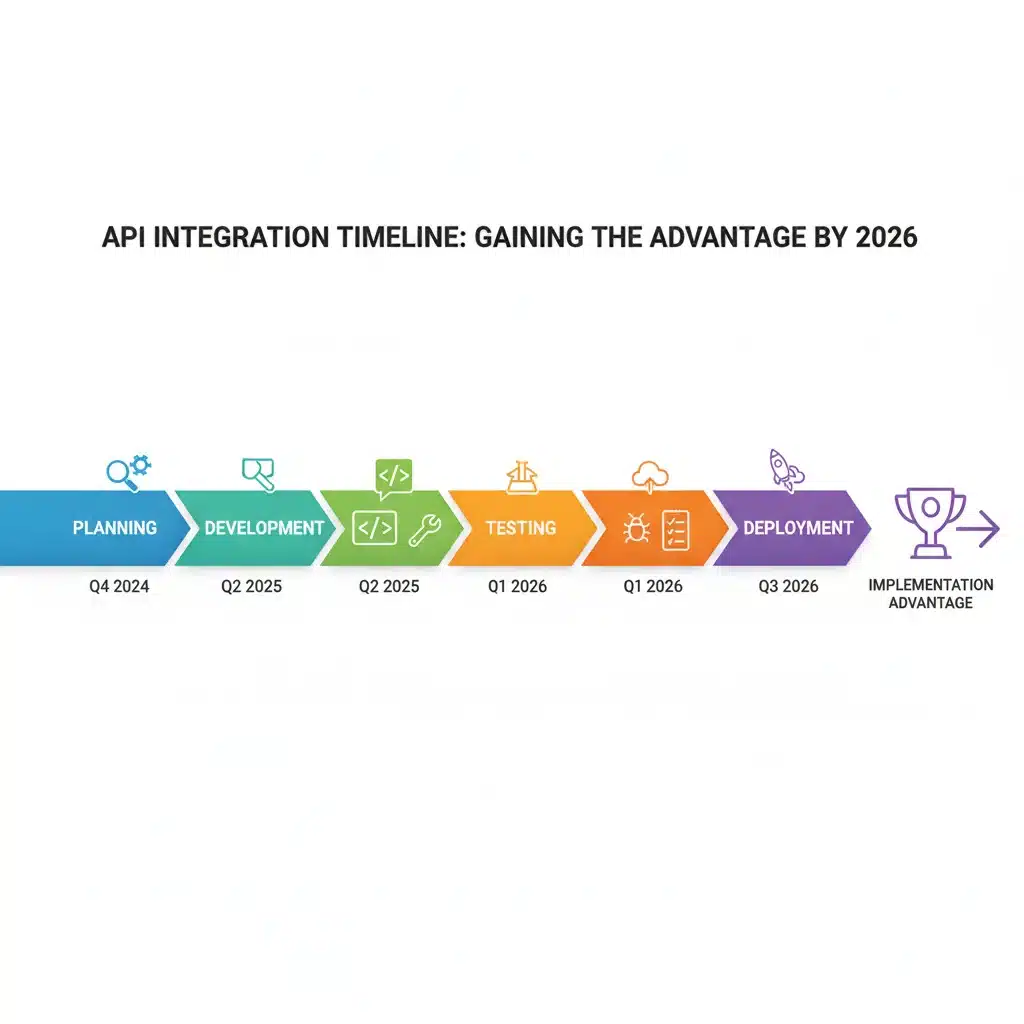
Achieving a 3-month implementation advantage requires proactive planning and execution. This isn’t a task to be left until the last minute; preparation should begin now. Here’s a strategic roadmap to guide your efforts.
Step 1: Conduct a Comprehensive API Audit and Inventory
Before you can integrate new APIs, you need a clear understanding of your existing API landscape. Conduct a thorough audit of all current APIs your organization uses, both internal and external. Document their functionalities, dependencies, security protocols, and performance metrics. Identify which existing integrations might be affected by the new API Integrations 2026 and which could potentially be replaced or enhanced. This inventory will serve as your baseline and help identify potential conflicts or opportunities for consolidation.
Step 2: Assess Your Current Infrastructure and Technical Stack
Evaluate your current IT infrastructure, including servers, networks, databases, and development environments. Are they capable of supporting the demands of the new API Integrations 2026? Consider scalability, performance, and security. You might need to upgrade hardware, migrate to cloud-native solutions, or refactor existing codebases to align with modern API best practices. This assessment should also include your current API management platform – does it support the new API versions and functionalities?
Step 3: Allocate Resources and Form a Dedicated Integration Team
Successful implementation of new API Integrations 2026 requires a dedicated team. This team should include developers, solution architects, project managers, and quality assurance specialists. Ensure they have the necessary skills, or plan for training and upskilling. Early allocation of resources demonstrates commitment and allows the team to familiarize themselves with the upcoming changes long before they are officially released. A clear leader for this initiative is also crucial to drive progress and overcome challenges.

Step 4: Engage with the Platform Provider and Developer Community
Stay in close communication with the platform provider. Attend webinars, read documentation, and participate in early access programs or beta testing if available. Engage with the broader developer community through forums, social media, and industry events. These interactions can provide invaluable insights, best practices, and early warnings about potential challenges. Understanding the roadmap and vision behind the API Integrations 2026 directly from the source is paramount.
Step 5: Develop a Phased Implementation Plan
A phased approach is often the most effective for complex integrations. Break down the implementation into manageable stages: discovery, planning, development, testing, deployment, and post-launch monitoring. Prioritize integrations based on business impact and technical feasibility. Starting with less critical integrations can provide valuable learning experiences before tackling mission-critical systems. This phased approach allows for continuous feedback and adjustment, minimizing risks.
Technical Deep Dive: Key Aspects of New API Integrations 2026
For developers and technical leads, a deeper understanding of the technical nuances of the new API Integrations 2026 is essential. This section explores some of the anticipated technical aspects that will require attention.
Authentication and Authorization Enhancements
As mentioned, security is a major focus. Expect a shift towards more granular access control. This might involve adopting fine-grained authorization policies (e.g., using OPA – Open Policy Agent) that allow precise control over what data and functionalities different applications or users can access. Implementing these new security models will require updates to your identity management systems and potentially refactoring how your applications interact with tokens and credentials. Developers should prepare to work with updated SDKs and authentication libraries that support these new protocols.
Versioning and Backward Compatibility
One of the perennial challenges with API updates is maintaining backward compatibility. While the new API Integrations 2026 will introduce significant changes, platform providers typically strive to offer a transition period or mechanisms for older API versions to coexist. However, relying on deprecated versions for too long can hinder access to new features and security patches. Plan to migrate to the latest API versions as quickly as possible. Understand the versioning strategy of the new APIs (e.g., semantic versioning) and how it impacts your release cycles.
Error Handling and Observability
Robust error handling and comprehensive observability are critical for maintaining stable integrations. The new API Integrations 2026 are expected to provide more standardized and detailed error codes, making it easier to diagnose and resolve issues. Furthermore, anticipate enhanced logging, tracing, and monitoring capabilities. Developers should integrate these new observability features into their existing monitoring stacks (e.g., Prometheus, Grafana, Splunk) to gain a holistic view of API performance and health. Proactive monitoring can help identify and resolve issues before they impact end-users.
Performance Optimization and Rate Limiting
With increased functionality and data flow, performance optimization becomes even more crucial. The new API Integrations 2026 will likely come with specific recommendations for optimizing requests, handling pagination, and leveraging caching mechanisms. Be aware of updated rate limits and quotas to avoid service disruptions. Implement efficient request strategies, such as batching requests where appropriate, and design your applications to gracefully handle rate limit excursions through exponential backoff and retry mechanisms.
Strategies for Gaining the 3-Month Advantage
Merely understanding the new API Integrations 2026 is not enough; you need actionable strategies to translate that knowledge into a tangible advantage. Here’s how to secure your 3-month head start.
Early Access Programs and Beta Testing
The most direct path to an early advantage is participating in any early access programs or beta testing initiatives offered by the platform provider. This allows your team to get hands-on experience with the new APIs before their general release. You can identify potential issues, provide feedback, and fine-tune your integration strategy in a controlled environment. This also gives you a significant head start in developing and testing your applications against the new APIs.
Proactive Documentation Review and Training
As soon as preliminary documentation for the API Integrations 2026 becomes available, dedicate resources to thoroughly review it. Conduct internal workshops and training sessions for your development and operations teams. The sooner your team understands the new API specifications, data models, and interaction patterns, the faster they can begin planning and development. Investing in this upfront knowledge transfer is an investment in speed and efficiency.
Modular Design and Decoupling
If your existing systems are tightly coupled, making changes to integrations can be a lengthy and risky process. Adopt a modular design philosophy for your applications and services. By decoupling components and using well-defined interfaces, you can swap out or update API integrations with minimal impact on other parts of your system. This architectural agility will be invaluable when transitioning to the new API Integrations 2026, allowing for faster deployment and reduced risk.
Automated Testing and Continuous Integration/Deployment (CI/CD)
To accelerate implementation and ensure stability, robust automated testing is paramount. Develop comprehensive unit, integration, and end-to-end tests for your API integrations. Implement a strong CI/CD pipeline that automates the build, test, and deployment processes. This not only speeds up development cycles but also catches errors early, reducing the time spent on debugging and rework. For the new API Integrations 2026, this means you can rapidly iterate and deploy changes with confidence.
Overcoming Potential Challenges in API Integrations 2026
While the benefits are clear, implementing new API Integrations 2026 will inevitably come with challenges. Anticipating and preparing for these can help maintain your advantage.
Data Migration and Transformation
New APIs often come with updated data models or formats. This can necessitate data migration and transformation efforts, which can be complex and time-consuming. Plan for this early by mapping existing data fields to new ones and developing robust ETL (Extract, Transform, Load) processes. Thorough testing of data integrity during migration is crucial to prevent data loss or corruption.
Managing Dependencies and Interoperability
Your systems likely rely on a web of interconnected APIs. Introducing new API Integrations 2026 requires careful consideration of these dependencies. Ensure that new integrations don’t inadvertently break existing functionalities or create conflicts. A detailed dependency map can help visualize these connections and plan for smooth interoperability.
Security Compliance and Governance
With enhanced security features in the new API Integrations 2026, your organization must ensure compliance with relevant data protection regulations (e.g., GDPR, CCPA) and internal security policies. This might involve updating your governance frameworks, conducting new security audits, and ensuring all integrated systems adhere to the highest security standards. Neglecting this aspect can lead to significant reputational and financial penalties.
Talent Gap and Skill Development
The rapid evolution of API technology means that your existing team might not possess all the necessary skills for the new API Integrations 2026. Identify any skill gaps early and invest in training, certifications, or hiring specialized talent. A well-trained team is your most valuable asset in navigating complex technical transitions.
The Long-Term Impact of API Integrations 2026
Beyond the immediate advantage, the new API Integrations 2026 are set to have a lasting impact on how businesses operate and innovate. This platform update is not just a one-off event; it’s a foundational shift that will influence digital strategy for years to come.
Fostering a Culture of Innovation
By providing more flexible and powerful tools for connectivity, the API Integrations 2026 will empower developers to build more innovative applications and services. This encourages a culture of experimentation and rapid prototyping, where new ideas can be brought to market faster. Businesses that embrace these new capabilities will find themselves better positioned to adapt to future market demands and create disruptive solutions.
Strengthening Ecosystem Partnerships
APIs are the backbone of modern digital ecosystems. The enhanced API Integrations 2026 will facilitate stronger and more complex partnerships between businesses, enabling richer data sharing and co-creation of value. This could lead to new business models, expanded service offerings, and a more interconnected global economy. Organizations that actively seek out and leverage these ecosystem opportunities will find new avenues for growth.
Future-Proofing Your Digital Strategy
By proactively adopting and integrating the new APIs, you are essentially future-proofing your digital strategy. Your systems will be built on a more modern, scalable, and secure foundation, making them more resilient to future technological shifts. This reduces technical debt and positions your business for sustained success in an ever-changing digital world. The 3-month advantage gained now can compound over time, ensuring long-term relevance and competitiveness.
Conclusion: Seizing the Opportunity of API Integrations 2026
The upcoming platform update and the introduction of new API Integrations 2026 represent a pivotal moment for businesses worldwide. It’s an opportunity to not only enhance existing operations but to fundamentally rethink how technology can drive growth, efficiency, and customer satisfaction. The 3-month implementation advantage is a powerful incentive, offering a head start that can translate into significant competitive gains.
Successfully navigating this transition requires a strategic, proactive, and well-resourced approach. By conducting thorough audits, assessing infrastructure, assembling dedicated teams, engaging with the platform provider, and adopting a phased implementation plan, organizations can ensure a smooth and effective integration process. Addressing potential challenges such as data migration, dependency management, security compliance, and skill gaps will be crucial for sustained success.
Ultimately, the new API Integrations 2026 are more than just technical upgrades; they are catalysts for innovation, collaboration, and long-term strategic advantage. Businesses that embrace these changes early and thoughtfully will not only survive but thrive in the increasingly interconnected digital future. Start your preparation today to unlock the full potential of these transformative APIs and secure your place at the forefront of industry innovation.