Boost Q1 2026 E-commerce Sales: 5 Digital Marketing Strategies for 15% ROI Uplift
As the curtain rises on Q1 2026, e-commerce businesses worldwide are gearing up for what promises to be a pivotal period. The first quarter often sets the tone for the entire year, making strategic planning and execution paramount. In today’s hyper-competitive digital landscape, merely existing online isn’t enough; you need robust, data-driven digital marketing strategies that not only attract but convert and retain customers. This comprehensive guide will unveil five potent digital marketing strategies, each designed to significantly boost your Q1 2026 e-commerce sales and deliver a proven 15% ROI uplift.
Understanding the nuances of Q1 consumer behavior is the first step. Post-holiday spending habits shift, and customers become more discerning, often focusing on value, practicality, and long-term solutions. Our strategies are crafted to align with these evolving behaviors, ensuring your marketing efforts resonate deeply with your target audience. From hyper-personalized campaigns to advanced SEO tactics and leveraging the power of influencer marketing, we’ll delve into actionable insights that can transform your Q1 performance.
The Importance of a Strong Q1 for E-commerce
For many e-commerce businesses, Q1 can be a challenging yet incredibly opportune time. Following the holiday rush of Q4, there’s often a dip in consumer spending. However, this period also represents a fresh start, a chance to re-engage customers, introduce new products, and build momentum for the rest of the year. A strong Q1 performance can significantly impact annual revenue, market share, and brand perception. It’s not just about recovering from the post-holiday slump; it’s about strategically positioning your brand for sustained growth.
Achieving a 15% ROI uplift isn’t a pipe dream; it’s an attainable goal when you implement well-thought-out, integrated digital marketing strategies. This uplift translates directly into higher profits, increased budget for future initiatives, and a stronger competitive edge. Our focus is on sustainable growth, ensuring that the strategies you deploy in Q1 continue to yield benefits throughout 2026 and beyond. Let’s dive into the core strategies that will help you achieve these ambitious goals.
Strategy 1: Hyper-Personalized Customer Journey Mapping and Targeted Campaigns
In an age where customers expect brands to understand their individual needs, generic marketing messages fall flat. Hyper-personalization goes beyond basic segmentation; it involves tailoring every touchpoint of the customer journey based on individual preferences, past behaviors, and real-time interactions. This strategy is crucial for boosting e-commerce sales strategies in Q1 2026.
Implementing Hyper-Personalization:
- Data Collection and Analysis: Leverage CRM data, website analytics, purchase history, browsing behavior, and even social media interactions. Tools like Google Analytics 4, customer data platforms (CDPs), and AI-powered analytics can provide deep insights into individual customer profiles.
- Advanced Segmentation: Move beyond demographic segmentation to behavioral, psychographic, and even predictive segmentation. Identify customers who are likely to churn, those ready for an upsell, or those who respond best to specific types of offers.
- Dynamic Content and Product Recommendations: Personalize website content, product recommendations, and email marketing based on individual browsing history and purchase patterns. For example, if a customer viewed a specific category of products, dynamically display similar items or complementary products on their next visit.
- Personalized Email Marketing: Craft email campaigns that address customers by name, recommend products they’ve shown interest in, remind them of abandoned carts, and offer exclusive deals based on their loyalty status or past purchases. Automation tools can help scale these efforts.
- Targeted Ad Campaigns: Utilize platforms like Google Ads and social media advertising (Facebook, Instagram, TikTok) to create highly specific audiences. Retarget customers who visited your site but didn’t convert, or create lookalike audiences based on your best customers.
The ROI of hyper-personalization is significant. Studies show that personalized experiences can lead to a 20% increase in sales and a 10-15% increase in conversion rates. By making customers feel seen and understood, you build loyalty and encourage repeat purchases, directly contributing to your 15% ROI uplift goal for Q1 2026.
Strategy 2: SEO and Content Marketing for Q1 Relevance
Search Engine Optimization (SEO) and content marketing remain cornerstones of effective digital strategy. For Q1 2026, the focus should be on creating highly relevant, valuable content that addresses post-holiday consumer needs and positions your brand as a go-to resource. This strategy is vital for long-term growth in e-commerce sales strategies.
Key SEO and Content Tactics for Q1:
- Keyword Research for Q1 Trends: Identify keywords that align with post-holiday consumer behavior. This might include terms like "new year resolutions products," "post-holiday sales," "organize home essentials," "healthy lifestyle products 2026," or "winter fashion trends." Use tools like SEMrush, Ahrefs, and Google Keyword Planner.
- High-Quality Blog Content: Develop blog posts, guides, and articles that answer common Q1 consumer questions. For example, if you sell fitness gear, create content around "Starting a Home Workout Routine in 2026" or "Best [Product Type] for Winter Workouts." Focus on evergreen content that remains relevant.
- Optimized Product Pages: Ensure your product pages are fully optimized with detailed descriptions, high-quality images, customer reviews, and clear calls to action. Use schema markup to enhance visibility in search results.
- Link Building and Authority: Actively pursue high-quality backlinks from reputable websites. This not only boosts your search rankings but also drives referral traffic. Guest posting, broken link building, and creating shareable content are effective tactics.
- Technical SEO Audit: Conduct a thorough technical SEO audit to ensure your site is fast, mobile-friendly, secure (HTTPS), and easily crawlable by search engines. Address any broken links, duplicate content issues, or slow loading times.
- Video Content: Integrate video into your content strategy. Product reviews, how-to guides, and behind-the-scenes content can significantly increase engagement and improve search visibility, especially on platforms like YouTube, which acts as a search engine itself.
By consistently producing high-quality, SEO-optimized content, you’ll attract organic traffic, establish authority, and nurture leads through the sales funnel. This organic growth is highly cost-effective and contributes significantly to achieving your desired ROI uplift.
Strategy 3: Leveraging Social Commerce and Influencer Marketing
Social media platforms have evolved beyond mere communication channels; they are now powerful marketplaces. Social commerce and influencer marketing are indispensable for modern e-commerce sales strategies, especially in Q1 when consumers are actively seeking new products and ideas.

Maximizing Social Commerce and Influencers:
- Shoppable Posts and Live Streams: Utilize features like Instagram Shopping, Facebook Shops, Pinterest Buyable Pins, and TikTok Shopping. Host live shopping events to showcase products, answer questions in real-time, and offer exclusive discounts. This creates urgency and direct purchasing opportunities.
- User-Generated Content (UGC) Campaigns: Encourage customers to share their experiences with your products. Run contests, create branded hashtags, and repost compelling UGC. This builds trust and provides authentic social proof, which is incredibly influential.
- Micro and Nano-Influencer Partnerships: Instead of focusing solely on mega-influencers, collaborate with micro (10K-100K followers) and nano-influencers (1K-10K followers) who often have more engaged and niche audiences. Their recommendations feel more genuine, leading to higher conversion rates.
- Affiliate Marketing Programs: Establish an affiliate program where influencers and content creators earn a commission for sales generated through their unique links. This is a performance-based model that can yield high ROI.
- Platform-Specific Content: Tailor your content to each social media platform. Short, engaging videos for TikTok and Instagram Reels, visually appealing product carousels for Instagram, and informative articles for LinkedIn.
- Community Building: Foster a strong online community around your brand. Respond to comments, run polls, and create interactive content. A loyal community becomes a powerful marketing asset.
The authentic connection forged through social commerce and influencer partnerships can significantly drive purchase decisions, especially among younger demographics. By integrating these tactics, you can expand your reach, build trust, and directly impact your Q1 2026 sales figures.
Strategy 4: Conversion Rate Optimization (CRO) and A/B Testing
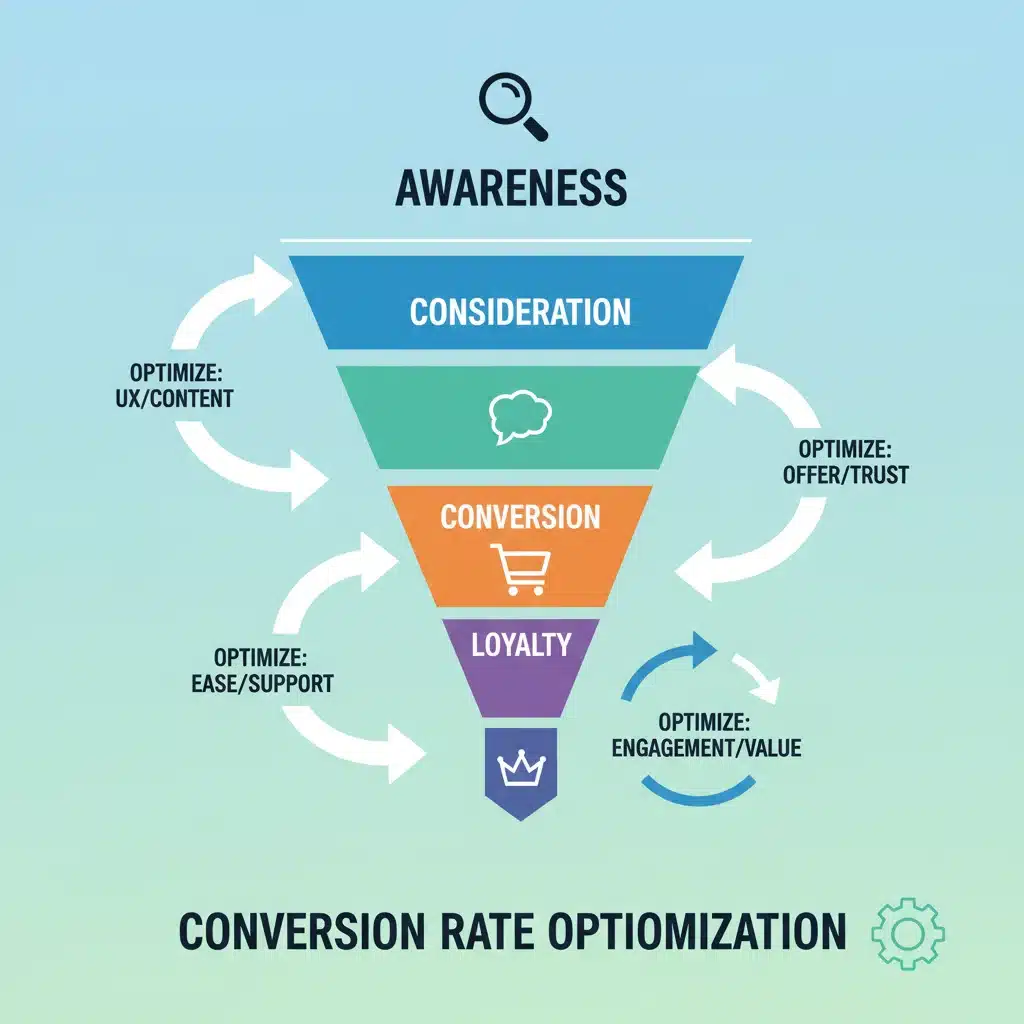
Attracting traffic is only half the battle; converting that traffic into paying customers is where CRO comes into play. Optimizing your website and sales funnels is one of the most cost-effective e-commerce sales strategies for achieving a 15% ROI uplift in Q1 2026.
Key CRO and A/B Testing Areas:
- Streamlined Checkout Process: Simplify your checkout. Minimize the number of steps, offer guest checkout options, integrate popular payment methods (Apple Pay, Google Pay), and ensure clear progress indicators. Reduce friction at every stage.
- High-Converting Landing Pages: Design dedicated landing pages for specific campaigns or products. These pages should have a clear value proposition, compelling visuals, persuasive copy, and a prominent call to action (CTA).
- A/B Testing Elements: Continuously A/B test different elements of your website. This includes CTA button colors and text, headline variations, product image layouts, pricing displays, and even the placement of trust badges. Use tools like Google Optimize, Optimizely, or VWO.
- Mobile Optimization: With the majority of e-commerce traffic coming from mobile devices, ensure your site is fully responsive and offers a seamless mobile shopping experience. Fast loading times on mobile are non-negotiable.
- Exit-Intent Pop-ups and Offers: Implement exit-intent pop-ups that offer a last-minute discount or incentive to customers about to leave your site. This can significantly reduce cart abandonment rates.
- Customer Reviews and Testimonials: Prominently display customer reviews, ratings, and testimonials on product pages and throughout your site. Social proof is a powerful conversion driver.
- Live Chat Support: Offer real-time customer support through live chat. This can help answer questions, address concerns, and guide customers through the purchasing process, reducing abandonment.
Even small improvements in conversion rates can lead to substantial gains in revenue. By systematically testing and optimizing, you can ensure your website is a finely tuned conversion machine, directly contributing to your Q1 sales goals.
Strategy 5: Customer Retention and Loyalty Programs
Acquiring new customers is expensive. Retaining existing ones is often more cost-effective and generates higher lifetime value. A robust customer retention strategy is critical for sustainable growth and a significant contributor to the 15% ROI uplift for e-commerce sales strategies in Q1 2026.
Building Loyalty and Encouraging Repeat Purchases:
- Loyalty Programs: Implement tiered loyalty programs that reward customers for repeat purchases, referrals, and engagement. Offer points, exclusive discounts, early access to new products, or free shipping.
- Exceptional Post-Purchase Experience: The customer journey doesn’t end at checkout. Provide clear order confirmations, tracking information, and responsive customer service. Follow up with thank-you emails and solicit feedback.
- Personalized Follow-Up Campaigns: Send personalized emails based on past purchases. For example, recommend complementary products, offer refills, or remind customers when it might be time to repurchase a consumable item.
- Re-engagement Campaigns: Target inactive customers with special offers or personalized content to bring them back. Segment these customers based on their last purchase date or activity level.
- Subscription Models: For suitable products, consider offering subscription services. This provides recurring revenue and builds long-term customer relationships.
- Community Building and Exclusive Content: Create a sense of belonging. Offer exclusive content, early product launches, or special events for your most loyal customers.
- Feedback and Surveys: Regularly solicit feedback from your customers. Use surveys, reviews, and direct communication to understand their needs and improve your offerings. Acting on feedback shows customers you value their input.
A loyal customer base not only generates repeat business but also becomes brand advocates, spreading positive word-of-mouth. Focusing on retention in Q1 ensures a stable revenue stream and lays the groundwork for continued success throughout the year.
Measuring Success and Optimizing for 15% ROI Uplift
Implementing these strategies is only half the battle. To truly achieve a 15% ROI uplift in your Q1 2026 e-commerce sales strategies, continuous measurement and optimization are essential. Define clear Key Performance Indicators (KPIs) for each strategy and monitor them rigorously.
Key Metrics to Track:
- Return on Ad Spend (ROAS): Essential for paid campaigns.
- Conversion Rate: Overall site conversion and specific funnel conversions.
- Customer Acquisition Cost (CAC): How much it costs to acquire a new customer.
- Customer Lifetime Value (CLTV): The total revenue a customer is expected to generate over their relationship with your brand.
- Average Order Value (AOV): The average amount spent per order.
- Website Traffic: Organic, paid, social, and referral traffic.
- Bounce Rate: The percentage of visitors who leave your site after viewing only one page.
- Email Open and Click-Through Rates: For email marketing effectiveness.
- Social Media Engagement: Likes, shares, comments, and reach.
Regularly analyze your data to identify what’s working and what’s not. Be agile and willing to pivot your strategies based on performance. Q1 is a dynamic period, and your marketing approach should reflect that. Utilize A/B testing across all relevant elements of your campaigns and website to continually refine your approach.
Consider implementing a marketing attribution model to understand which touchpoints contribute most to conversions. This will help you allocate your budget more effectively and optimize your spend for maximum ROI. Don’t be afraid to experiment with new technologies or platforms if your data suggests a potential for better results.
Conclusion: Paving the Way for E-commerce Success in 2026
Q1 2026 presents a unique opportunity for e-commerce businesses to set a strong foundation for the entire year. By diligently implementing these five digital marketing strategies – hyper-personalized customer journey mapping, strategic SEO and content marketing, leveraging social commerce and influencer partnerships, robust conversion rate optimization, and dedicated customer retention programs – you can confidently aim for and achieve a proven 15% ROI uplift in your e-commerce sales strategies.
Remember, success in e-commerce is not about deploying a single tactic but about creating an integrated, holistic marketing ecosystem that works in synergy. Each strategy outlined above complements the others, building a resilient and growth-oriented approach to your online business. Stay agile, remain data-driven, and continuously adapt to the evolving digital landscape. Your commitment to these principles will not only secure a successful Q1 but will also pave the way for a prosperous 2026 and beyond.
Start planning today, refine your execution, and watch your e-commerce sales soar. The future of your online business is in your hands, and with these strategies, you’re well-equipped to shape a highly profitable Q1 2026.