US Consumer Privacy Regulations 2026: Digital Marketing Impact

Understanding US Consumer Privacy Regulations (Updated March 2026): Impact on Digital Marketing Strategies
In an increasingly data-driven world, the landscape of consumer privacy is constantly shifting. For businesses operating within the United States, staying abreast of these changes isn’t just good practice; it’s a legal imperative. The year 2026 marks a significant milestone in the evolution of US consumer privacy regulations, bringing with it updated mandates that will profoundly impact digital marketing strategies. This comprehensive guide delves into the latest developments, offering insights into what these changes mean for your business and how you can adapt to ensure compliance and maintain consumer trust.
The journey towards robust consumer data protection in the US has been a gradual one, often characterized by a patchwork of state-specific laws rather than a single federal framework. However, the momentum towards more unified and stringent regulations has been undeniable. As of March 2026, several key updates and new interpretations of existing laws are set to take effect or gain more prominence, necessitating a thorough review of current digital marketing practices.
The Evolving Landscape of US Privacy Regulations
Before diving into the specifics of the March 2026 updates, it’s crucial to understand the foundational elements of US privacy legislation. Unlike the European Union’s comprehensive General Data Protection Regulation (GDPR), the US approach has historically been sector-specific and state-led. This has resulted in a complex web of laws, each with its own scope and requirements. Key players in this legislative arena include:
- California Consumer Privacy Act (CCPA) and California Privacy Rights Act (CPRA): Often considered the gold standard for state-level privacy laws, the CCPA, amended by the CPRA, grants California consumers extensive rights over their personal information, including the right to know, delete, and opt-out of the sale or sharing of their data.
- Virginia Consumer Data Protection Act (VCDPA): Similar to the CCPA/CPRA, the VCDPA provides consumers with rights regarding their personal data and imposes obligations on data controllers and processors.
- Colorado Privacy Act (CPA): Another comprehensive state law, the CPA, also grants consumers rights and places duties on organizations handling personal data.
- Utah Consumer Privacy Act (UCPA) and Connecticut Data Privacy Act (CTDPA): These acts further contribute to the growing body of state-level privacy legislation, each with unique nuances but generally aligning with the principles of consumer control and business accountability.
The March 2026 updates are not necessarily about entirely new federal legislation, but rather a maturation and, in some cases, stricter enforcement or expanded interpretation of these existing and emerging state laws. There’s also an increasing federal push for a more unified approach, which, while not fully realized, influences the regulatory environment. Businesses must now contend with a more interconnected and often more demanding compliance burden. The focus is shifting from simply having a privacy policy to actively demonstrating accountability and implementing privacy-by-design principles across all operations.
Key Updates and Their Implications for Digital Marketing
The period leading up to and including March 2026 brings several critical areas of focus for digital marketers. Understanding these shifts is paramount to avoiding penalties and building consumer trust.
Expanded Definitions of Personal Information and Sensitive Data
One of the most significant trends is the broadening definition of what constitutes ‘personal information’ and ‘sensitive data’. What was once considered innocuous data, such as IP addresses or device identifiers, is increasingly being categorized as personal information, especially when it can be linked to an individual. Furthermore, categories like precise geolocation data, health information, racial or ethnic origin, religious beliefs, and even biometric data are firmly established as ‘sensitive data,’ requiring higher levels of protection and explicit consent.
Implication for Digital Marketing: Marketers must reassess their data collection practices. This means being more transparent about what data is collected, why it’s collected, and how it’s used. The collection of sensitive data, in particular, will require more robust consent mechanisms, moving beyond implied consent to explicit, affirmative opt-in. This impacts targeted advertising, personalization, and audience segmentation, requiring more granular control over data types used for these activities.
Enhanced Consumer Rights and Data Subject Access Requests (DSARs)
Consumers are gaining more power over their data. The March 2026 updates reinforce and often expand rights such as:
- Right to Know: Consumers can request to know what personal information a business has collected about them, the sources of that information, the purposes for collecting it, and the categories of third parties with whom it’s shared.
- Right to Delete: Consumers can request the deletion of their personal information held by a business.
- Right to Correct: The ability to request correction of inaccurate personal information.
- Right to Opt-Out: The right to opt-out of the sale or sharing of personal information for cross-context behavioral advertising.
- Right to Limit Use and Disclosure of Sensitive Personal Information: For sensitive data, consumers will have increased control over its use.
Implication for Digital Marketing: Businesses need streamlined and accessible processes for handling DSARs. This includes clear channels for requests, efficient internal systems for data retrieval and deletion, and a commitment to fulfilling requests within specified timeframes. Failing to honor these rights can lead to significant fines and reputational damage. Marketers must ensure their data management platforms (DMPs) and customer relationship management (CRM) systems are capable of identifying, retrieving, and deleting specific user data upon request.
Stricter Consent Requirements
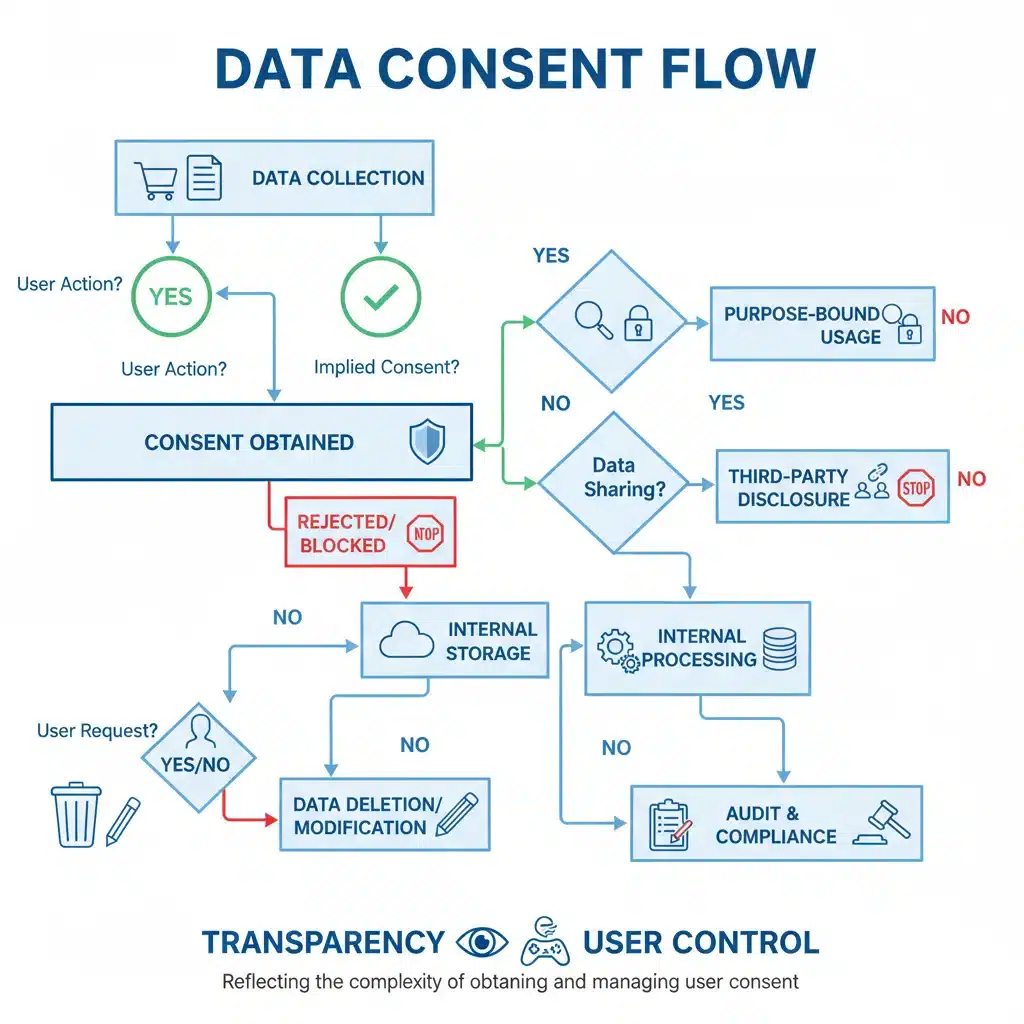
The days of passive consent via pre-checked boxes or vague privacy policies are rapidly fading. The trend is towards explicit, informed consent, especially for data collection and processing related to advertising and personalization. This means consumers must be clearly informed about what they are consenting to, and their agreement must be unambiguous.
Implication for Digital Marketing: Consent management platforms (CMPs) are no longer optional; they are essential. Websites and apps must implement clear, user-friendly consent banners that provide granular options for data collection and usage. Marketers must move away from ‘dark patterns’ that trick users into consenting. This impacts cookie usage, tracking technologies, and the ability to build detailed user profiles. Obtaining valid consent will be critical for legitimate interest processing and targeted advertising campaigns.
Increased Focus on Data Minimization and Purpose Limitation
Regulators are increasingly emphasizing the principles of data minimization and purpose limitation. This means businesses should only collect the data absolutely necessary for a specific, stated purpose and should not retain it longer than required. ‘Just in case’ data collection is becoming a liability.
Implication for Digital Marketing: Marketers need to scrutinize their data collection practices. Is every piece of data collected truly essential for the marketing objective? Can the same objective be achieved with less data or anonymized data? This requires a shift in mindset, moving from collecting as much data as possible to collecting only what’s necessary and relevant. This will impact the scope of analytics, A/B testing, and lead generation forms.
Third-Party Data Sharing and Cross-Context Behavioral Advertising
The sharing of consumer data with third parties, particularly for cross-context behavioral advertising (i.e., tracking users across different websites and apps to build profiles for targeted ads), is under intense scrutiny. Many state laws now provide explicit rights for consumers to opt-out of such sharing.
Implication for Digital Marketing: The reliance on third-party cookies and data brokers for audience targeting will diminish significantly. Marketers must pivot towards first-party data strategies, building direct relationships with consumers and collecting data directly with explicit consent. Contextual advertising, walled gardens (like major social media platforms with their own robust first-party data), and privacy-preserving advertising technologies will gain prominence. This will fundamentally alter how ad campaigns are planned, executed, and measured.
Data Security and Breach Notification Requirements
While not new, the emphasis on robust data security measures and timely breach notification continues to strengthen. Non-compliance here can lead to severe financial penalties and irreparable damage to brand reputation.
Implication for Digital Marketing: Marketers, often custodians of significant consumer data, must work closely with IT and legal teams to ensure all data handled for marketing purposes is adequately secured. This includes data in CRMs, email marketing platforms, and analytics tools. Understanding and adhering to breach notification protocols is also critical.
Adapting Digital Marketing Strategies for 2026 and Beyond
The regulatory shifts of March 2026 are not merely obstacles; they are catalysts for innovation and a renewed focus on customer-centric marketing. Here’s how digital marketing strategies need to adapt:
1. Prioritize First-Party Data Collection and Management
With the decline of third-party cookies and stricter regulations on data sharing, first-party data becomes your most valuable asset. This includes data collected directly from your customers through website interactions, purchase history, email sign-ups, loyalty programs, and direct feedback.
- Strategy: Invest in robust customer data platforms (CDPs) to unify and manage first-party data. Develop compelling value propositions to encourage users to share their data directly (e.g., exclusive content, personalized experiences, loyalty rewards). Ensure transparent consent mechanisms are in place for all first-party data collection.
- Marketing Impact: Enables highly personalized marketing, improves customer journey mapping, and fosters stronger customer relationships built on trust.
2. Implement Robust Consent Management Platforms (CMPs)
A sophisticated CMP is essential for navigating the complex consent requirements. It allows users to make informed choices about their data and provides businesses with a verifiable record of consent.
- Strategy: Choose a CMP that integrates seamlessly with your website and marketing tech stack. Ensure it offers granular consent options, is easy for users to understand, and automatically updates based on legal requirements. Regularly audit your consent collection processes.
- Marketing Impact: Ensures legal compliance, reduces the risk of fines, and builds consumer trust by empowering user choice. Impacts cookie banners, email sign-ups, and app permissions.
3. Embrace Privacy-Enhancing Technologies (PETs)
PETs are technologies designed to minimize personal data usage, maximize data security, and enable compliance with privacy regulations. Examples include differential privacy, homomorphic encryption, and secure multi-party computation.
- Strategy: Explore how PETs can be integrated into your analytics, advertising, and data processing workflows. For instance, using anonymized or pseudonymized data for large-scale analysis where individual identification isn’t necessary.
- Marketing Impact: Allows for data-driven insights and targeted campaigns while significantly reducing privacy risks and enhancing compliance.
4. Re-evaluate Advertising Strategies
The traditional reliance on broad audience targeting based on third-party data will need to shift.
- Strategy: Increase investment in contextual advertising, which targets users based on the content they are consuming rather than their personal profile. Explore advertising within ‘walled gardens’ (e.g., Google, Meta, Amazon) that leverage their extensive first-party data. Focus on creating high-quality content that naturally attracts your target audience (inbound marketing).
- Marketing Impact: Requires a more creative approach to ad placement and content creation, potentially leading to more relevant ad experiences for consumers.
5. Strengthen Data Governance and Internal Processes
Compliance is an ongoing process that requires strong internal data governance policies and procedures.
- Strategy: Conduct regular data audits to map all personal data collected, stored, and processed. Implement data retention policies. Train all marketing staff on privacy regulations and best practices. Establish clear procedures for handling DSARs.
- Marketing Impact: Reduces legal risk, improves operational efficiency, and fosters a culture of privacy awareness within the organization.
6. Focus on Transparency and Trust
In an era of heightened privacy awareness, transparency is a competitive differentiator. Consumers are more likely to engage with brands they trust to handle their data responsibly.
- Strategy: Communicate your privacy practices clearly and concisely in your privacy policy and other consumer-facing materials. Be proactive in explaining how you use data to provide value. Offer easy-to-use tools for consumers to manage their preferences.
- Marketing Impact: Enhances brand reputation, increases customer loyalty, and can lead to higher opt-in rates for data collection when trust is established.

The Role of a Data Protection Officer (DPO) or Privacy Lead
For many businesses, especially those with significant data processing activities, appointing a dedicated Data Protection Officer (DPO) or a privacy lead is becoming increasingly vital. While not explicitly mandated for all under current US laws (unlike GDPR), the complexity of navigating multiple state regulations and ensuring ongoing compliance makes this role almost indispensable. A DPO can:
- Advise on data protection obligations and best practices.
- Monitor internal compliance with privacy policies and laws.
- Act as a point of contact for supervisory authorities and data subjects.
- Conduct Data Protection Impact Assessments (DPIAs) for new projects and technologies.
- Educate and train staff on data privacy.
Having such an expert on board ensures that privacy considerations are embedded into the core of digital marketing strategy, rather than being an afterthought. This proactive approach is crucial in mitigating risks and fostering innovation within a compliant framework.
Preparing for Future Regulatory Changes
The March 2026 updates are not the end of the privacy journey; they are merely another significant stop. The US regulatory landscape is dynamic, with ongoing discussions at both federal and state levels for further legislation. Businesses should adopt a flexible and adaptable approach to privacy compliance.
- Stay Informed: Regularly monitor legislative developments at both federal and state levels. Subscribe to legal updates and industry news.
- Build a Flexible Framework: Design your data privacy framework to be adaptable. Rather than building systems for each specific law, aim for a comprehensive approach that can accommodate future changes with minimal disruption.
- Engage with Industry Peers: Participate in industry forums and discussions to understand how others are navigating compliance challenges and to share best practices.
- Legal Counsel: Regularly consult with legal experts specializing in data privacy to ensure your strategies remain compliant with the latest interpretations and enforcement trends.
The proactive engagement with privacy regulations can turn a compliance burden into a competitive advantage, demonstrating to consumers that your brand values their privacy and is committed to ethical data practices.
Conclusion: Navigating the New Era of Digital Marketing with US Privacy Regulations
The updated US privacy regulations in March 2026 signal a new era for digital marketing. The shift towards greater consumer control, enhanced transparency, and stricter accountability for data handling is irreversible. While these changes present challenges, they also offer immense opportunities for businesses to build deeper trust with their audience, innovate in their marketing approaches, and ultimately foster more sustainable customer relationships.
By prioritizing first-party data, implementing robust consent mechanisms, embracing privacy-enhancing technologies, and fostering a culture of privacy-by-design, marketers can not only navigate the complex regulatory environment but also thrive within it. The future of digital marketing is one where privacy is not a constraint, but a foundational element of ethical and effective engagement.
Businesses that proactively adapt their digital marketing strategies to align with these evolving US privacy regulations will be best positioned to succeed in the years to come, demonstrating leadership in data stewardship and earning the invaluable trust of their consumers. The time to prepare and adapt is now, ensuring your brand is not just compliant, but a beacon of privacy in the digital age.