
In the rapidly evolving landscape of modern commerce, the ability to predict future sales with precision is no longer a luxury but a fundamental necessity. For US retailers, the stakes are particularly high, with market fluctuations, shifting consumer behaviors, and intense competition demanding ever-smarter strategies. Enter Artificial Intelligence (AI) in retail analytics—a transformative force poised to revolutionize how businesses understand and anticipate demand. The promise? A remarkable 25% increase in sales forecasting accuracy by 2026, driven by the sophisticated capabilities of machine learning.
This isn’t merely an incremental improvement; it’s a paradigm shift. Traditional forecasting methods, often reliant on historical data and statistical models, struggle to keep pace with the sheer volume and velocity of contemporary retail data. AI, however, thrives in this complexity, sifting through vast datasets to uncover intricate patterns and correlations that human analysts might miss. By leveraging AI in retail analytics, businesses can move beyond reactive strategies to proactive, data-driven decision-making that optimizes every facet of their operations.
The Imperative for Enhanced Sales Forecasting in Retail
Retail today is a high-stakes game. Overstocking leads to costly inventory holding, markdowns, and waste. Understocking results in lost sales, frustrated customers, and damaged brand reputation. The margin for error is shrinking, making accurate sales forecasting a critical determinant of profitability and customer satisfaction. The US retail market, characterized by its dynamism and scale, presents both immense opportunities and significant challenges.
Traditional forecasting often falls short due to several limitations:
- Reliance on historical data: While historical trends are valuable, they don’t always account for sudden shifts in consumer preferences, economic downturns, or disruptive events (e.g., pandemics, supply chain crises).
- Limited variable consideration: Manual models struggle to incorporate a wide array of external factors like social media trends, weather patterns, competitor actions, or macroeconomic indicators.
- Lag in response: Traditional methods can be slow to adapt to new information, leading to outdated forecasts and missed opportunities.
- Human bias: Subjective interpretations and biases can inadvertently skew forecasts, leading to suboptimal decisions.
These shortcomings underscore the urgent need for more robust, adaptive, and intelligent forecasting solutions. This is precisely where AI in retail analytics shines, offering the power to transcend these limitations and provide a clearer, more accurate vision of the future.
Understanding AI in Retail Analytics and Machine Learning
At its core, AI in retail analytics refers to the application of artificial intelligence technologies to extract meaningful insights from retail data. Machine learning (ML), a subset of AI, is particularly instrumental in this domain. ML algorithms are designed to learn from data, identify patterns, and make predictions or decisions with minimal human intervention. Unlike traditional programming, where rules are explicitly coded, ML models learn these rules from the data itself.
Key Machine Learning Techniques for Sales Forecasting:
- Regression Models: These are foundational for predicting continuous values like sales figures. Linear regression, polynomial regression, and more advanced models like Support Vector Regression (SVR) can model the relationship between various input features (e.g., price, promotions, seasonality) and sales.
- Time Series Analysis: Techniques such as ARIMA (AutoRegressive Integrated Moving Average), SARIMA (Seasonal ARIMA), and Prophet are specifically designed to analyze and forecast data points collected over time. They are excellent for capturing seasonality, trends, and cyclical patterns inherent in sales data.
- Neural Networks (Deep Learning): These sophisticated models, inspired by the human brain, can learn highly complex patterns and relationships in vast datasets. Recurrent Neural Networks (RNNs) and Long Short-Term Memory (LSTM) networks are particularly effective for sequential data like sales, as they can remember past information and apply it to future predictions.
- Ensemble Methods: Techniques like Random Forests, Gradient Boosting Machines (GBM), and XGBoost combine multiple individual models to produce a more accurate and robust forecast. By aggregating the predictions of several ‘weak learners,’ ensemble methods often outperform single models.
The beauty of these ML techniques lies in their ability to process diverse data types—from structured sales records and inventory levels to unstructured data like customer reviews, social media sentiment, and even external economic indicators. This holistic approach allows for a much richer and more accurate understanding of the factors influencing sales.
The Data Fueling AI-Powered Forecasting
The effectiveness of AI in retail analytics hinges on the quality and quantity of data it consumes. Retailers sit on a goldmine of information, much of which remains underutilized by traditional methods. AI can harness this data from various sources:
- Internal Data:
- Point-of-Sale (POS) data: Transaction records, sales volume, product mix, pricing.
- Inventory management systems: Stock levels, replenishment rates, warehouse movement.
- Customer Relationship Management (CRM) data: Purchase history, customer demographics, loyalty program engagement.
- E-commerce platform data: Website traffic, bounce rates, conversion rates, abandoned carts, clickstream data.
- Marketing campaign data: Promotion effectiveness, advertising spend, channel performance.
- Supply chain data: Supplier lead times, logistics costs, delivery schedules.
- External Data:
- Economic indicators: GDP growth, inflation rates, unemployment figures, consumer confidence indices.
- Weather data: Temperature, precipitation, and other meteorological conditions can significantly impact sales of certain products (e.g., seasonal clothing, beverages).
- Social media trends and sentiment: Public perception, emerging trends, influencer activities.
- Competitor data: Pricing strategies, promotions, new product launches.
- Geographic data: Local events, demographic shifts in specific regions.
The ability of AI to integrate and analyze these disparate data sources is what gives it a distinct edge. It can identify subtle, non-obvious correlations—for instance, how a local sporting event combined with specific weather conditions might spike demand for certain snacks and beverages in a particular store location.
Strategic Advantages of AI in Retail Analytics for Sales Forecasting
The implementation of AI in retail analytics for sales forecasting yields a multitude of strategic advantages that directly contribute to increased profitability and operational efficiency.
1. Optimized Inventory Management
Perhaps the most immediate and impactful benefit is the optimization of inventory. Accurate forecasts allow retailers to:
- Reduce overstocking: Minimize carrying costs, eliminate the need for drastic markdowns, and free up valuable warehouse space. This directly impacts the bottom line by reducing capital tied up in slow-moving inventory.
- Prevent understocking: Ensure popular items are always in stock, preventing lost sales and improving customer satisfaction. This is crucial for maintaining customer loyalty and avoiding brand damage.
- Improve stock rotation: Facilitate the efficient movement of goods, especially for perishable items or products with short shelf lives.
- Streamline replenishment: Automate and optimize ordering processes, leading to just-in-time inventory strategies that reduce waste and improve cash flow.
This optimization is not just about cost savings; it’s about making the supply chain more agile and responsive to market demands.
2. Enhanced Marketing and Promotional Strategies
AI-driven forecasts provide invaluable insights for marketing teams:
- Targeted promotions: Understand which products will be in high demand, allowing for pre-emptive promotional campaigns that maximize impact. Conversely, identify products likely to underperform and design targeted promotions to move them.
- Personalized offers: Combine sales forecasts with customer segmentation to deliver highly personalized recommendations and offers, increasing conversion rates.
- Campaign timing: Optimize the timing of marketing campaigns based on predicted demand peaks and troughs, ensuring messages resonate when customers are most receptive.
- Resource allocation: Allocate marketing budgets more effectively by focusing on products and channels with the highest predicted ROI.
By understanding future demand, retailers can craft marketing messages that are not only relevant but also timely, leading to higher engagement and sales.
3. Improved Supply Chain Efficiency
An accurate sales forecast acts as the cornerstone of an efficient supply chain:
- Better supplier negotiations: With precise demand predictions, retailers can negotiate better terms with suppliers, securing favorable pricing and reliable delivery schedules.
- Optimized logistics: Plan transportation routes and warehouse operations more efficiently, reducing shipping costs and delivery times.
- Reduced waste: Minimize spoilage for fresh produce or fashion items, and generally reduce obsolescence across all product categories.
- Risk mitigation: Proactively identify potential supply chain bottlenecks or disruptions based on anticipated demand surges and take corrective actions.
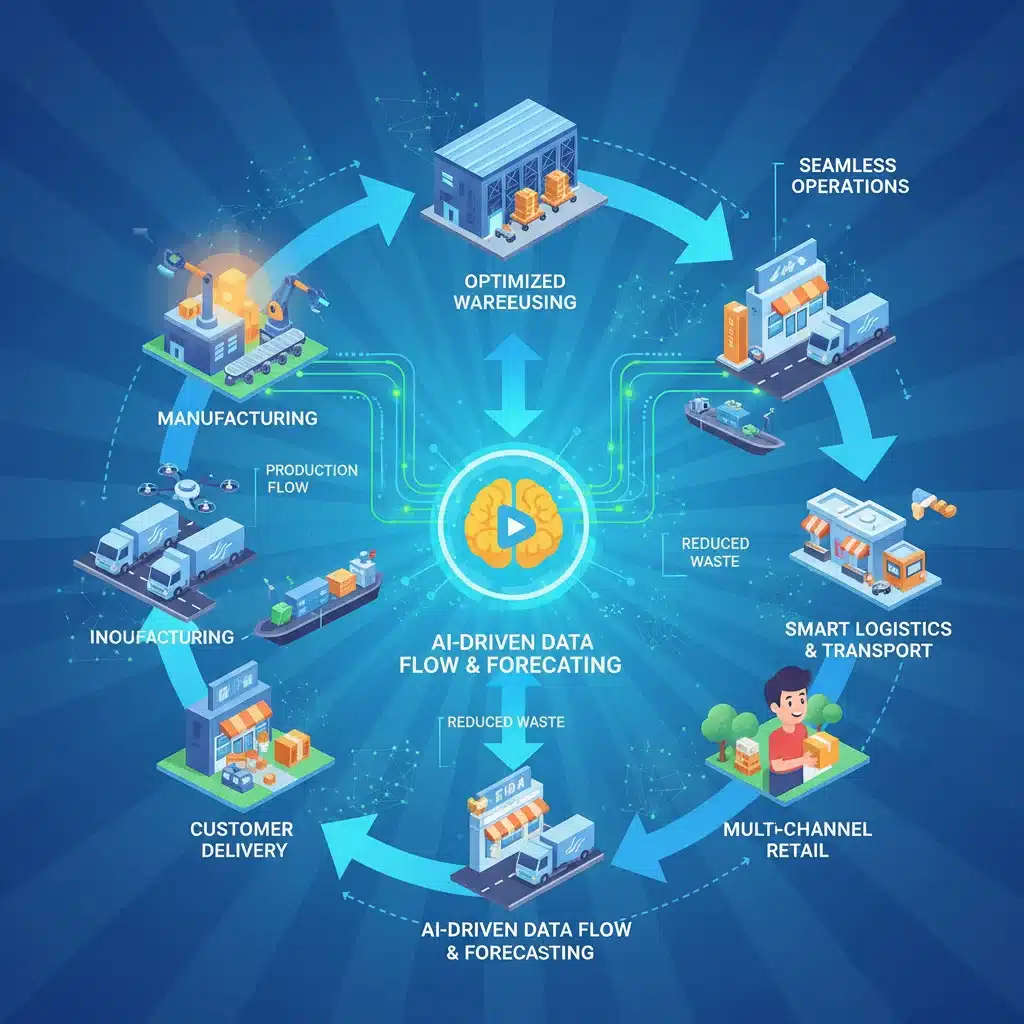
The interconnectedness of retail operations means that improvements in forecasting ripple through the entire supply chain, creating a more robust and resilient system.
4. Dynamic Pricing Strategies
AI enables retailers to implement dynamic pricing models that respond to real-time market conditions and predicted demand:
- Maximize revenue: Adjust prices up during periods of high demand and down during low demand to optimize revenue without resorting to aggressive markdowns.
- Competitive advantage: React swiftly to competitor pricing changes, maintaining a competitive edge.
- Clearance optimization: Strategically price end-of-season or expiring inventory to clear stock effectively while minimizing losses.
This agility in pricing can significantly boost profit margins, as every product is sold at its optimal price point.
5. Enhanced Customer Experience
While often seen as a back-end function, accurate forecasting profoundly impacts the customer experience:
- Product availability: Customers are less likely to encounter out-of-stock items, leading to fewer frustrations and higher satisfaction.
- Faster fulfillment: Optimized inventory and supply chain mean quicker order processing and delivery times.
- Relevant offers: Personalized recommendations based on predicted preferences make shopping more enjoyable and efficient.
- Freshness and quality: For perishable goods, better forecasting reduces spoilage, ensuring customers receive fresher products.
Ultimately, a smoother, more reliable shopping experience translates into increased customer loyalty and repeat business.
The Path to a 25% Increase in Forecasting Accuracy by 2026
Achieving a 25% uplift in sales forecasting accuracy is an ambitious yet attainable goal for US retailers willing to fully embrace AI in retail analytics. This journey involves several critical steps:
1. Data Infrastructure and Integration
The foundation of any successful AI initiative is robust data. Retailers must invest in:
- Data lakes/warehouses: Centralized repositories to store vast amounts of structured and unstructured data from all internal and external sources.
- Data integration tools: Solutions to seamlessly connect disparate systems (POS, CRM, e-commerce, ERP) and standardize data formats.
- Data quality management: Processes and tools to clean, validate, and enrich data, ensuring its accuracy and reliability for ML models.
Garbage in, garbage out applies rigorously to AI. High-quality, integrated data is paramount.
2. Selection and Implementation of AI/ML Platforms
Retailers need to choose the right AI/ML platforms and tools. This could involve:
- Cloud-based AI services: Platforms like AWS Sagemaker, Google AI Platform, or Microsoft Azure Machine Learning offer scalable, pre-built ML services and infrastructure.
- Specialized retail AI solutions: Vendors offering industry-specific AI solutions tailored for retail forecasting.
- In-house data science teams: Building and training internal teams capable of developing, deploying, and maintaining custom ML models.
The choice depends on the retailer’s size, resources, and specific needs, but the trend is towards hybrid approaches leveraging both off-the-shelf and custom solutions.
3. Model Training, Validation, and Iteration
Implementing AI in retail analytics is an iterative process:
- Feature engineering: Identifying and creating relevant features from raw data that will best inform the ML models (e.g., creating a ‘days since last promotion’ feature).
- Model selection: Experimenting with different ML algorithms to find the best fit for specific product categories, sales channels, or time horizons.
- Hyperparameter tuning: Optimizing the internal settings of ML models to maximize their performance.
- Continuous monitoring: Regularly evaluating model performance against actual sales, identifying drift, and retraining models with new data to maintain accuracy.
- A/B testing: Comparing AI-driven forecasts against traditional methods or different AI models to empirically validate improvements.
This continuous learning loop ensures that the AI models remain relevant and accurate in a dynamic retail environment.
4. Organizational Change Management and Skill Development
Technology alone is insufficient. Successful adoption of AI in retail analytics requires:
- Cross-functional collaboration: Fostering cooperation between IT, data science, merchandising, marketing, and supply chain teams.
- Upskilling employees: Training staff on how to interpret AI-generated insights, interact with AI tools, and adapt their workflows.
- Leadership buy-in: Strong commitment from senior management to champion AI initiatives and allocate necessary resources.
- Data-driven culture: Shifting the organizational mindset towards making decisions based on data and AI insights rather than intuition alone.
The human element remains crucial for the successful integration and maximization of AI’s potential.
Challenges and Considerations
While the benefits are clear, implementing AI in retail analytics for forecasting is not without its challenges:
- Data privacy and security: Handling vast amounts of customer data requires strict adherence to privacy regulations (e.g., CCPA) and robust cybersecurity measures.
- Model interpretability: Some advanced ML models (e.g., deep neural networks) can be ‘black boxes,’ making it difficult to understand why a particular prediction was made. This can be a hurdle for gaining trust and making informed business decisions.
- Integration complexity: Integrating new AI systems with legacy IT infrastructure can be complex and costly.
- Cost of implementation: Initial investment in technology, talent, and infrastructure can be substantial.
- Ethical considerations: Ensuring fairness and avoiding bias in AI models, particularly when they influence pricing or personalized recommendations.
Addressing these challenges proactively is key to a smooth and successful AI adoption journey.
Real-World Impact and Future Outlook
Retailers globally are already experiencing the profound impact of AI in retail analytics. Major players like Amazon, Walmart, and Target continuously refine their forecasting capabilities using advanced ML, leading to highly optimized operations and competitive pricing. Smaller and mid-sized retailers are increasingly adopting accessible cloud-based AI solutions to level the playing field.
By 2026, the 25% increase in sales forecasting accuracy will translate into tangible benefits across the US retail sector:
- Significant cost savings: Reduced inventory holding costs, minimized waste, and optimized logistics will free up substantial capital.
- Higher profit margins: Dynamic pricing and targeted promotions will lead to increased revenue and improved profitability.
- Enhanced competitiveness: Retailers with superior forecasting will be more agile, responsive, and better positioned to meet evolving consumer demands.
- Sustainable practices: Reduced waste from overproduction and efficient resource allocation contribute to more environmentally friendly operations.
- Superior customer loyalty: Consistent product availability and personalized experiences will foster stronger customer relationships.
The future of retail is intrinsically linked to the intelligent use of data. AI in retail analytics, particularly through machine learning, is not just a technological advancement; it’s a strategic imperative that will redefine success in the coming years. Retailers who embrace this transformation will not only achieve a 25% increase in forecasting accuracy but will also build more resilient, profitable, and customer-centric businesses.
Conclusion
The journey towards a 25% increase in US sales forecasting accuracy by 2026, powered by AI in retail analytics, is an exciting and challenging one. It demands a commitment to data, technology, and organizational change. However, the rewards—optimized inventory, smarter marketing, streamlined supply chains, and ultimately, a superior customer experience—are too significant to ignore. As AI continues to mature and become more accessible, its role in shaping the future of retail will only grow, cementing its position as the indispensable tool for navigating the complexities of the modern marketplace. Retailers who invest now in AI-driven forecasting will not just predict the future; they will actively shape it, securing a competitive edge and driving sustainable growth in an ever-evolving industry.