Data-Driven Merchandising: Boost AOV by 12% with Predictive Analytics
Data-Driven Merchandising: Increasing Average Order Value by 12% with Predictive Analytics
In today’s hyper-competitive retail landscape, simply stocking products is no longer enough. To truly thrive, businesses must move beyond traditional merchandising and embrace a data-driven approach. Specifically, leveraging predictive analytics merchandising can be a game-changer, with studies showing it can lead to significant improvements, such as a 12% increase in Average Order Value (AOV). This comprehensive guide will delve into how predictive analytics transforms merchandising, offering actionable strategies to elevate your retail performance and enhance customer experiences.
The Evolution of Merchandising: From Intuition to Data
For decades, merchandising decisions were largely based on gut feelings, historical sales data, and seasonal trends. While these methods had their place, they often lacked the precision and foresight needed to truly optimize product placement, pricing, and promotions. The advent of big data and advanced analytical tools has ushered in a new era: data-driven merchandising. This paradigm shift empowers retailers to make informed decisions, anticipate customer needs, and proactively shape their product offerings.
At its core, data-driven merchandising involves collecting, analyzing, and interpreting vast amounts of data related to customer behavior, sales patterns, inventory levels, and market trends. This data provides a comprehensive view of what’s working, what’s not, and what opportunities lie ahead. When combined with predictive analytics, this approach becomes even more powerful, allowing businesses to not just react to data, but to anticipate future outcomes.
What is Predictive Analytics Merchandising?
Predictive analytics merchandising is the application of statistical algorithms and machine learning techniques to historical and real-time data to forecast future outcomes. In the context of merchandising, this means predicting which products customers are most likely to buy, what price points will maximize sales and profitability, and which promotions will resonate most effectively. It’s about moving from ‘what happened?’ to ‘what will happen?’ and ‘what can we do about it?’.
This sophisticated approach allows retailers to:
- Personalize Recommendations: Offer highly relevant product suggestions based on individual browsing and purchase history.
- Optimize Inventory: Forecast demand more accurately, reducing overstocking and stockouts.
- Dynamic Pricing: Adjust prices in real-time based on demand, competitor pricing, and inventory levels.
- Strategic Product Placement: Determine the optimal placement of products online and in-store to maximize visibility and sales.
- Effective Promotions: Identify the most impactful promotions and target them to the right customer segments.
The Path to a 12% AOV Increase: Key Strategies
Achieving a significant increase in Average Order Value, such as the 12% often cited, requires a multi-faceted approach centered around effective predictive analytics merchandising. Here are the key strategies:
1. Hyper-Personalization Through Customer Segmentation
The foundation of effective predictive analytics is understanding your customer. By segmenting your customer base into granular groups based on demographics, purchase history, browsing behavior, and psychographics, you can deliver highly personalized experiences. Predictive models can identify patterns within these segments to forecast future purchasing behavior.
- Behavioral Segmentation: Group customers by their actions (e.g., frequent buyers, window shoppers, bargain hunters). Predictive models can then suggest products tailored to these behaviors.
- Demographic and Psychographic Segmentation: Combine traditional demographic data with insights into customer lifestyles and values to create richer profiles.
- Lifecycle Segmentation: Understand where customers are in their journey (new, loyal, at-risk) and tailor offers accordingly. Predictive analytics can even forecast churn risk.
Once segments are defined, predictive algorithms can recommend products, content, and offers that resonate most with each group, increasing the likelihood of additional purchases and thus AOV.
2. Intelligent Product Recommendations and Bundling
This is perhaps the most direct way predictive analytics merchandising impacts AOV. Instead of generic ‘customers also bought’ suggestions, predictive models can offer truly intelligent recommendations.
- Cross-Selling: Suggest complementary products that enhance the value of the primary item a customer is considering (e.g., a phone case with a new smartphone). Predictive models analyze historical purchase data to identify frequently bought-together items.
- Up-Selling: Offer a higher-end or more feature-rich version of a product the customer is viewing (e.g., a premium subscription tier). Predictive analytics can identify customers most likely to upgrade based on their past spending habits and engagement.
- Product Bundling: Create attractive packages of related items at a slightly reduced price. Predictive models can identify optimal product combinations that appeal to specific customer segments and maximize perceived value.
By presenting highly relevant items at the right moment, retailers encourage customers to add more to their carts, directly boosting AOV.
3. Dynamic Pricing and Promotions
Static pricing can leave money on the table. Predictive analytics merchandising enables dynamic pricing strategies that adjust prices in real-time based on a multitude of factors, including:
- Demand Fluctuations: Increase prices for high-demand items and decrease for slow-moving inventory.
- Competitor Pricing: Automatically adjust prices to remain competitive while maximizing profit margins.
- Customer Behavior: Offer personalized discounts or promotions to specific customers identified as price-sensitive or on the verge of conversion.
- Inventory Levels: Use predictive models to clear excess stock efficiently or capitalize on scarcity.
Similarly, predictive models can optimize promotions by identifying which offers (e.g., ‘buy one get one free’, ‘20% off’, ‘free shipping’) resonate most with different customer segments, at what times, and for which products, ensuring maximum impact on AOV without eroding profit margins unnecessarily.
4. Optimized Product Placement and Search
Whether in a physical store or an e-commerce platform, where products are placed significantly impacts their visibility and sales. Predictive analytics merchandising can optimize this placement:
- E-commerce Product Listing: Determine the optimal order of products on category pages, search results, and homepages based on predicted customer engagement and conversion rates.
- In-Store Layout: For brick-and-mortar, analyze foot traffic patterns and purchase data to strategically place high-margin or complementary items near popular products.
- Search Optimization: Enhance internal search capabilities by understanding natural language queries and predicting which products users are truly looking for, even with imperfect search terms. This reduces friction and increases conversion.
By making it easier for customers to find and discover relevant products, retailers can encourage larger purchases.
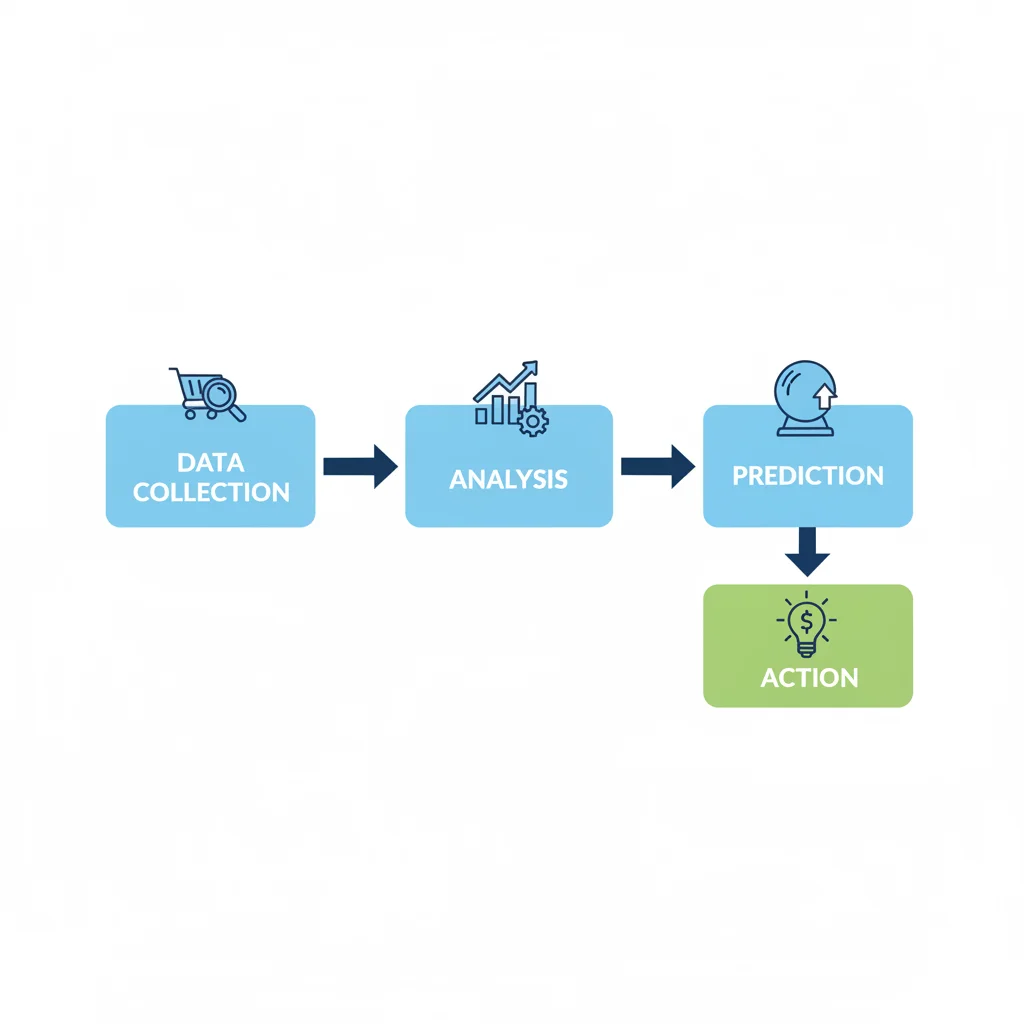
Implementing Predictive Analytics Merchandising: A Step-by-Step Guide
Successfully integrating predictive analytics merchandising into your operations requires a structured approach. Here’s a roadmap:
Step 1: Data Collection and Integration
The first and most crucial step is to gather all relevant data. This includes:
- Customer Data: Purchase history, browsing behavior, demographics, loyalty program data, wish lists, abandoned carts.
- Product Data: SKUs, categories, descriptions, images, pricing history, inventory levels, supplier information.
- Transactional Data: Sales records, returns, order values, payment methods.
- Marketing Data: Campaign performance, ad clicks, email engagement.
- External Data: Competitor pricing, market trends, seasonal forecasts, social media sentiment.
This data needs to be integrated into a centralized system (e.g., a data warehouse or data lake) to ensure it’s clean, consistent, and accessible for analysis.
Step 2: Choosing the Right Tools and Technologies
Implementing predictive analytics merchandising requires specialized tools. These can range from:
- Business Intelligence (BI) Platforms: For data visualization and basic reporting.
- Machine Learning Platforms: Cloud-based services (AWS SageMaker, Google AI Platform, Azure Machine Learning) or open-source libraries (TensorFlow, Scikit-learn) for building and deploying models.
- E-commerce Personalization Engines: Dedicated solutions that integrate predictive analytics for recommendations, dynamic content, and A/B testing.
- Demand Forecasting Software: Specialized tools for inventory and sales predictions.
The choice of tools will depend on your budget, existing infrastructure, and internal data science capabilities.
Step 3: Model Development and Training
This is where data scientists and analysts come in. They will:
- Define Objectives: Clearly articulate what you want to predict (e.g., next purchase, probability of responding to an offer, optimal price).
- Feature Engineering: Select and transform raw data into features that are useful for machine learning models.
- Algorithm Selection: Choose appropriate algorithms (e.g., collaborative filtering for recommendations, regression for pricing, classification for churn prediction).
- Model Training and Validation: Train models on historical data and rigorously test them for accuracy and performance.
Iterative refinement is key here; models need to be continuously improved as more data becomes available.
Step 4: Integration and Deployment
Once models are trained and validated, they need to be integrated into your existing systems. This means connecting the predictive engine to your:
- E-commerce Platform: For real-time recommendations, dynamic pricing adjustments, and personalized content.
- CRM System: To inform sales and marketing teams with customer insights.
- Inventory Management System: For automated demand forecasting and replenishment.
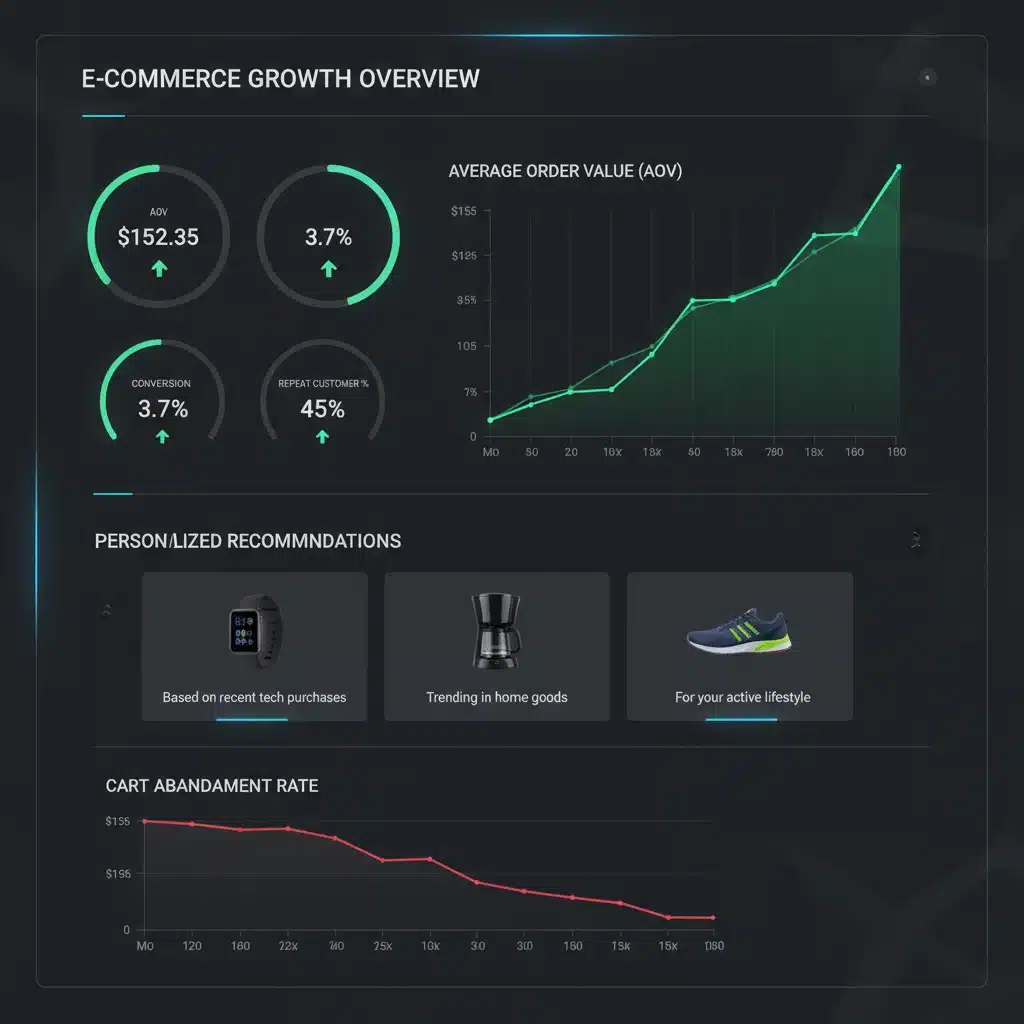
- Reporting Dashboards: To monitor the impact of predictive analytics on key metrics like AOV.
Seamless deployment ensures that the insights generated by predictive analytics merchandising are actionable and can influence customer interactions in real-time.
Step 5: Monitoring, Evaluation, and Iteration
Predictive analytics merchandising is not a one-time setup; it’s an ongoing process. You must continuously monitor the performance of your models and strategies:
- Track Key Metrics: Regularly review AOV, conversion rates, customer lifetime value, inventory turnover, and profitability.
- A/B Testing: Experiment with different recommendation algorithms, pricing strategies, and promotional offers to identify what works best.
- Model Retraining: As customer behavior and market conditions evolve, models need to be retrained with fresh data to maintain accuracy.
- Feedback Loop: Gather feedback from sales, marketing, and customer service teams to identify areas for improvement.
This continuous cycle of improvement is what drives sustained gains, such as the impressive 12% AOV increase, and ensures your merchandising strategy remains agile and effective.
Real-World Impact and Case Studies
The theoretical benefits of predictive analytics merchandising are compelling, but its real-world impact is even more so. Leading retailers across various sectors have successfully leveraged these techniques to achieve significant improvements:
- Fashion Retailers: Many online fashion brands use predictive analytics to recommend outfits, suggest sizes based on past purchases, and forecast trends, leading to higher average basket sizes and reduced returns.
- Grocery Stores: Supermarket chains employ predictive models to optimize shelf placement, personalize weekly promotions, and manage perishable inventory, resulting in less waste and increased sales per customer.
- Electronics Retailers: Companies selling electronics use predictive analytics to cross-sell accessories, offer extended warranties, and dynamically price products based on competitive intelligence, directly impacting AOV.
- Subscription Services: Streaming platforms and subscription box companies use predictive insights to recommend content or products, predict churn, and tailor upgrade offers, thereby increasing customer lifetime value and the average monthly spend.
These examples underscore the versatility and power of predictive analytics in driving tangible business outcomes, with a 12% AOV increase being a very achievable benchmark for those who implement these strategies effectively.
Challenges and Considerations
While the benefits are clear, implementing predictive analytics merchandising isn’t without its challenges:
- Data Quality: ‘Garbage in, garbage out’ applies here. Poor data quality can lead to inaccurate predictions and flawed strategies. Investing in data governance and cleaning is crucial.
- Talent Gap: Building and maintaining predictive models requires skilled data scientists and analysts, which can be a challenge to hire and retain.
- Integration Complexity: Integrating new predictive systems with legacy IT infrastructure can be complex and time-consuming.
- Ethical Considerations: Ensuring data privacy and avoiding discriminatory practices in personalization is paramount. Transparency with customers about data usage builds trust.
- Cost: Initial investment in technology, talent, and infrastructure can be substantial, though the ROI often justifies it.
Addressing these challenges proactively is essential for a successful implementation of predictive analytics merchandising.
The Future of Merchandising: AI and Beyond
The journey of predictive analytics merchandising is far from over. As artificial intelligence (AI) continues to advance, we can expect even more sophisticated capabilities:
- Generative AI for Product Content: AI could soon generate personalized product descriptions, marketing copy, and even visual content tailored to individual customer preferences.
- Autonomous Merchandising: Systems that can automatically adjust pricing, promotions, and product displays based on real-time data and predicted outcomes, with minimal human intervention.
- Voice Commerce Optimization: Predictive models will play a crucial role in optimizing product discovery and recommendations for voice-activated shopping platforms.
- Immersive Shopping Experiences: Integrating predictive analytics into AR/VR environments to offer hyper-personalized virtual try-ons and product explorations.
The future promises a retail environment where merchandising is not just data-driven but truly intelligent, anticipating and shaping customer demand in unprecedented ways.
Conclusion
In conclusion, predictive analytics merchandising is no longer a luxury but a necessity for retailers aiming to thrive in the modern market. By harnessing the power of data to forecast customer behavior, optimize product strategies, and personalize experiences, businesses can unlock significant growth. The potential for a 12% increase in Average Order Value is a compelling testament to its efficacy, driving not just higher revenues but also deeper customer engagement and loyalty. Embracing this data-driven revolution requires strategic investment, a commitment to continuous learning, and a willingness to innovate, but the rewards—in terms of profitability and competitive advantage—are unequivocally worth the effort.
Start your journey today towards smarter, more profitable merchandising by integrating predictive analytics into the core of your retail strategy.