
Content Marketing That Converts: 4 Data-Backed Strategies for US Audiences in 2026
In the rapidly evolving digital landscape of 2026, content marketing remains the cornerstone of successful digital strategies. However, merely creating content is no longer enough. To truly stand out and drive measurable business outcomes, marketers must focus on content marketing conversion. This means crafting content that not only engages but also compels the audience to take a desired action, whether it’s making a purchase, signing up for a newsletter, or requesting a demo.
The United States market, with its diverse demographics and sophisticated digital consumers, presents unique challenges and opportunities. Understanding the nuances of this audience and leveraging data-backed strategies is paramount. This comprehensive guide will explore four essential, data-driven strategies designed to optimize your content marketing conversion efforts specifically for US audiences in 2026. We will delve into how to identify your target audience with precision, personalize content for maximum impact, leverage interactive formats, and measure your success with advanced analytics.
The Evolving Landscape of Content Marketing in the US: Why Data is Your Best Friend
The US digital consumer of 2026 is more discerning, tech-savvy, and privacy-conscious than ever before. Generic, one-size-all content simply won’t cut it. Brands are competing not just for attention but for trust and loyalty. This makes data-backed content strategy not just a best practice, but a necessity for achieving high content marketing conversion rates.
Data provides invaluable insights into consumer behavior, preferences, pain points, and decision-making processes. By analyzing user data, market trends, and competitive intelligence, marketers can move beyond guesswork and create content that resonates deeply, addresses specific needs, and guides users seamlessly through the sales funnel. From understanding search intent to predicting future trends, data empowers every stage of the content creation and distribution process, directly impacting your ability to achieve significant content marketing conversion.
Understanding the US Digital Consumer in 2026
- Hyper-connected: The average US adult spends several hours a day online, across multiple devices. Content needs to be optimized for mobile-first consumption and seamless cross-device experiences.
- Information Overload: Consumers are bombarded with content. To stand out, your content must be exceptionally valuable, relevant, and easy to digest.
- Privacy-Aware: With increasing data privacy regulations and consumer awareness, transparency and ethical data usage are critical for building trust.
- Demand for Authenticity: Consumers prefer brands that are genuine, transparent, and align with their values. Authentic storytelling drives engagement and conversions.
- Personalization Expectation: Generic content is often ignored. Users expect personalized experiences based on their past interactions and stated preferences.
These characteristics underscore the importance of a data-driven approach to content marketing. Let’s dive into the strategies that will help you master content marketing conversion in this dynamic environment.
Strategy 1: Hyper-Targeted Audience Segmentation and Persona Development
The first step to achieving significant content marketing conversion is knowing exactly who you’re talking to. In 2026, basic demographic segmentation is insufficient. You need to delve into psychographics, behavioral patterns, and intent data to create truly hyper-targeted audience segments and detailed buyer personas.
Leveraging Advanced Analytics for Deeper Insights
Utilize tools like Google Analytics 4 (GA4), CRM data, social media insights, and third-party data providers to gather comprehensive information about your existing and potential customers. Look beyond surface-level metrics to understand:
- Demographics: Age, gender, income, location (still relevant, but not enough).
- Psychographics: Interests, values, attitudes, lifestyle choices, personality traits. What motivates them? What are their aspirations?
- Behavioral Data: Website visit history, pages viewed, content consumed, search queries, purchase history, email open rates, social media engagement.
- Pain Points and Challenges: What problems are they trying to solve? What frustrations do they experience?
- Goals and Aspirations: What do they hope to achieve? How can your product/service help them get there?
- Content Consumption Habits: What types of content do they prefer (blogs, videos, podcasts, infographics)? Which platforms do they frequent?
Developing Granular Buyer Personas
Once you have this data, create 3-5 detailed buyer personas. These aren’t just fictional characters; they are data-informed representations of your ideal customers. Each persona should include:
- A name and demographic details.
- Job title and responsibilities (if B2B).
- Key pain points and challenges.
- Goals and motivations.
- Preferred communication channels and content formats.
- Objections to purchasing your product/service.
- A quote that encapsulates their mindset.
By developing these granular personas, you can tailor your content to address specific needs and interests, making it far more likely to resonate and drive content marketing conversion. For example, a persona for a busy small business owner will require concise, actionable content, while a technical professional might prefer in-depth whitepapers and data-rich articles.
Strategy 2: Personalized Content Journeys and Dynamic Delivery
With precise audience segmentation, the next step for boosting content marketing conversion is to deliver highly personalized content. In 2026, this goes beyond simply using a customer’s first name in an email. It involves creating dynamic content journeys that adapt in real-time based on user behavior and preferences.
Mapping Content to the Customer Journey
Every piece of content should serve a purpose within the customer journey. From awareness to consideration, decision, and even post-purchase loyalty, content needs to guide the user towards the next logical step. This is where a robust content map comes into play.
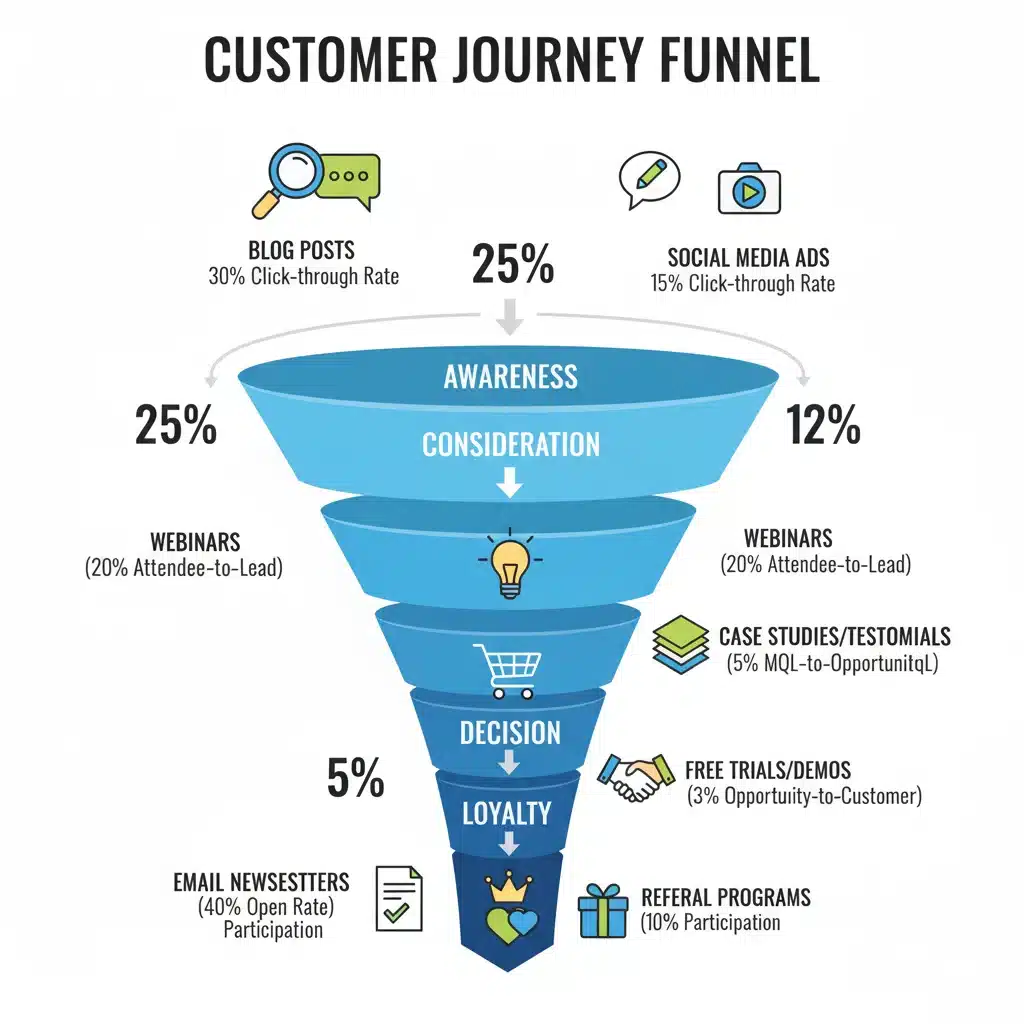
- Awareness Stage: Blog posts, infographics, short videos, social media content addressing broad pain points and introducing solutions. Goal: Attract attention and educate.
- Consideration Stage: E-books, webinars, detailed guides, comparison articles, expert interviews. Goal: Provide deeper insights and establish authority.
- Decision Stage: Case studies, testimonials, product demos, free trials, pricing guides, FAQs. Goal: Overcome objections and build confidence for purchase.
- Retention/Loyalty Stage: How-to guides, advanced tips, community forums, exclusive content, customer support resources. Goal: Enhance user experience and encourage repeat business.
Implementing Dynamic Content Delivery
Modern marketing automation platforms (MAPs) and Content Management Systems (CMS) offer capabilities for dynamic content delivery. This means:
- Website Personalization: Displaying different headlines, calls-to-action (CTAs), or product recommendations based on a visitor’s past browsing history, geographic location, or persona.
- Email Nurturing Sequences: Automated email campaigns that deliver specific content based on a user’s interactions with previous emails or website behavior. For instance, if a user downloads an e-book on ‘SEO for Beginners,’ subsequent emails can offer advanced SEO tips or related services.
- Retargeting Ads: Showing relevant ads on social media or other websites to users who have previously interacted with your content but haven’t converted.
- Interactive Content: Quizzes, polls, calculators, and interactive infographics that gather user data in real-time and provide personalized results or recommendations, directly boosting content marketing conversion by engaging users more deeply.
Personalization at scale is key to transforming passive readers into active leads and ultimately, loyal customers. It shows your audience that you understand their unique needs, building trust and rapport.
Strategy 3: Leveraging Interactive Content and Emerging Formats
In 2026, static content struggles to compete for attention. To truly capture the US audience and drive content marketing conversion, brands must embrace interactive content and experiment with emerging formats that offer immersive and engaging experiences.
The Power of Interactive Content
Interactive content isn’t just entertaining; it’s highly effective for data collection, lead generation, and improving content marketing conversion rates. When users actively participate, they invest more time and attention, leading to better recall and a stronger connection with your brand.
- Quizzes and Assessments: Engage users by testing their knowledge or providing personalized insights. These are excellent for lead generation, as users often provide contact information to receive results.
- Calculators: Offer practical tools that help users solve problems or estimate costs/benefits related to your product/service. For example, a ‘ROI calculator’ for a software company.
- Interactive Infographics and Data Visualizations: Allow users to explore data at their own pace, filtering information and uncovering insights relevant to them.
- Polls and Surveys: Directly gather audience opinions and preferences, making them feel heard and providing valuable first-party data.
- Interactive E-books and Whitepapers: Enhance traditional long-form content with embedded videos, quizzes, and clickable elements.
These formats not only keep users engaged longer but also provide valuable data points about their preferences and needs, which can be fed back into your personalization efforts.
Embracing Emerging Content Formats
Beyond traditional interactive content, keep an eye on and experiment with these emerging formats:
- Short-Form Video (e.g., TikTok, Instagram Reels): Highly popular among US audiences, especially younger demographics. Use it for quick tips, behind-the-scenes content, product showcases, and direct calls to action.
- Live Streaming and Webinars 2.0: More interactive live sessions with Q&A, polls, and direct product demonstrations. These build community and real-time engagement.
- Audio Content (Podcasts, Audio Blogs): Cater to on-the-go consumption. Podcasts continue to grow in popularity in the US, offering a deep dive into topics for engaged listeners.
- Augmented Reality (AR) Experiences: For brands with suitable products, AR can offer immersive product previews (e.g., virtual try-ons for fashion, furniture placement in homes). While still nascent for many, it’s a powerful tool for specific niches to drive content marketing conversion.
- AI-Generated and AI-Assisted Content: While AI won’t replace human creativity, it can significantly enhance content creation by generating drafts, optimizing headlines, and personalizing content at scale. Marketers must learn to leverage AI tools responsibly and ethically to maintain authenticity and quality.
Staying ahead of the curve with content formats ensures your brand remains fresh, relevant, and capable of capturing the attention of the diverse US audience, directly influencing your content marketing conversion success.
Strategy 4: Data-Driven Optimization and A/B Testing for Continuous Improvement
Content marketing is not a set-it-and-forget-it endeavor. To continuously improve your content marketing conversion rates, you must adopt a rigorous cycle of data analysis, optimization, and A/B testing. In 2026, this process is more sophisticated than ever, thanks to advanced analytics and AI tools.
Key Metrics for Content Conversion
Focus on metrics that directly correlate with your conversion goals, beyond just vanity metrics like page views. Essential metrics include:
- Conversion Rate: The percentage of users who complete a desired action (e.g., purchase, sign-up) after interacting with your content.
- Lead-to-Customer Rate: How many leads generated by content ultimately become paying customers.
- Time on Page/Engagement Rate: While not a direct conversion, higher engagement often indicates content relevance and can precede conversion.
- Bounce Rate: A high bounce rate on a key conversion page might indicate a mismatch between content and user intent or a poor user experience.
- Click-Through Rate (CTR) on CTAs: Measures the effectiveness of your calls-to-action within content.
- Attribution Models: Understand which content pieces contribute at different stages of the customer journey, not just the last touchpoint. Multi-touch attribution is crucial.
Implementing A/B Testing and Multivariate Testing
A/B testing is fundamental for optimizing content elements. Test different:
- Headlines: Which headline drives more clicks or engagement?
- CTAs: Different wording, placement, color, and size of CTAs.
- Content Formats: Does a video explain better than text for a specific topic?
- Landing Page Layouts: How does the design and flow of a landing page impact conversion?
- Image/Video Thumbnails: Which visuals attract more attention?
- Email Subject Lines: Which subject lines lead to higher open rates and subsequent engagement?
For more complex scenarios, multivariate testing allows you to test multiple variables simultaneously, identifying the optimal combination of elements for maximum content marketing conversion.
Leveraging AI and Predictive Analytics
In 2026, AI tools can dramatically enhance your optimization efforts:
- Predictive Analytics: AI can analyze historical data to predict which content types, topics, or distribution channels are most likely to lead to conversions for specific audience segments.
- Content Audits and Gap Analysis: AI can quickly scan your existing content library, identify underperforming assets, and suggest new content opportunities based on search trends and competitor analysis.
- Automated Personalization: AI algorithms can dynamically adjust website content or ad creatives in real-time based on individual user behavior, maximizing the chance of content marketing conversion.
- Sentiment Analysis: Understand how your audience feels about your content and brand through social media listening and review analysis, allowing for proactive adjustments.

By continuously analyzing data, running experiments, and leveraging advanced technologies, you can refine your content strategy, eliminate inefficiencies, and ensure your content marketing efforts are consistently driving higher conversions.
The Future of Content Marketing Conversion for US Audiences
The landscape of content marketing conversion for US audiences in 2026 is defined by precision, personalization, and performance. Brands that succeed will be those that move beyond generic content creation and embrace a data-first approach to understanding, engaging, and converting their audience.
The four strategies outlined – hyper-targeted audience segmentation, personalized content journeys, leveraging interactive and emerging formats, and data-driven optimization – are not isolated tactics but interconnected pillars of a robust content marketing ecosystem. They demand a commitment to continuous learning, adaptation, and investment in the right technologies and talent.
Building Trust and Authority
Beyond the technical strategies, remember that at the heart of every successful content marketing conversion is trust. US consumers are increasingly wary of misinformation and superficial marketing. Your content must establish your brand as a credible, authoritative, and helpful resource. This means:
- Accuracy and Reliability: Ensure all information is fact-checked and up-to-date. Cite credible sources.
- Transparency: Be open about your brand’s values, processes, and any sponsored content.
- Thought Leadership: Provide unique insights, original research, and expert opinions that differentiate you from competitors.
- Consistency: Maintain a consistent brand voice, tone, and quality across all content channels.
When consumers trust your brand, they are more likely to engage with your content, perceive it as valuable, and ultimately, convert into loyal customers. This long-term relationship building is critical for sustainable growth and maximizing your content marketing conversion ROI.
Conclusion: Mastering Content Marketing Conversion in 2026
The journey to mastering content marketing conversion for US audiences in 2026 is dynamic and challenging, but immensely rewarding. By diligently applying data-backed strategies, you can transform your content from a mere presence to a powerful engine for business growth.
Start by deeply understanding your audience through advanced segmentation. Then, craft personalized content journeys that speak directly to their needs at every stage. Embrace interactive and emerging formats to capture attention and foster deeper engagement. Finally, commit to a cycle of continuous optimization through data analysis and A/B testing, leveraging AI to gain a competitive edge.
The brands that prioritize these strategies will not only see higher conversion rates but will also build stronger, more resilient relationships with their US customers, positioning themselves for sustained success in the years to come. The future of content marketing is here, and it’s driven by data, personalization, and an unwavering focus on conversion.