
Guide to Receiving Shein Products for Free
Learn How to Review New Products, Earn Benefits, and Build a Strong Reputation as a Trusted Evaluator.

How to Receive Free Products at Home
A Complete Guide to Increasing Your Approval Odds, Standing Out as a Candidate, and Helping Influence Upcoming Products.

Hyper-Personalized Retail: The 2026 Shopper Demand
By 2026, a significant portion of US shoppers will expect hyper-personalized retail experiences. This article explores the drivers behind this demand and offers strategies for retailers to meet these evolving consumer expectations.

3% US GDP Growth & 2025 E-commerce Spending Impact
A projected 3% US GDP growth in 2025 is expected to significantly boost e-commerce spending, driven by increased consumer confidence, higher disposable income, and technological advancements, reshaping the digital retail landscape.

Customer Loyalty Programs: Boost U.S. E-commerce Repeat Purchases by 10% in 2025
Effective customer loyalty programs are pivotal for U.S. e-commerce businesses aiming to increase repeat purchases by 10% in 2025, driving sustainable growth and fostering stronger customer relationships through data-driven strategies.

Personalization at Scale: Boost U.S. E-commerce AOV by 6% in 2025
Achieving personalization at scale is crucial for U.S. e-commerce brands, with data-driven strategies projected to increase Average Order Value (AOV) by 6% in 2025 by delivering highly relevant customer experiences.

Sustainability in E-commerce: U.S. Consumer Preferences & 2025 Growth
U.S. consumer preferences are increasingly prioritizing eco-friendly options, fueling a significant surge in sustainable e-commerce. Projections indicate a 10% increase in eco-conscious purchases by 2025, fundamentally reshaping market strategies and driving demand for environmentally responsible businesses.
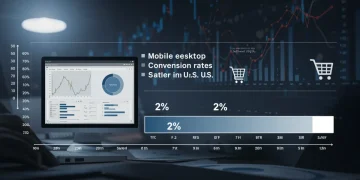
Mobile vs. Desktop Commerce: 2025 U.S. Conversion Gap Analysis
In 2025, U.S. e-commerce continues to exhibit a notable 2% conversion rate gap between mobile and desktop platforms, underscoring persistent challenges and opportunities for businesses prioritizing mobile optimization.

Data Privacy Regulations: U.S. E-commerce Compliance & 2025 Fines
U.S. e-commerce businesses face critical deadlines for data privacy compliance, with significant financial penalties looming in 2025 for non-adherence to evolving regulations.

Voice Commerce Adoption: 4% Projected U.S. Online Purchase Increase by 2025
Voice commerce adoption in the U.S. is set for significant growth, with a projected 4% increase in online purchases via voice assistants by 2025, driven by technological advancements and evolving consumer behaviors.