Mastering Google’s 2026 Core Web Vitals: 15% SEO Boost for US Retailers

In the rapidly evolving digital landscape, staying ahead of Google’s algorithm changes is not merely an option for U.S. retailers – it’s a necessity for survival and growth. The impending 2026 update to Google’s Core Web Vitals (CWV) is poised to be a game-changer, presenting both challenges and unprecedented opportunities. For forward-thinking U.S. retailers, mastering Core Web Vitals 2026 isn’t just about avoiding penalties; it’s about unlocking a potential 15% SEO performance boost, translating directly into increased visibility, traffic, and ultimately, revenue.
This comprehensive guide delves deep into what the 2026 Core Web Vitals update entails, why it’s more critical than ever for the U.S. retail sector, and provides actionable strategies to optimize your e-commerce platform. We’ll explore the nuances of each metric, offer practical implementation tips, and outline a roadmap for not just meeting, but exceeding Google’s expectations, ensuring your brand stands out in a crowded marketplace.
The Evolving Landscape: Why Core Web Vitals 2026 Matters More Than Ever
Google’s commitment to user experience (UX) has been a consistent theme in its algorithm updates. Core Web Vitals, first introduced as a ranking factor in 2021, are a set of specific, quantifiable metrics that measure a website’s overall page experience. They assess how users perceive the speed, responsiveness, and visual stability of a web page. Over the years, these metrics have become increasingly influential, and the 2026 update signals a further maturation and increased weighting of these critical factors.
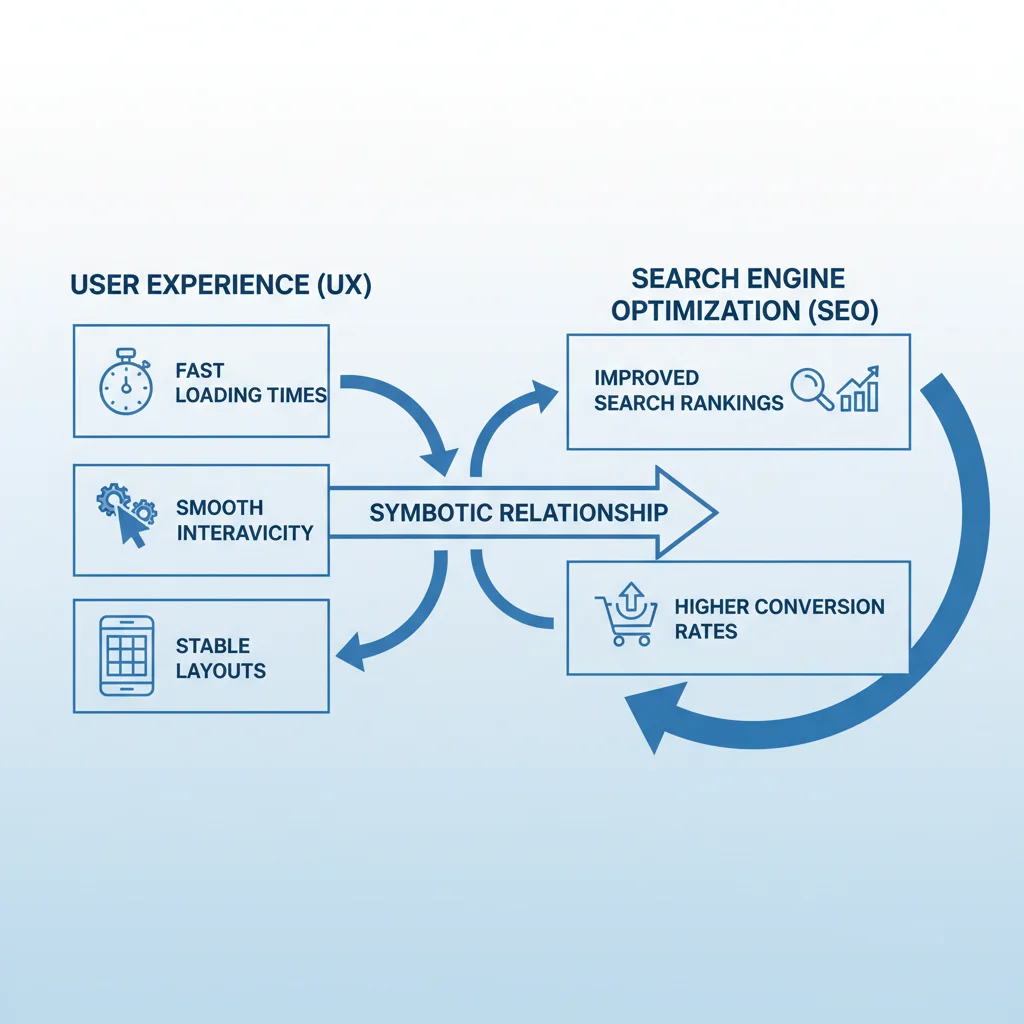
For U.S. retailers, this evolution is particularly significant. The e-commerce sector is intensely competitive, with consumer expectations for seamless online shopping experiences at an all-time high. A slow-loading page, an unresponsive button, or an unexpected layout shift can lead to immediate abandonment, lost sales, and a damaged brand reputation. Google’s 2026 update is designed to reward websites that prioritize these user experience elements, effectively making CWV a direct proxy for customer satisfaction in the eyes of the search engine.
The potential 15% SEO performance boost isn’t a mere estimation; it’s a reflection of the cumulative impact of improved rankings, higher click-through rates (CTRs) due to better page experience signals in search results, and reduced bounce rates. By aligning with Google’s vision for a better web, U.S. retailers can gain a significant competitive edge.
Key Changes and Anticipated Impact of Core Web Vitals 2026
While Google hasn’t fully revealed all specifics of the 2026 update, historical patterns suggest a refinement and potentially new metrics or stricter thresholds for existing ones. It’s crucial to understand the current Core Web Vitals and prepare for their likely evolution:
- Largest Contentful Paint (LCP): Measures loading performance. It’s the time it takes for the largest content element on the screen to become visible. For retail, this often means product images, hero banners, or key promotional content. A good LCP score is typically 2.5 seconds or less.
- First Input Delay (FID): Measures interactivity. It quantifies the time from when a user first interacts with a page (e.g., clicks a button, taps a link) to the time when the browser is actually able to respond to that interaction. A good FID score is 100 milliseconds or less.
- Cumulative Layout Shift (CLS): Measures visual stability. It quantifies the amount of unexpected layout shift of visual page content. Imagine clicking a button only for it to move just as you’re about to click, causing you to misclick. A good CLS score is 0.1 or less.
The 2026 update might introduce new metrics focusing on aspects like animation smoothness, overall page responsiveness beyond initial input, or even more nuanced content stability. Regardless of the exact changes, the underlying principle remains: deliver an exceptional user experience. For U.S. retailers, this means a rigorous focus on technical SEO, robust infrastructure, and continuous performance monitoring.
Deep Dive into Core Web Vitals: Understanding Each Metric for Retail Success
To truly master Core Web Vitals 2026, U.S. retailers must move beyond superficial understanding and embrace a granular approach to each metric.
1. Largest Contentful Paint (LCP): Speed is King for First Impressions
LCP is perhaps the most intuitive of the Core Web Vitals for e-commerce. In a retail context, the ‘largest contentful paint’ is often the star of the show: a high-resolution product image, a compelling promotional banner, or the main product description block. If these critical elements take too long to appear, users are likely to bounce, assuming the site is slow or broken. This directly impacts conversion rates and SEO.
Common LCP Offenders for Retail Sites:
- Large Image Files: Unoptimized product images, especially on category and product detail pages (PDPs), are a primary culprit.
- Slow Server Response Times: If your server is sluggish, every element, including the LCP, will be delayed. This is particularly problematic during peak shopping periods.
- Render-Blocking JavaScript and CSS: Scripts and stylesheets that block the main thread can prevent the browser from rendering content until they are fully loaded and parsed.
- Unoptimized Web Fonts: Large font files or inefficient font loading strategies can delay text rendering.
Optimization Strategies for LCP:
- Image Optimization: Implement responsive images (
srcset,sizes), compress images without losing quality (WebP is an excellent format), and lazy-load offscreen images. Use CDNs (Content Delivery Networks) to serve images from locations closer to your users. - Server Optimization: Upgrade hosting, optimize database queries, implement caching (browser, server, CDN), and consider a faster server-side language or framework if applicable.
- Minimize Render-Blocking Resources: Defer non-critical JavaScript, asynchronously load scripts, and inline critical CSS. Consider using tools like Google PageSpeed Insights and Lighthouse to identify these issues.
- Preload Critical Resources: Use
<link rel="preload">for critical fonts and images that are part of the LCP.
2. First Input Delay (FID): Ensuring a Responsive Shopping Journey
FID measures the time it takes for your site to respond to a user’s first interaction. For a retail site, this could be clicking a ‘Add to Cart’ button, opening a navigation menu, or typing into a search bar. A high FID means a user experiences a noticeable lag, leading to frustration and the perception of a broken or unresponsive site. While FID is a field metric (meaning it can only be measured with real user data), its underlying causes are often related to heavy JavaScript execution.
Common FID Offenders for Retail Sites:
- Heavy JavaScript Execution: E-commerce sites often rely heavily on JavaScript for dynamic content, filters, product carousels, and third-party integrations. If the main thread is busy executing large scripts, it can’t respond to user input.
- Long Tasks: Any task that takes more than 50 milliseconds to execute can contribute to input delay.
- Third-Party Scripts: Analytics, ad scripts, chatbots, and review widgets can significantly impact FID if not loaded efficiently.
Optimization Strategies for FID:
- Break Up Long JavaScript Tasks: Use techniques like code splitting and lazy loading to deliver smaller chunks of JavaScript.
- Minimize and Defer JavaScript: Audit all JavaScript, remove unused code, and defer non-critical scripts.
- Use Web Workers: Offload complex JavaScript computations to web workers to free up the main thread.
- Optimize Third-Party Scripts: Evaluate every third-party script. Load them asynchronously or defer them. Consider self-hosting critical scripts where possible to gain more control.
- Prioritize Main Thread Work: Ensure that user-facing interactions are given priority over background tasks.
3. Cumulative Layout Shift (CLS): Building Trust Through Stability
CLS is arguably the most frustrating of the Core Web Vitals for users. It quantifies unexpected layout shifts – when visible elements on a page move around without user initiation. Imagine trying to click ‘Buy Now’ only for an ad to load above it, pushing the button down, making you click something else entirely. This erodes trust and severely damages the user experience, leading to high abandonment rates.
Common CLS Offenders for Retail Sites:
- Images and Videos Without Dimensions: If the browser doesn’t know the dimensions of an image or video before it loads, it allocates space for it only after it’s downloaded, causing content below it to shift.
- Dynamically Injected Content: Ads, pop-ups, banners, or widgets that load after the initial page render can push existing content around.
- Web Fonts Causing FOIT/FOUT: Flash of Invisible Text (FOIT) or Flash of Unstyled Text (FOUT) can cause layout shifts when web fonts finally load and replace fallback fonts.
Optimization Strategies for CLS:
- Always Set Image and Video Dimensions: Specify
widthandheightattributes for all media elements, or use CSS aspect ratio boxes. - Reserve Space for Ads and Embedded Content: If you use ads or embed third-party content, reserve sufficient space for them in your layout.
- Preload Fonts and Use
font-display: Preload critical web fonts and usefont-display: optionalorswapto manage font loading behavior and minimize layout shifts. - Avoid Inserting Content Above Existing Content: If dynamic content must be inserted, ensure it doesn’t push existing content down. Place it in a dedicated space or use overlays.
- Use CSS Transforms for Animations: Animate properties that don’t trigger layout changes, such as
transform: translate()instead of changingtoporleft.
Strategic Roadmap for U.S. Retailers: Achieving the 15% SEO Boost
Achieving a 15% SEO performance boost from Core Web Vitals 2026 requires a structured, multi-faceted approach. It’s not a one-time fix but an ongoing commitment to excellence.
Phase 1: Audit and Baseline Assessment
Before optimizing, you need to know where you stand. This phase is critical for identifying specific pain points and setting measurable goals for Core Web Vitals 2026.
- Utilize Google Tools:
- PageSpeed Insights: Provides both lab (Lighthouse) and field (CrUX) data for your pages, highlighting specific CWV issues and offering recommendations.
- Google Search Console: The Core Web Vitals report in GSC shows aggregate performance for URLs on your site, categorizing them as ‘Good’, ‘Needs Improvement’, or ‘Poor’. This is your primary monitoring tool.
- Lighthouse: Can be run directly from Chrome DevTools for detailed, page-specific audits.
- Competitor Analysis: Benchmark your CWV scores against key competitors. This helps identify industry standards and potential competitive advantages.
- Identify Critical Pages: Focus your initial efforts on high-traffic pages, conversion funnels (product pages, checkout), and pages with poor CWV scores.
Phase 2: Technical Optimization & Implementation
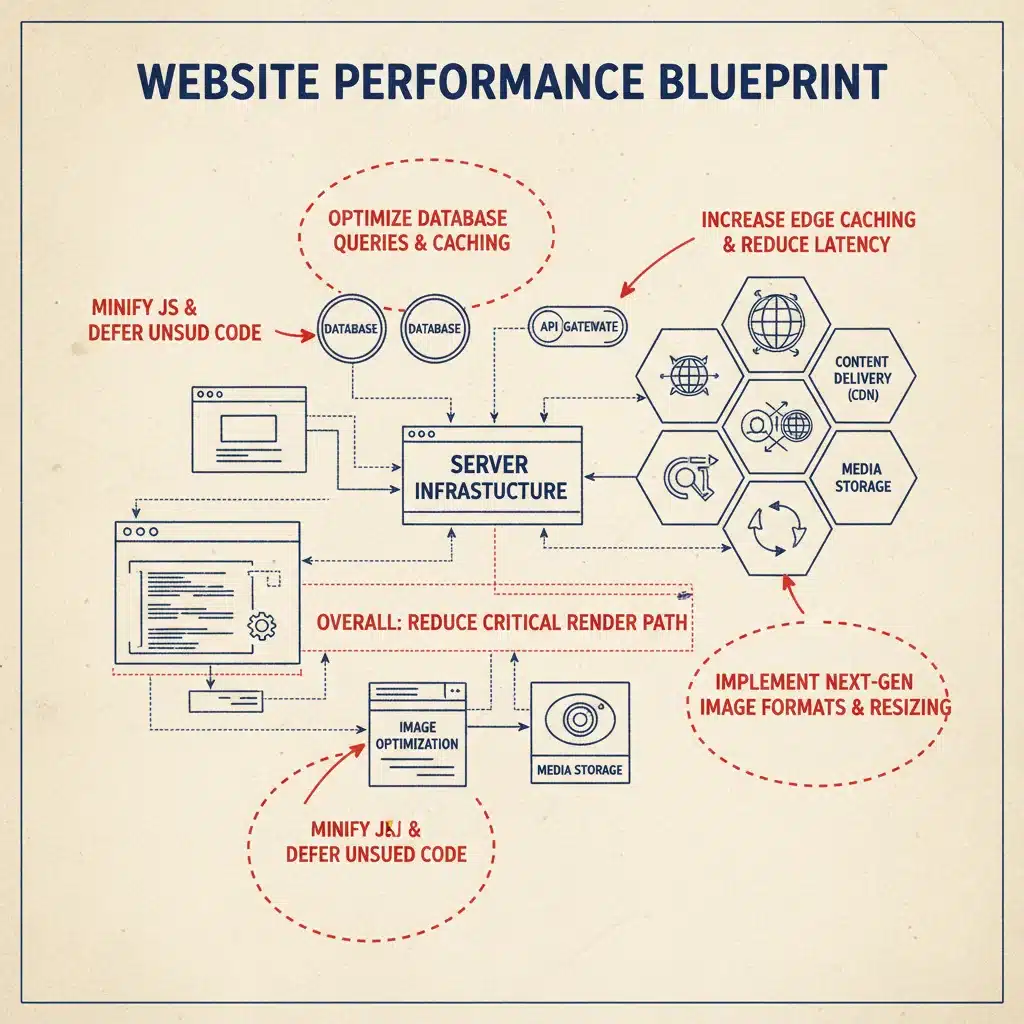
This is where the bulk of the work happens. It requires collaboration between SEO teams, developers, and potentially UI/UX designers.
- Infrastructure & Server Optimization:
- Upgrade Hosting: Invest in high-performance hosting or cloud solutions.
- Implement CDN: Use a CDN for static assets (images, CSS, JS) to reduce latency, especially for a geographically diverse user base across the U.S.
- Caching Strategy: Implement robust caching at all levels (browser, server, CDN) to serve content faster.
- Image and Media Optimization:
- Responsive Images: Ensure images adapt to different screen sizes.
- Modern Formats: Convert images to WebP or AVIF.
- Lazy Loading: Load images and videos only when they enter the viewport.
- Specify Dimensions: Prevent CLS by always including
widthandheightattributes. - JavaScript and CSS Optimization:
- Minify and Compress: Reduce file sizes of JS and CSS.
- Eliminate Render-Blocking Resources: Use
async,defer, and inline critical CSS. - Code Splitting: Break large JS bundles into smaller, on-demand chunks.
- Prioritize Critical CSS: Deliver the essential CSS for above-the-fold content first.
- Font Optimization:
- Preload Critical Fonts: Use
<link rel="preload">. - Font Display Property: Use
font-display: swaporoptionalto manage loading behavior. - Third-Party Script Management:
- Audit & Evaluate: Ruthlessly assess every third-party script’s necessity and impact.
- Asynchronous Loading: Load scripts without blocking the main thread.
- Delay Loading: Load less critical scripts after initial page render.
Phase 3: Continuous Monitoring & Refinement
Core Web Vitals optimization is an ongoing process. The digital landscape changes, new content is added, and user behavior evolves. Regular monitoring is essential to maintain and improve your scores for Core Web Vitals 2026.
- Set Up Alerts: Configure alerts in Google Search Console or third-party monitoring tools for significant drops in CWV scores.
- Regular Audits: Schedule recurring audits using PageSpeed Insights and Lighthouse for key pages.
- A/B Testing: Test different optimization strategies to see their impact on CWV and business metrics.
- Stay Updated: Keep abreast of Google’s announcements regarding Core Web Vitals and broader page experience updates.
- User Feedback: Complement data with qualitative user feedback to understand perceived performance.
Beyond the Metrics: The Holistic Benefit for U.S. Retailers
While the 15% SEO performance boost is a compelling headline, the benefits of mastering Core Web Vitals 2026 extend far beyond search rankings:
- Improved Conversion Rates: Faster, more stable, and more responsive websites lead to a smoother shopping experience, reducing friction and increasing the likelihood of purchases. Every millisecond counts in e-commerce.
- Reduced Bounce Rates: Users are less likely to leave a site that performs well, especially crucial for retail where immediate gratification is often expected.
- Enhanced Brand Reputation: A high-performing website signals professionalism and attention to detail, bolstering consumer trust and perception of your brand.
- Better Ad Performance: Google Ads and other paid channels often factor in landing page experience. Improved CWV can lead to higher Quality Scores, lower CPCs, and better ad positions.
- Future-Proofing: Google’s focus on user experience is a long-term strategy. Investing in CWV now future-proofs your digital presence against upcoming algorithm changes.
- Accessibility: Many CWV optimizations, such as ensuring visual stability, inherently improve accessibility for users with disabilities.
Common Pitfalls and How to Avoid Them
Even with the best intentions, U.S. retailers can stumble in their Core Web Vitals journey. Awareness of these common pitfalls can help you navigate them effectively:
- Ignoring Mobile Performance: Many optimizations are desktop-focused, but Google’s indexing is primarily mobile-first. Ensure your mobile CWV scores are excellent.
- Over-reliance on Third-Party Themes/Plugins: While convenient, these can introduce significant performance overhead. Audit them regularly and choose lightweight, optimized options.
- One-Time Optimization Mindset: CWV is not a set-it-and-forget-it task. Websites are dynamic; new content, features, and ads can degrade performance over time.
- Focusing Only on Lab Data: While Lighthouse is useful, real user data (field data from CrUX report in GSC) is what Google uses for ranking. Ensure your field data shows improvement.
- Neglecting Technical Debt: Postponing performance fixes can lead to a mountain of technical debt that becomes exponentially harder and more expensive to resolve later.
Conclusion: Your Path to a 15% SEO Performance Boost with Core Web Vitals 2026
The 2026 Core Web Vitals update represents a pivotal moment for U.S. retailers. It’s a clear signal from Google: prioritize user experience, and your SEO will reap the rewards. By understanding the core metrics – LCP, FID, and CLS – and implementing the detailed optimization strategies outlined in this guide, you can not only meet Google’s evolving standards but also achieve a significant 15% SEO performance boost.
This isn’t just about pleasing an algorithm; it’s about delivering an unparalleled online shopping experience that delights your customers, drives conversions, and solidifies your brand’s position in the competitive U.S. retail market. Start your Core Web Vitals 2026 optimization journey today, and watch your digital presence transform.