March 2026 Privacy Policy Updates: Your Guide to 100% Compliance

Action Required: Adapting to the March 2026 Privacy Policy Updates to Maintain 100% Compliance
The digital landscape is constantly evolving, and with it, the regulations governing how businesses handle personal data. As we approach March 2026, a significant set of privacy policy updates is on the horizon, poised to reshape data privacy standards globally. For organizations worldwide, this isn’t just another regulatory tweak; it’s a critical juncture demanding immediate attention and strategic adaptation. Ensuring Privacy Policy Compliance with these upcoming changes is not merely a legal obligation but a cornerstone of maintaining trust with your customers and safeguarding your brand’s reputation.
Understanding the nuances of these updates, identifying their implications for your specific operations, and proactively implementing the necessary adjustments will be paramount. This comprehensive guide is designed to equip you with the knowledge and actionable steps required to navigate the March 2026 Privacy Policy Updates, ensuring your organization achieves and maintains 100% compliance. We will delve into the core changes, explore their impact, and provide a roadmap for updating your policies, processes, and technological infrastructure.
Ignoring these impending changes is not an option. The penalties for non-compliance can be severe, ranging from hefty fines to significant reputational damage and loss of customer trust. Conversely, organizations that embrace these updates as an opportunity to strengthen their data privacy framework will not only mitigate risks but also enhance their competitive advantage by demonstrating a deep commitment to user privacy. Let’s embark on this journey to secure your organization’s future in an increasingly data-conscious world, starting with a clear understanding of what’s coming.
Understanding the Scope of the March 2026 Privacy Policy Updates
The March 2026 Privacy Policy Updates represent a concerted effort to harmonize and strengthen data protection principles across various jurisdictions. While the specifics may vary, the overarching goal is to provide individuals with greater control over their personal data and impose stricter obligations on organizations that collect, process, and store this information. These updates are likely to build upon existing frameworks such as the GDPR (General Data Protection Regulation) in Europe and the CCPA (California Consumer Privacy Act) in the United States, potentially introducing new requirements or expanding the scope of current ones.
Key areas expected to see significant modifications include:
- Expanded Definitions of Personal Data: The definition of what constitutes ‘personal data’ may broaden to include more types of identifiers, such as IP addresses, device identifiers, and even certain types of inferred data, making it crucial for organizations to re-evaluate their data mapping exercises.
- Enhanced Consent Requirements: Consent mechanisms are likely to become more stringent, requiring explicit, unambiguous, and granular consent for specific data processing activities. Pre-ticked boxes or implied consent will likely be rendered invalid, necessitating a review of all consent acquisition points.
- Strengthened Data Subject Rights: Individuals may gain new or expanded rights, such as the right to data portability, the right to object to automated decision-making, or enhanced rights to rectification and erasure. Organizations must be prepared to facilitate these requests efficiently.
- Increased Transparency Obligations: Privacy policies will need to be even more transparent, written in plain language, and easily accessible. Organizations will be required to clearly articulate what data is collected, why it’s collected, how it’s used, with whom it’s shared, and how long it’s retained.
- New Cross-Border Data Transfer Rules: If your organization operates internationally, expect stricter rules and safeguards for transferring personal data across borders. This could involve new standard contractual clauses, adequacy decisions, or other mechanisms to ensure data remains protected regardless of its location.
- Accountability and Governance: The updates will likely emphasize greater accountability, requiring organizations to implement robust data governance frameworks, conduct regular data protection impact assessments (DPIAs), and maintain detailed records of processing activities.
- Stricter Breach Notification Requirements: The timelines and scope for notifying data breaches to supervisory authorities and affected individuals may become more demanding, requiring robust incident response plans.
Understanding these potential areas of change is the first step towards achieving comprehensive Privacy Policy Compliance. It’s not just about updating a document; it’s about embedding a culture of privacy throughout your entire organization.
Assessing Your Current State of Privacy Policy Compliance
Before you can adapt to the March 2026 Privacy Policy Updates, you need a clear picture of your current data privacy posture. This involves a thorough assessment of your existing policies, procedures, and data handling practices. Think of it as a privacy audit, designed to identify gaps and areas of non-compliance that will need to be addressed. This step is foundational for effective Privacy Policy Compliance.
1. Data Mapping and Inventory
Begin by conducting a comprehensive data mapping exercise. Document all personal data your organization collects, processes, stores, and shares. For each data element, identify:
- Source: Where does the data come from? (e.g., website forms, third-party providers, internal systems)
- Purpose: Why is the data collected? (e.g., order fulfillment, marketing, customer support)
- Legal Basis: What is your legal justification for processing this data? (e.g., consent, contract, legitimate interest)
- Location: Where is the data stored? (e.g., specific servers, cloud services)
- Retention Period: How long is the data kept?
- Recipients: With whom is the data shared? (e.g., vendors, partners, internal departments)
- Security Measures: What safeguards are in place to protect the data?
This detailed inventory will provide the granular insight needed to understand your data flows and identify where potential vulnerabilities or non-compliance issues might exist in light of the new regulations.
2. Reviewing Existing Privacy Policies and Notices
Carefully examine your current privacy policy, cookie policy, and any other privacy notices provided to individuals. Ask yourself:
- Are they easily accessible and understandable?
- Do they accurately reflect your current data processing activities?
- Are all required disclosures included?
- Is the language clear, concise, and free of legal jargon?
- Do they cover all relevant data subject rights?
Compare these against the anticipated requirements of the March 2026 updates. This comparison will highlight specific areas that require revision to ensure future Privacy Policy Compliance.
3. Evaluating Consent Mechanisms
Scrutinize how your organization obtains, records, and manages consent. Are your consent mechanisms:
- Freely Given? Is there any coercion or imbalance?
- Specific? Does consent relate to clearly defined purposes?
- Informed? Are individuals fully aware of what they are consenting to?
- Unambiguous? Is there a clear affirmative action?
- Revocable? Can individuals easily withdraw consent?
Any areas where consent is implied or bundled with other terms will likely need to be revamped to meet the higher standards expected by March 2026.
4. Assessing Data Subject Request Procedures
How well-equipped is your organization to handle requests from individuals exercising their privacy rights (e.g., access, deletion, correction)?
- Do you have clear procedures for receiving and responding to requests?
- Are you able to verify the identity of the requester?
- Can you fulfill requests within the stipulated timelines?
- Are there designated personnel responsible for handling these requests?
Inefficient or non-existent processes in this area pose a significant compliance risk.
5. Vendor and Third-Party Data Sharing Review
Many organizations share data with third-party vendors, partners, and service providers. It’s crucial to:
- Identify all third parties with whom you share personal data.
- Review existing data processing agreements (DPAs) or contracts to ensure they include adequate privacy clauses.
- Assess the data protection practices of your vendors.
Remember, your organization often remains accountable for data shared with third parties, making robust vendor management critical for Privacy Policy Compliance.
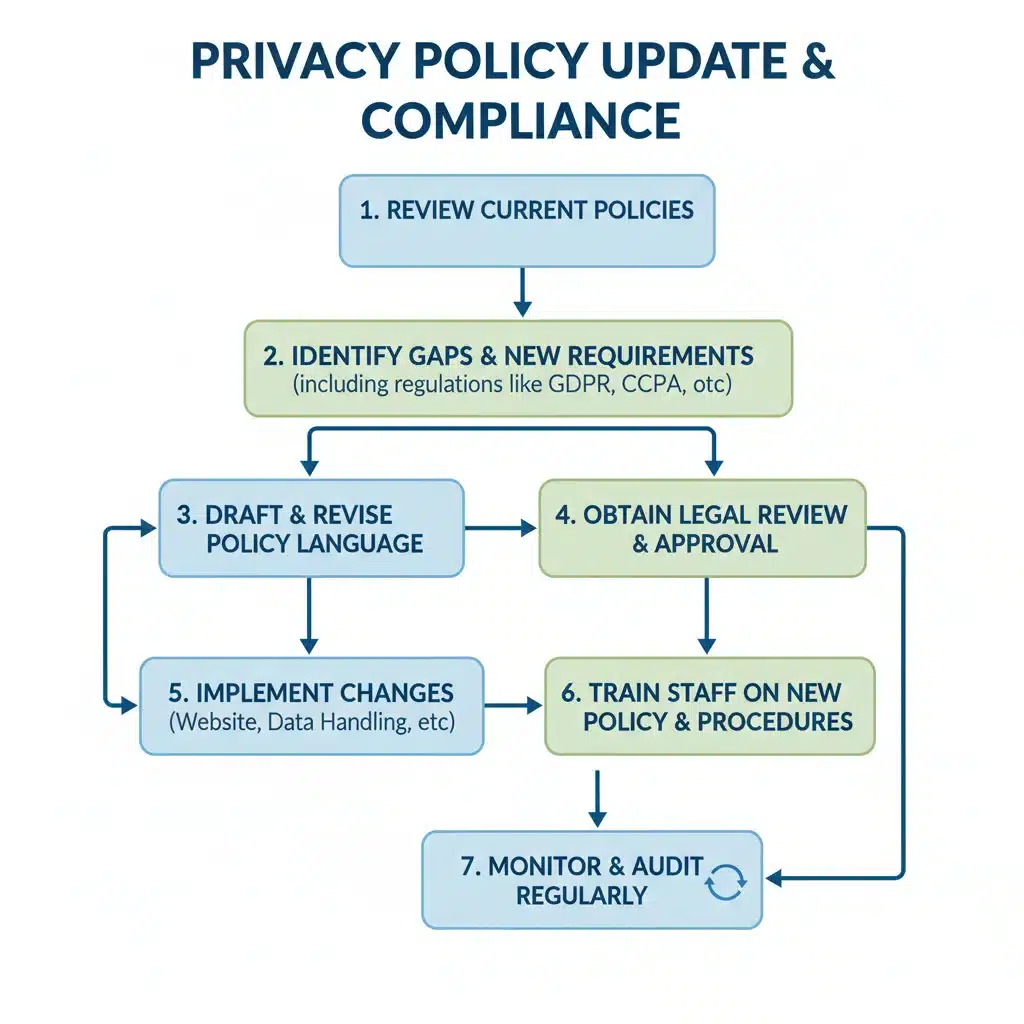
Developing Your Action Plan for 100% Privacy Policy Compliance
Once you’ve assessed your current state, it’s time to develop a detailed action plan to bridge any identified gaps and ensure full Privacy Policy Compliance by March 2026. This plan should be comprehensive, actionable, and assigned clear responsibilities.
1. Update Your Privacy Policies and Notices
This is arguably the most direct and visible change. Based on your assessment and understanding of the new regulations, revise all consumer-facing privacy documents. Ensure they are:
- Comprehensive: Cover all new requirements regarding data collection, processing, sharing, and individual rights.
- Transparent: Use clear, unambiguous language. Avoid legalistic jargon. Consider using layered notices or FAQs for easier comprehension.
- Accessible: Make them easy to find on your website, in apps, and at points of data collection.
- Granular: If the updates require more specific consent, ensure your policies reflect this and guide users through the new consent process.
Consider engaging legal counsel specializing in data privacy to review your updated policies to ensure they meet all legal requirements.
2. Revamp Consent Management Systems
If your current consent mechanisms fall short, invest in a robust Consent Management Platform (CMP). This technology can help you:
- Obtain explicit and granular consent for different processing purposes.
- Record and timestamp consent, providing an auditable trail.
- Allow users to easily review and withdraw consent at any time.
- Integrate seamlessly with your website, apps, and other data collection points.
Implementing a sophisticated CMP is crucial for demonstrating effective Privacy Policy Compliance with enhanced consent requirements.
3. Strengthen Data Subject Request Fulfillment
Refine and formalize your processes for handling Data Subject Access Requests (DSARs) and other privacy-related inquiries. This includes:
- Designated Point of Contact: Establish a clear channel for individuals to submit requests (e.g., a dedicated email address, an online portal).
- Identity Verification: Implement secure methods to verify the identity of requesters to prevent unauthorized data disclosure.
- Streamlined Workflow: Develop internal workflows to ensure requests are routed to the correct departments, processed efficiently, and completed within regulatory timelines.
- Record Keeping: Maintain meticulous records of all requests received and how they were addressed.
Consider automation tools to manage the volume of requests, especially for larger organizations.
4. Update Data Processing Agreements (DPAs) with Third Parties
Proactively reach out to all third-party vendors and partners with whom you share personal data. Review and update your DPAs to ensure they reflect the new privacy policy requirements, including:
- Specific obligations regarding data protection.
- Provisions for data breach notification.
- Restrictions on sub-processing.
- Audit rights.
Ensure that all new agreements signed moving forward also incorporate these updated clauses to maintain continuous Privacy Policy Compliance.
5. Enhance Data Security Measures
While privacy and security are distinct, they are inextricably linked. Strong data security is fundamental to effective privacy. Review and enhance your technical and organizational security measures, including:
- Encryption: Implement robust encryption for data at rest and in transit.
- Access Controls: Enforce strict access controls based on the principle of least privilege.
- Regular Audits: Conduct regular security audits and penetration testing.
- Incident Response Plan: Update and test your data breach incident response plan to align with new notification requirements.
Proactive security measures reduce the risk of breaches, which are often the catalyst for privacy non-compliance.

Training and Internal Communication: The Human Element of Privacy Policy Compliance
Technology and legal documents are only part of the equation. The human element is equally, if not more, critical for successful Privacy Policy Compliance. Your employees are on the front lines of data handling, and their understanding of and adherence to privacy principles are paramount.
1. Comprehensive Employee Training Programs
Develop and implement mandatory training programs for all employees who handle personal data. This training should cover:
- The importance of data privacy and the impact of non-compliance.
- The specifics of the March 2026 Privacy Policy Updates.
- Your organization’s updated privacy policies and procedures.
- How to identify and report a potential data breach.
- Best practices for data handling, storage, and disposal.
- How to respond to data subject requests.
Tailor training to different roles and responsibilities. For example, marketing teams will need specific guidance on consent for direct marketing, while IT teams will require deeper training on data security protocols. Regular refreshers are essential to keep privacy top of mind.
2. Fostering a Culture of Privacy
Beyond formal training, strive to embed a culture of privacy throughout your organization. This means:
- Leadership Buy-in: Ensure senior management champions privacy initiatives and leads by example.
- Clear Communication: Regularly communicate privacy updates, best practices, and the importance of compliance through internal newsletters, intranet portals, and team meetings.
- Privacy by Design: Encourage teams to consider privacy at every stage of product and service development, from conception to deployment.
- Designated Privacy Officer/Team: If not already in place, consider appointing a Data Protection Officer (DPO) or establishing a dedicated privacy team to oversee compliance efforts.
When every employee understands their role in protecting personal data, achieving Privacy Policy Compliance becomes a collective effort rather than solely a legal burden.
Monitoring, Auditing, and Continuous Improvement for Ongoing Compliance
Achieving Privacy Policy Compliance by March 2026 is not a one-time event; it’s an ongoing commitment. The regulatory landscape will continue to evolve, and your organization’s data processing activities may change. Therefore, establishing mechanisms for continuous monitoring, regular auditing, and iterative improvement is vital.
1. Implement Regular Compliance Audits
Schedule periodic internal and, where appropriate, external audits of your privacy practices. These audits should:
- Verify that your updated policies and procedures are being followed.
- Test the effectiveness of your consent mechanisms and data subject request processes.
- Review data security controls.
- Assess vendor compliance.
- Identify new risks or areas where practices have deviated from policy.
Audits provide an objective measure of your compliance status and highlight areas needing attention.
2. Establish Key Performance Indicators (KPIs) for Privacy
Define measurable KPIs to track your organization’s privacy performance. Examples include:
- Number of data subject requests received and response times.
- Percentage of employees who completed privacy training.
- Number of privacy-related incidents or breaches.
- Audit findings and remediation rates.
Tracking these KPIs allows you to monitor trends, identify potential weaknesses, and demonstrate accountability in your Privacy Policy Compliance efforts.
3. Stay Informed of Regulatory Developments
The privacy landscape is dynamic. Designate individuals or a team responsible for staying abreast of new legislation, regulatory guidance, and best practices. Subscribe to industry newsletters, attend webinars, and engage with privacy professionals to ensure your organization remains informed and agile in adapting to future changes.
4. Conduct Data Protection Impact Assessments (DPIAs)
For new projects, systems, or processing activities that involve high-risk personal data, conduct a DPIA. This proactive assessment helps identify and mitigate privacy risks before they materialize, ensuring that privacy by design principles are consistently applied. DPIAs are often a mandatory requirement under existing and likely future privacy regulations.
5. Continuous Improvement Cycle
Adopt a continuous improvement model for your privacy program. This involves:
- Plan: Identify areas for improvement based on audits, KPIs, and regulatory changes.
- Do: Implement the necessary changes to policies, processes, or technology.
- Check: Monitor the effectiveness of the changes.
- Act: Adjust and refine as needed.
This iterative approach ensures that your Privacy Policy Compliance framework remains robust, adaptable, and effective in the face of ongoing challenges.
Conclusion: Embracing Privacy as a Strategic Advantage
The March 2026 Privacy Policy Updates are more than just a regulatory hurdle; they are an opportunity for organizations to reinforce their commitment to data privacy, build stronger trust with their customers, and differentiate themselves in the marketplace. While the task of achieving 100% Privacy Policy Compliance may seem daunting, a structured, proactive approach, as outlined in this guide, can make the process manageable and ultimately successful.
By conducting a thorough assessment, developing a comprehensive action plan, investing in robust technology and training, and committing to continuous monitoring and improvement, your organization can not only meet the requirements of the new regulations but also elevate its overall data governance posture. In an era where data breaches and privacy infringements erode consumer confidence, being a leader in privacy protection can translate into a significant strategic advantage, fostering loyalty and driving sustainable growth.
Start your compliance journey today. The deadline of March 2026 is approaching rapidly, and proactive preparation is the key to ensuring a smooth transition and securing your organization’s future in the evolving world of data privacy. Embrace these updates not as a burden, but as a pathway to greater transparency, stronger customer relationships, and a more secure digital ecosystem for everyone.