Mastering Marketing Attribution 2026: Boost ROI 15% in the U.S.

In the dynamic and increasingly complex landscape of modern marketing, the ability to accurately measure the impact of every dollar spent is paramount. As we look ahead to 2026, U.S. businesses are under more pressure than ever to demonstrate tangible returns on their marketing investments. The promise of a 15% marketing ROI improvement is not just a dream; it’s an achievable reality for those who master the art and science of marketing attribution 2026. This comprehensive guide will delve into the future of attribution modeling, exploring how advanced techniques, data integration, and artificial intelligence will revolutionize how marketers understand and optimize their campaigns.
The journey to enhanced marketing ROI begins with a fundamental shift in how we perceive and implement attribution. Gone are the days of simplistic last-click models; the modern consumer journey is far too intricate for such rudimentary approaches. By 2026, a sophisticated understanding of every touchpoint, from initial awareness to final conversion, will be the cornerstone of successful marketing strategies. This article will equip you with the knowledge and foresight to navigate this evolving realm, ensuring your marketing efforts are not just effective, but demonstrably profitable.
The Evolution of Marketing Attribution: From Simple to Sophisticated
For decades, marketing attribution has been a quest for clarity in a sea of marketing noise. Initially, marketers relied on basic models, primarily last-click or first-click, to assign credit for conversions. While these models offered a starting point, they painted an incomplete picture, often overlooking the nuanced interplay of various channels and touchpoints that influence a customer’s decision-making process. The limitations of these traditional models became increasingly apparent as digital marketing expanded, introducing a multitude of channels, devices, and interactions.
The mid-2010s saw the rise of multi-touch attribution models, such as linear, time-decay, and U-shaped models. These represented a significant leap forward, acknowledging that multiple touchpoints contribute to a conversion. However, even these models often relied on predefined rules, which, while better than single-touch, still struggled to capture the unique complexities of individual customer journeys. The challenge remained: how to assign credit fairly and accurately across a diverse set of marketing activities?
As we approach 2026, the evolution of marketing attribution 2026 is characterized by an insatiable demand for precision and predictive power. The focus has shifted from merely understanding what happened to predicting what will happen and optimizing for it. This requires moving beyond rule-based models to more dynamic, data-driven, and ultimately, AI-powered approaches. The goal is no longer just to allocate credit, but to understand the incremental impact of each marketing interaction and to optimize budgets accordingly to achieve that coveted 15% ROI improvement.
The foundational shift lies in treating every customer interaction as a data point, part of a larger narrative that leads to conversion. This holistic view demands robust data collection, integration, and advanced analytical capabilities. Companies that embrace this evolution will be the ones that thrive in the competitive U.S. market, turning marketing spend into a predictable engine of growth.
Key Drivers for a 15% Marketing ROI Improvement by 2026
Achieving a 15% marketing ROI improvement in the U.S. by 2026 is an ambitious yet attainable goal, driven by several interconnected factors. These drivers represent the cutting edge of marketing analytics and strategy, and their effective implementation will differentiate market leaders from the rest. Understanding these key drivers is crucial for any business aiming to optimize its marketing spend and maximize returns.
Advanced Data Integration and Harmonization
The bedrock of effective marketing attribution 2026 is data. However, it’s not just about collecting data; it’s about integrating and harmonizing it from disparate sources. Customer data often resides in silos: CRM systems, advertising platforms, website analytics, social media, email marketing tools, and offline interactions. To build accurate attribution models, marketers need a unified view of the customer journey. This means breaking down data silos and creating a single source of truth.
By 2026, advanced data integration platforms and Customer Data Platforms (CDPs) will be indispensable. These technologies enable marketers to consolidate first-party, second-party, and third-party data, creating comprehensive customer profiles. This holistic data foundation allows for a much more granular understanding of how different touchpoints interact and influence conversions, paving the way for more precise attribution.
The Rise of AI and Machine Learning in Attribution
Artificial intelligence (AI) and machine learning (ML) are no longer futuristic concepts; they are current realities transforming marketing attribution. Traditional rule-based models are inherently limited because customer journeys are rarely linear or predictable. AI/ML algorithms, however, can analyze vast datasets, identify complex patterns, and dynamically assign credit based on the statistical likelihood of each touchpoint contributing to a conversion.
By 2026, AI-powered attribution models will move beyond simple credit allocation to predictive analytics. These models will not only tell you what happened but also predict the optimal budget allocation for future campaigns to maximize ROI. They can identify the incremental value of each channel, even those that don’t directly lead to a conversion but play a crucial role in nurturing a lead. This predictive capability is a game-changer for achieving significant ROI improvements.
Econometric Modeling and Marketing Mix Modeling (MMM)
While often associated with high-level strategic planning, econometric modeling and Marketing Mix Modeling (MMM) are undergoing a resurgence, enhanced by modern data and computational power. MMM analyzes historical sales and marketing data to determine the effectiveness of different marketing channels and non-marketing factors (like seasonality, economic conditions, and competitor activity) on overall sales and brand metrics. By 2026, these models will be more agile, incorporating granular-level data and real-time insights.
When combined with granular, individual-level attribution data, MMM provides a powerful top-down and bottom-up view of marketing effectiveness. This dual approach allows marketers to optimize both strategic budget allocation across channels and tactical campaign execution within channels, contributing significantly to a 15% ROI improvement.
Enhanced Privacy-Compliant Measurement
The increasing focus on data privacy (e.g., GDPR, CCPA, and similar U.S. state laws) and the deprecation of third-party cookies present significant challenges for traditional tracking and attribution. However, these challenges also spur innovation. By 2026, marketers will rely heavily on first-party data strategies, server-side tracking, and privacy-enhancing technologies (PETs) to maintain accurate measurement.
Contextual advertising, clean rooms, and privacy-preserving machine learning techniques will become standard. The ability to measure effectively in a privacy-first world will be a competitive advantage, enabling businesses to continue optimizing their spend while building trust with their customers. Robust, privacy-compliant marketing attribution 2026 solutions will be essential.
Cross-Channel and Cross-Device Attribution
The modern customer journey is rarely confined to a single channel or device. Consumers interact with brands across desktops, mobile phones, tablets, smart TVs, and even voice assistants. Accurately attributing conversions requires the ability to track and connect these disparate interactions to a single user profile. By 2026, advanced cross-channel and cross-device attribution solutions will be mainstream.
These solutions leverage identity resolution techniques, probabilistic matching, and deterministic matching (where available and privacy-compliant) to stitch together a consistent view of the customer journey. This comprehensive understanding allows marketers to see the true impact of their integrated campaigns and optimize the sequence and timing of touchpoints for maximum effect.
Implementing Advanced Marketing Attribution Models for Maximum Impact
Moving beyond theoretical understanding, the practical implementation of advanced marketing attribution 2026 models is where the real ROI gains are made. This involves a strategic approach to technology, data, and organizational alignment.
Selecting the Right Attribution Model
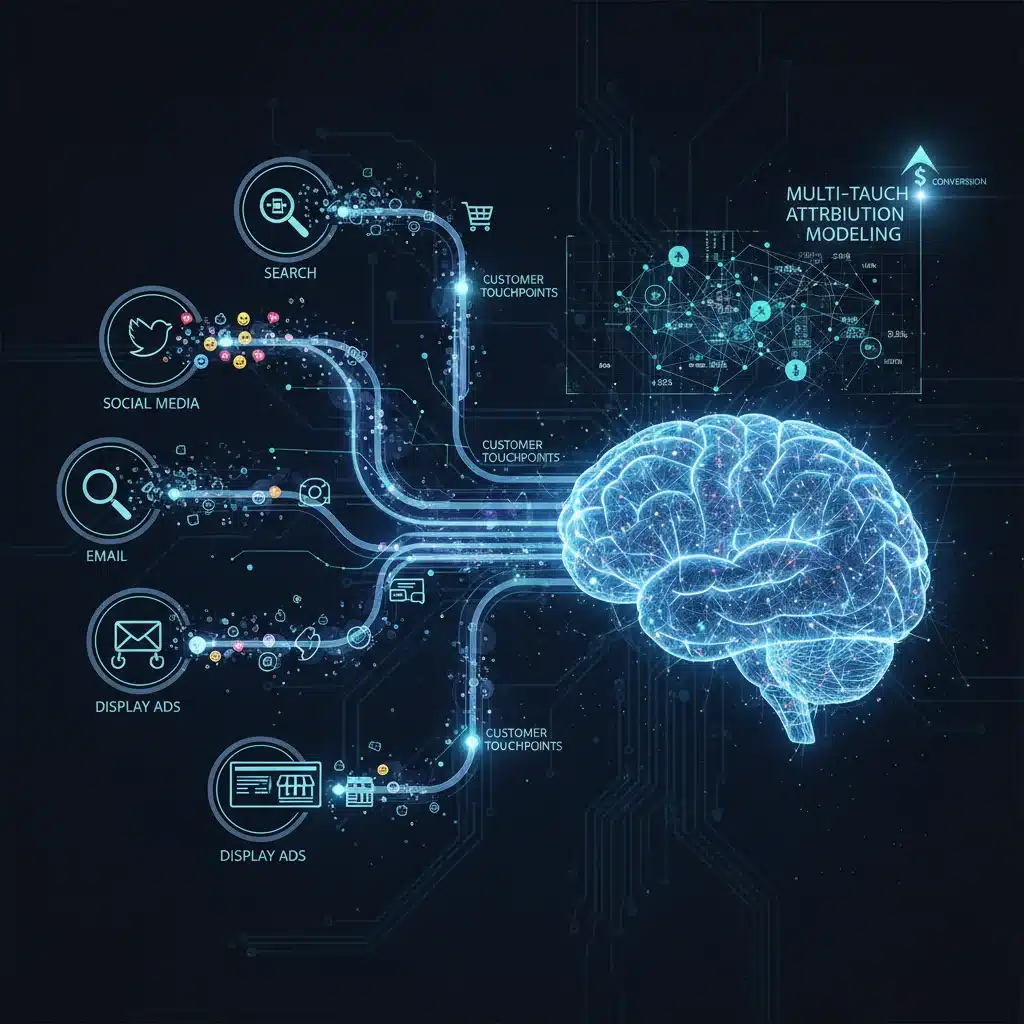
There isn’t a one-size-fits-all attribution model. The ideal model depends on your business goals, customer journey complexity, and data availability. By 2026, the most effective models will likely be data-driven, leveraging AI/ML. These include:
- Algorithmic/Data-Driven Models: These models use machine learning to analyze historical conversion paths and assign credit based on the actual contribution of each touchpoint. They are dynamic and adapt to changes in customer behavior and marketing effectiveness.
- Shapley Value Attribution: Derived from game theory, this model fairly distributes credit among all contributing touchpoints by considering all possible permutations of touchpoint sequences. It’s particularly useful for complex, multi-touch journeys.
- Incremental Attribution: This approach focuses on determining the additional conversions generated by a specific marketing activity, isolating its true impact. It often involves controlled experiments or statistical methods to measure causality.
The key is to move away from rigid, predefined rules and embrace models that learn and adapt, providing a more accurate reflection of reality. This flexibility is crucial for achieving a 15% marketing ROI improvement.
Building a Robust Data Infrastructure
As mentioned, data is the foundation. To implement advanced attribution, you need:
- Centralized Data Warehouse/Lake: A single repository for all your marketing, sales, and customer data.
- Customer Data Platform (CDP): To unify customer profiles and enable real-time segmentation and activation.
- Server-Side Tracking: To mitigate the impact of browser restrictions and ad blockers, ensuring more accurate data collection.
- Data Governance and Quality: Processes and tools to ensure data accuracy, consistency, and compliance with privacy regulations.
Without a clean, integrated, and accessible data infrastructure, even the most sophisticated attribution models will yield unreliable results.
Integrating Attribution with Activation
Attribution is not just an analytical exercise; it’s a tool for optimization. By 2026, the seamless integration of attribution insights with marketing activation platforms will be critical. This means:
- Automated Budget Allocation: Using attribution data to dynamically reallocate marketing spend across channels and campaigns in real-time.
- Personalized Customer Journeys: Leveraging attribution insights to tailor messaging and offers based on a customer’s specific journey and touchpoint history.
- Optimized Bidding Strategies: Feeding attribution data into ad platforms to improve bidding for keywords, audiences, and placements that drive the highest incremental value.
The goal is to close the loop between measurement and action, continually refining your marketing efforts based on what truly drives ROI.
Organizational Alignment and Skill Development
Technology and data alone are not enough. Successfully implementing advanced marketing attribution 2026 requires a cultural shift within the organization. This includes:
- Cross-Functional Collaboration: Marketing, sales, IT, and finance teams must work together to define metrics, share data, and interpret insights.
- Data Literacy: Training marketing teams to understand and utilize attribution insights effectively.
- Hiring and Developing Talent: Investing in data scientists, marketing analysts, and AI specialists who can build, manage, and interpret complex attribution models.
Without organizational buy-in and the right talent, even the most advanced attribution systems will fall short of their potential to deliver a 15% marketing ROI improvement.
Challenges and Considerations for Marketing Attribution in 2026
While the potential for significant ROI improvement is clear, navigating the future of marketing attribution 2026 also comes with its share of challenges. Addressing these proactively will be key to success.
Privacy Regulations and Data Deprecation
The ongoing shift towards a privacy-centric internet, with the phasing out of third-party cookies and stricter data protection laws, remains a major hurdle. Marketers must invest in first-party data strategies, consent management platforms, and explore privacy-enhancing technologies like differential privacy and federated learning. Server-side tracking and robust data governance will be non-negotiable.
Data Quality and Completeness
Garbage in, garbage out. The accuracy of any attribution model is directly tied to the quality and completeness of the underlying data. Issues like missing data, inconsistent tagging, duplicate records, and incomplete customer profiles can severely undermine the reliability of attribution insights. Continuous investment in data cleaning, validation, and enrichment processes will be vital.
Complexity of Implementation and Maintenance
Advanced attribution models, particularly those powered by AI/ML, are inherently complex to build, implement, and maintain. They require specialized skills, significant computational resources, and ongoing calibration. Businesses must be prepared for the investment in technology and talent required to sustain these sophisticated systems.
Overcoming Organizational Silos
Despite the recognized need for integrated data, organizational silos often persist. Different departments may use different systems, have conflicting goals, or be reluctant to share data. Breaking down these silos requires strong leadership, a shared vision, and clear communication about the benefits of a unified attribution strategy for the entire organization.
Measuring Offline Impact
While digital attribution has made significant strides, accurately measuring the impact of offline marketing activities (e.g., TV, radio, print, events) and their interaction with digital touchpoints remains a challenge. By 2026, advanced techniques like media mix modeling combined with digital attribution, geo-targeting, and survey data will become more sophisticated in bridging this gap, but it will require careful planning and data collection.
The Future is Now: Preparing for Marketing Attribution 2026
The path to achieving a 15% marketing ROI improvement in the U.S. by 2026 is clear, though it demands proactive effort and strategic investment. Businesses that embrace the future of marketing attribution 2026 will gain a significant competitive advantage, transforming their marketing from a cost center into a powerful engine of growth.
Start with a Data Strategy
Before diving into complex models, lay the groundwork with a robust data strategy. Identify all customer touchpoints, assess your current data collection capabilities, and plan for integration. Focus on building a strong first-party data asset that you own and control.
Experiment with Advanced Models
Don’t wait until 2026 to start. Begin experimenting with more advanced attribution models like data-driven or algorithmic approaches on a smaller scale. Learn from the results, refine your data, and gradually expand your implementation.
Invest in AI and ML Capabilities
Whether through in-house talent or partnerships with specialized vendors, investing in AI and ML capabilities is crucial. These technologies will power the next generation of attribution models, providing the predictive insights needed for optimal budget allocation and campaign optimization.
Prioritize Privacy and Trust
Build your attribution strategy with privacy at its core. Ensure compliance with all relevant regulations and be transparent with your customers about data usage. Trust will be a key differentiator in a privacy-conscious world.
Foster a Culture of Data-Driven Decision Making
Encourage your teams to rely on data and attribution insights for their marketing decisions. Provide the tools, training, and support necessary to empower them to leverage these insights effectively. This cultural shift is as important as the technology itself.

Conclusion: Unlocking Your Marketing Potential
The landscape of marketing is constantly evolving, but the fundamental goal remains the same: to maximize return on investment. By embracing the advancements in marketing attribution 2026, U.S. businesses have an unprecedented opportunity to achieve a 15% marketing ROI improvement.
This isn’t merely about tweaking existing campaigns; it’s about fundamentally rethinking how you understand, measure, and optimize every aspect of your marketing efforts. It requires a commitment to data integrity, a willingness to adopt cutting-edge technologies like AI and machine learning, and a strategic approach to integrating insights across all marketing channels. Those who successfully navigate these complexities will not only see significant improvements in their marketing ROI but will also gain a deeper, more actionable understanding of their customers and their journey. The future of marketing attribution is bright, data-driven, and incredibly powerful for those ready to seize its potential.