Personalization at Scale: 4 Data-Driven Approaches Boosting US Customer Engagement by 20% in 2026
In today’s hyper-competitive digital landscape, capturing and retaining the attention of US customers is more challenging than ever. Generic marketing messages no longer cut it. Consumers expect, and increasingly demand, experiences tailored specifically to their needs, preferences, and behaviors. This isn’t just a trend; it’s a fundamental shift in customer expectations, making customer engagement personalization not just a buzzword, but a strategic imperative for businesses aiming for sustainable growth. The goal for many forward-thinking organizations is to achieve a substantial increase in engagement, with a target of boosting US customer engagement by 20% in 2026 through advanced personalization at scale.
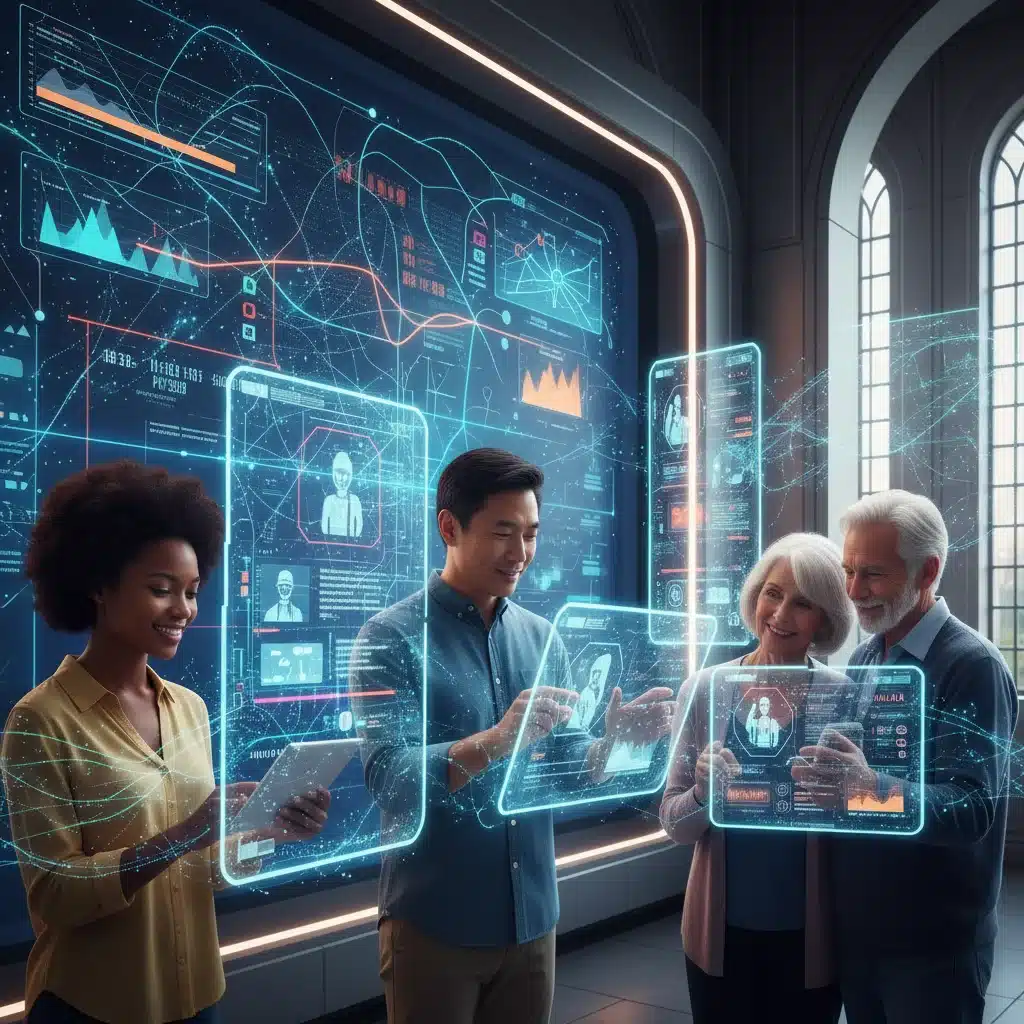
Personalization at scale is the ability to deliver highly relevant, individualized experiences to millions of customers simultaneously, without sacrificing the intimacy of a one-to-one interaction. It’s about leveraging vast amounts of data and sophisticated technologies to understand each customer deeply and respond to their unique journey in real-time. This article will delve into four critical data-driven approaches that empower businesses to master customer engagement personalization, driving significant improvements in customer loyalty, satisfaction, and ultimately, revenue.
The Imperative of Personalization in the US Market
The US market is a melting pot of diverse demographics, cultural nuances, and consumer behaviors. What resonates with a Gen Z consumer in New York might not appeal to a Baby Boomer in rural Kansas. This inherent diversity underscores the critical need for personalization. According to recent studies, US consumers are more likely to purchase from brands that offer personalized experiences, and conversely, they are quick to abandon brands that fail to meet this expectation. A lack of personalization can lead to increased bounce rates, lower conversion rates, and a diminished brand perception.
However, the challenge lies not just in personalizing, but in personalizing at scale. Manual personalization for thousands, let alone millions, of customers is simply not feasible. This is where data-driven strategies come into play, enabling businesses to automate and optimize personalization efforts across all touchpoints. By understanding the ‘why’ behind customer actions, businesses can proactively deliver relevant content, offers, and support, fostering deeper connections and driving significant gains in customer engagement personalization.
Approach 1: Robust Data Collection and Unification for a 360-Degree Customer View
The foundation of effective personalization at scale is comprehensive, accurate, and unified customer data. Without a holistic understanding of your customers, any personalization effort will be superficial at best. This approach emphasizes the importance of collecting data from all possible touchpoints and consolidating it into a single, accessible customer profile.
What Data to Collect?
- Demographic Data: Age, gender, location, income, family status. While basic, these provide foundational segments.
- Behavioral Data: Website visits, pages viewed, products purchased, abandoned carts, email opens, click-through rates, app usage, social media interactions. This is arguably the most powerful data for predicting future actions.
- Transactional Data: Purchase history, order value, frequency of purchases, preferred payment methods.
- Preference Data: Explicitly stated preferences through surveys, wishlists, or account settings.
- Attitudinal Data: Customer feedback, sentiment analysis from reviews or social media.
The Challenge of Data Silos
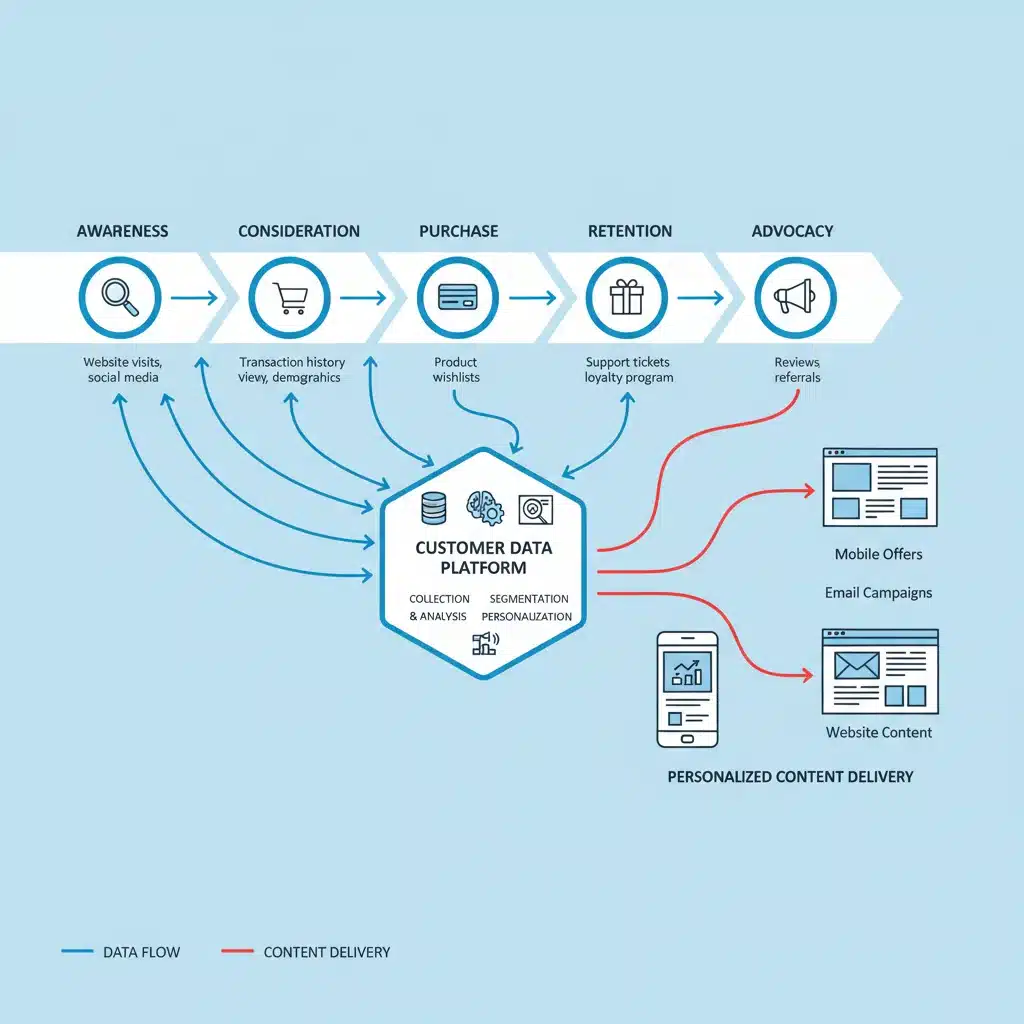
Many organizations struggle with data silos, where customer information is fragmented across different departments and systems (CRM, ERP, marketing automation, e-commerce platforms, customer service). This fragmentation prevents a unified view, making comprehensive customer engagement personalization impossible. The solution lies in implementing a Customer Data Platform (CDP).
The Power of a Customer Data Platform (CDP)
A CDP is a centralized system that collects, unifies, and activates customer data from all sources. It creates persistent, unified customer profiles accessible to other systems. With a CDP, businesses can:
- Consolidate Data: Bring together disparate data points into a single, coherent view.
- Clean and Normalize Data: Ensure data quality and consistency across all sources.
- Create Unified Profiles: Build a persistent, unique profile for each customer, updating it in real-time as new interactions occur.
- Activate Data: Make these unified profiles available to marketing, sales, and service platforms for targeted campaigns and interactions.
By establishing a robust data infrastructure, businesses lay the groundwork for truly impactful personalization strategies. A 360-degree view allows for deeper insights, enabling more accurate segmentation and more relevant content delivery, directly impacting customer engagement personalization efforts.
Approach 2: Advanced Segmentation and Micro-Segmentation
Once you have a unified view of your customers, the next step in achieving personalization at scale is to move beyond broad demographic segments to advanced segmentation and micro-segmentation. This involves grouping customers into smaller, more homogeneous cohorts based on shared characteristics, behaviors, and needs.
Traditional Segmentation vs. Advanced Segmentation
- Traditional: Age, gender, location. While a starting point, these are often too broad for effective personalization.
- Advanced: Behavioral patterns (e.g., ‘frequent browser, infrequent buyer,’ ‘loyal high-value customer,’ ‘cart abandoner’), psychographics (lifestyle, values, interests), customer lifecycle stage (new customer, repeat customer, at-risk customer), product preferences, channel preferences.
The Power of Micro-Segmentation
Micro-segmentation takes this a step further, creating extremely narrow segments, sometimes down to individual customers. This is where true personalization begins to shine. For example, instead of targeting ‘women aged 25-34 interested in fashion,’ you might target ‘women aged 28-32 in urban areas who have purchased sustainable activewear in the last 3 months and frequently browse new arrivals on Tuesdays.’
Tools and techniques for advanced segmentation include:
- RFM Analysis: Recency, Frequency, Monetary value – a classic method for segmenting customers based on their transactional behavior.
- Predictive Analytics: Using historical data to predict future behavior, such as churn risk or likelihood to purchase a specific product.
- AI and Machine Learning: Algorithms can identify complex patterns in vast datasets that human analysts might miss, creating dynamic and highly accurate segments in real-time.
Effective segmentation allows businesses to craft messages, offers, and experiences that are highly relevant to each group, significantly improving the likelihood of engagement. This granular approach ensures that personalization efforts are not wasted on irrelevant audiences, maximizing the impact on customer engagement personalization.
Approach 3: Dynamic Content and Offer Personalization
Once you understand your segments, the next crucial step is to deliver personalized content and offers. This isn’t just about inserting a customer’s name into an email; it’s about dynamically changing entire sections of a website, email, or app experience based on the individual’s profile and real-time behavior. This level of dynamic content is a cornerstone of effective customer engagement personalization.
Website Personalization
Imagine a customer returning to your e-commerce site. Instead of a generic homepage, they see a hero banner featuring products they’ve recently browsed, categories related to their past purchases, and recommendations based on their browsing history and similar customers. This can include:
- Personalized Product Recommendations: ‘Customers who bought X also bought Y,’ ‘Based on your browsing history,’ or ‘Top picks for you.’
- Dynamic Landing Pages: Tailoring landing page content based on the source of the traffic (e.g., a specific ad campaign, an email link).
- Personalized Calls-to-Action (CTAs): Displaying CTAs that are most relevant to the user’s stage in the buying journey.
- Geo-Targeted Content: Showing local store information, promotions, or content relevant to their geographical location.
- Real-time Behavioral Triggers: Modifying content or displaying pop-ups based on real-time actions, like prolonged inactivity or attempting to exit the site.
Email and Marketing Automation Personalization
Email remains a powerful channel for personalization. Beyond addressing customers by name, dynamic content allows for:
- Personalized Product Carousels: Featuring items from abandoned carts, recommended new arrivals, or complementary products.
- Dynamic Subject Lines: A/B testing subject lines that resonate most with specific segments.
- Behavior-Triggered Emails: Sending emails based on specific actions, such as welcome series for new subscribers, re-engagement campaigns for inactive users, or post-purchase follow-ups.
- Content Blocks: Varying entire sections of an email template to display blog posts, events, or services relevant to the recipient’s interests.
Mobile App Personalization
Mobile apps offer unique opportunities for deep personalization due to their access to location data and direct user interaction:
- Push Notifications: Highly targeted messages based on location, app usage patterns, or upcoming events relevant to the user.
- In-App Content: Customizing the app’s home screen, recommendations, or news feed based on user preferences and past interactions.
- Location-Based Offers: Sending promotions when a user is near a physical store.
The key here is not just to have the data, but to use it to create genuinely relevant and timely interactions across all channels. This level of dynamic personalization dramatically enhances the customer experience, making them feel understood and valued, which is fundamental for boosting customer engagement personalization.
Approach 4: Leveraging AI and Machine Learning for Predictive Personalization
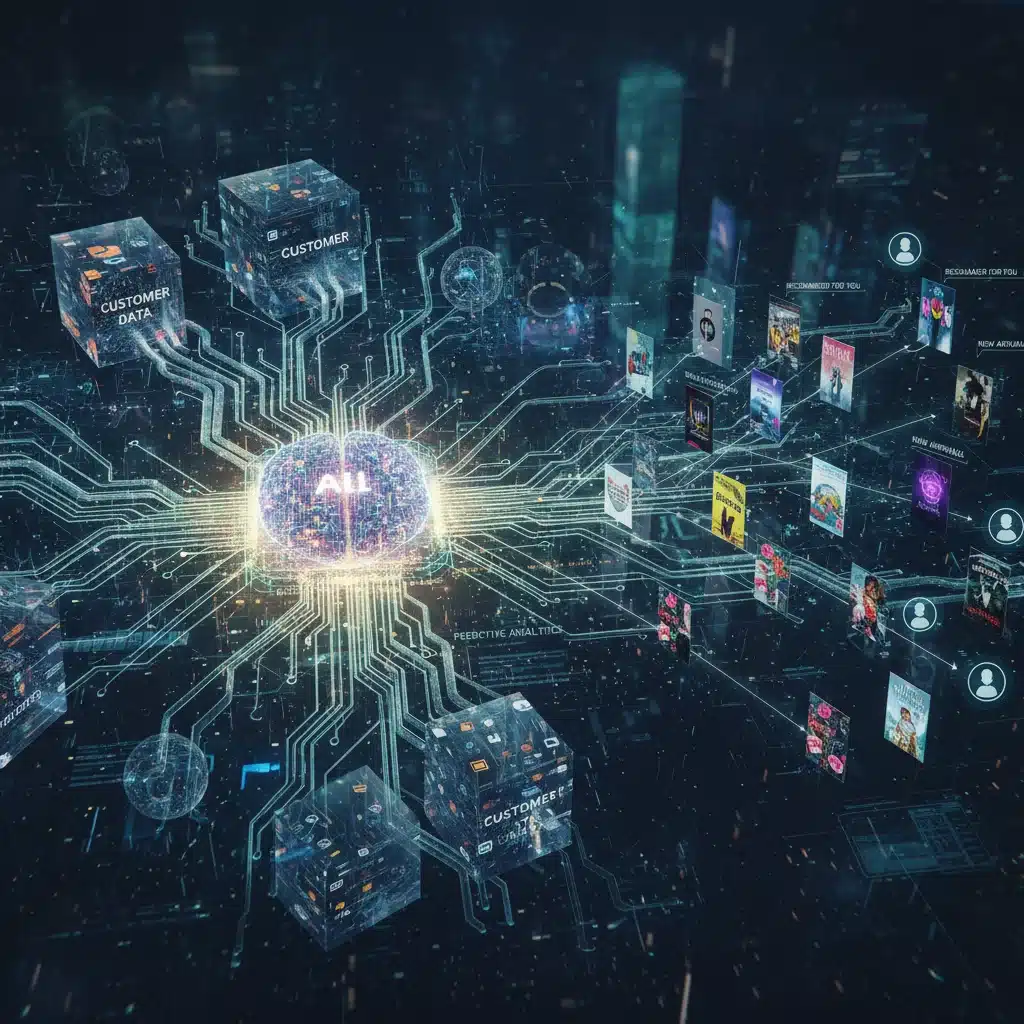
The ultimate frontier in personalization at scale is the intelligent application of Artificial Intelligence (AI) and Machine Learning (ML). These technologies move beyond reactive personalization (responding to past behavior) to proactive, predictive personalization (anticipating future needs and desires). AI and ML are indispensable for achieving the 20% boost in US customer engagement by 2026, as they enable hyper-targeting and optimization that manual methods cannot.
The future of customer engagement personalization in the US will be heavily influenced by advancements in AI and ML. These technologies enable businesses to move beyond reactive personalization to proactive, predictive personalization, anticipating customer needs and delivering highly relevant experiences. This is crucial for achieving a significant boost in customer engagement.
Predictive Analytics for Next Best Action
AI algorithms can analyze vast datasets to identify complex patterns and predict what a customer is most likely to do next. This allows businesses to:
- Predict Purchase Intent: Identify customers who are highly likely to buy a specific product or category in the near future.
- Anticipate Churn: Flag customers at risk of leaving, enabling proactive retention efforts with personalized offers or support.
- Recommend Content: Suggest articles, videos, or educational material that aligns with a user’s interests and stage in their journey.
- Optimize Pricing: Dynamically adjust pricing or offers for individual customers based on their perceived value and price sensitivity.
Personalized Customer Journeys
AI can orchestrate entire personalized customer journeys across multiple touchpoints. Instead of a linear path, each customer’s journey becomes a dynamic, adaptive experience. For example:
- If a customer browses a product but doesn’t buy, AI might trigger an email with a similar product on sale.
- If they click the email but still don’t purchase, AI might then suggest a targeted ad on social media.
- If they abandon their cart, a personalized SMS reminder might be sent with a limited-time discount.
This continuous, intelligent adaptation ensures that every interaction is optimized for maximum relevance and engagement. It’s about meeting the customer where they are, with what they need, exactly when they need it.
Real-time Optimization
ML algorithms can learn and adapt in real-time. This means that personalization strategies are constantly being refined based on new data and customer responses. If a particular recommendation engine performs better for a specific segment, the system can automatically adjust its approach. This iterative optimization is key to achieving continuous improvements in customer engagement personalization.
Implementing Personalization at Scale: Best Practices and Challenges
While the benefits of personalization at scale are clear, successful implementation requires careful planning and execution. Here are some best practices and common challenges to consider:
Best Practices:
- Start Small, Scale Gradually: Don’t try to personalize everything at once. Begin with a few key touchpoints or segments, measure results, and then expand.
- Focus on Customer Value: Personalization should always aim to add value to the customer experience, not just push sales.
- Ensure Data Privacy and Transparency: Be transparent about data collection and usage. Adhere to all privacy regulations (e.g., CCPA). Building trust is paramount.
- Test and Iterate Constantly: A/B test different personalization strategies to see what resonates best with your audience. Personalization is an ongoing process of optimization.
- Integrate Systems: Ensure your CDP, CRM, marketing automation, and e-commerce platforms communicate seamlessly.
- Empower Your Team: Provide training and tools to enable your marketing, sales, and service teams to leverage personalized insights.
Common Challenges:
- Data Quality and Integration: Poor data quality or fragmented data can undermine even the best personalization efforts.
- Technology Stack Complexity: Implementing and integrating the necessary technologies (CDP, AI/ML tools) can be complex and expensive.
- Organizational Silos: Different departments may have conflicting goals or operate in isolation, hindering a unified customer experience.
- Measuring ROI: Clearly attributing business outcomes to specific personalization efforts can be challenging but is crucial for demonstrating value.
- Balancing Personalization with Privacy: Finding the right balance between delivering relevant experiences and respecting customer privacy is a constant tightrope walk.
Addressing these challenges proactively will pave the way for a smoother and more successful journey towards achieving advanced customer engagement personalization.
Measuring Success: Key Metrics for Personalization
To ensure your personalization efforts are truly boosting US customer engagement by 20% in 2026, it’s essential to track the right metrics. Beyond vanity metrics, focus on those that reflect genuine customer interaction and business impact:
- Conversion Rates: Higher conversion rates (purchases, sign-ups, downloads) for personalized content vs. generic.
- Customer Lifetime Value (CLTV): Personalized experiences should lead to longer, more profitable customer relationships.
- Customer Retention/Churn Rate: Reduced churn indicates increased satisfaction and loyalty.
- Average Order Value (AOV): Effective product recommendations can lead to larger purchases.
- Email Open and Click-Through Rates: Higher rates for personalized email campaigns.
- Website Engagement Metrics: Increased time on site, lower bounce rates, more pages viewed.
- Customer Satisfaction (CSAT) and Net Promoter Score (NPS): Improved scores reflect a better overall customer experience.
- Return on Investment (ROI): Quantify the financial impact of your personalization initiatives.
By rigorously tracking these key performance indicators, businesses can continuously refine their strategies and ensure they are on track to meet their engagement goals for customer engagement personalization.
The Future of Customer Engagement Personalization in the US
Looking ahead, the evolution of personalization will continue to be driven by advancements in AI, machine learning, and real-time data processing. We can expect even more sophisticated predictive models, hyper-individualized experiences, and seamless integration across emerging channels like voice assistants and augmented reality.
The brands that will thrive in the coming years are those that embrace these technologies to truly understand and anticipate the needs of their US customers. Personalization will move from being a ‘nice-to-have’ to a ‘must-have,’ becoming an invisible, intuitive part of every customer interaction. The goal of boosting US customer engagement by 20% in 2026 through these data-driven approaches is not just ambitious; it’s entirely achievable for businesses committed to putting the customer at the center of their strategy.
Conclusion
Achieving personalization at scale is no longer a futuristic concept but a present-day necessity for businesses aiming to excel in the US market. By adopting robust data collection and unification, implementing advanced segmentation, leveraging dynamic content and offer personalization, and harnessing the power of AI and machine learning, organizations can deliver hyper-targeted experiences that resonate deeply with individual customers. These four data-driven approaches are the roadmap to significantly boosting customer engagement personalization, fostering loyalty, and ultimately driving substantial growth. The 20% increase in US customer engagement by 2026 is an ambitious yet attainable target for those who strategically invest in and execute these transformative personalization strategies. The future of customer relationships is personal, and the time to act is now.