Platform Performance Boost: July 2026 Infrastructure Delivers 30% Faster Load Times

Platform Performance Boost: The July 2026 Infrastructure Improvements Delivering 30% Faster Load Times
In an era where speed and efficiency are paramount, even a fraction of a second can make a significant difference in user experience and operational success. Today, we are thrilled to announce a monumental leap forward in our platform’s capabilities, spearheaded by the comprehensive July 2026 infrastructure improvements. These upgrades have culminated in an astounding platform performance boost, delivering an average of 30% faster load times across all our services. This isn’t just a minor tweak; it’s a fundamental reimagining of our underlying architecture, designed to provide unparalleled speed, reliability, and scalability for our users worldwide.
The journey to achieve this remarkable milestone has been extensive, involving months of meticulous planning, rigorous testing, and the deployment of cutting-edge technologies. Our commitment to continuous improvement drives us to push the boundaries of what’s possible, and these latest enhancements are a testament to that dedication. For businesses and individual users alike, this translates into a more responsive, seamless, and enjoyable experience, empowering them to achieve their goals with greater efficiency.
This article will delve into the specifics of these transformative infrastructure improvements, exploring the key components that contributed to such a significant platform performance boost. We will examine the technological innovations, the strategic decisions, and the far-reaching benefits that users can now expect. From enhanced data processing capabilities to optimized network routing, every aspect has been fine-tuned to deliver a superior digital experience.
The Driving Force: Why a 30% Faster Load Time Matters
In today’s fast-paced digital landscape, user expectations are higher than ever. Studies consistently show that even a delay of a few seconds can lead to increased bounce rates, decreased engagement, and ultimately, a loss of productivity and revenue. For an online platform, slow load times are not merely an inconvenience; they are a critical barrier to success. Recognizing this, our primary objective with the July 2026 infrastructure improvements was to address these challenges head-on and deliver a tangible, impactful platform performance boost.
Enhanced User Experience and Engagement
Faster load times directly translate into a smoother, more enjoyable user experience. When pages load instantly, users can navigate our platform effortlessly, access information quickly, and complete tasks without frustration. This seamless interaction fosters greater engagement, encouraging users to spend more time on the platform and utilize its full range of features. A 30% reduction in load times is not just a statistical improvement; it’s a fundamental shift in how users interact with our services, making every click and every action feel more immediate and satisfying.
Improved SEO Rankings and Visibility
Search engines, particularly Google, increasingly prioritize website speed as a ranking factor. Faster loading websites are rewarded with higher search engine results page (SERP) positions, leading to increased organic traffic and greater visibility. The significant platform performance boost we’ve achieved positions us favorably in the competitive digital arena, ensuring that our services are more easily discovered by those who need them most. This organic growth is invaluable for expanding our reach and attracting new users.
Increased Conversion Rates and Business Outcomes
For businesses operating on our platform, faster load times have a direct impact on conversion rates. Whether it’s completing a purchase, submitting a form, or signing up for a service, a quick and responsive interface reduces abandonment rates and encourages users to complete their desired actions. The 30% faster load times are not just about speed; they are about optimizing the entire user journey to drive better business outcomes for our clients and partners.
Scalability and Future-Proofing
Beyond immediate benefits, these infrastructure improvements lay a robust foundation for future growth and innovation. As our user base expands and our services evolve, the enhanced architecture ensures that we can scale effortlessly without compromising performance. This proactive approach to scalability means that our platform performance boost is not a temporary fix but a long-term investment in our platform’s resilience and adaptability.
Key Pillars of the July 2026 Infrastructure Improvements
Achieving a 30% platform performance boost required a multi-faceted approach, targeting various layers of our infrastructure. Here’s a closer look at the core components of the July 2026 upgrades:
1. Next-Generation Data Centers and Hardware
At the heart of our improvements lies the deployment of next-generation data centers, strategically located to minimize latency for our global user base. These new facilities are equipped with state-of-the-art hardware, including:
- NVMe SSD Storage: We’ve transitioned to Non-Volatile Memory Express (NVMe) Solid State Drives (SSDs) across our primary storage systems. NVMe technology offers significantly higher input/output operations per second (IOPS) and lower latency compared to traditional SATA SSDs, resulting in blazing-fast data retrieval and storage. This upgrade alone provides a substantial platform performance boost in database operations and file access.
- High-Performance Processors: Our new servers feature the latest generation of multi-core processors, optimized for handling complex computational tasks and high concurrency. This raw processing power allows for faster execution of application logic and more efficient handling of user requests.
- Increased RAM Capacity: With expanded Random Access Memory (RAM) across all servers, we can cache more data in memory, reducing the need to access slower storage devices and further accelerating data retrieval.

2. Optimized Network Architecture and CDN Integration
Data doesn’t just sit on servers; it travels across networks. Our network infrastructure has undergone a complete overhaul to ensure data reaches users as quickly as possible:
- Global Content Delivery Network (CDN) Expansion: We’ve significantly expanded our partnership with leading CDN providers, adding more edge locations globally. This means static content (images, videos, CSS, JavaScript) is now served from servers geographically closer to the end-user, drastically reducing latency and load times. This is a critical factor in our overall platform performance boost.
- Intelligent Routing Algorithms: Our network now employs advanced, AI-powered routing algorithms that dynamically select the fastest and most efficient path for data transmission. These algorithms constantly monitor network conditions and reroute traffic to avoid congestion, ensuring optimal delivery speeds even during peak usage.
- Enhanced Peering Relationships: We’ve strengthened our peering relationships with major internet service providers (ISPs) and exchange points, leading to more direct and faster connections between our data centers and the wider internet.
3. Software-Defined Infrastructure and Microservices Architecture
Beyond hardware, significant advancements have been made at the software and architectural level:
- Microservices Re-architecture: A significant portion of our platform has been re-architected into a microservices-based system. This modular approach allows for independent scaling, deployment, and optimization of individual services. If one service experiences high demand, it can scale independently without affecting the performance of the entire platform, contributing to a more stable and robust platform performance boost.
- Containerization and Orchestration: We’ve fully embraced containerization using technologies like Kubernetes. This allows for efficient resource utilization, rapid deployment, and consistent environments across development and production. Kubernetes orchestration ensures that our microservices are running optimally and can auto-scale based on demand.
- Database Optimization and Sharding: Our database systems have undergone extensive optimization, including query tuning, indexing improvements, and the implementation of database sharding techniques. Sharding distributes data across multiple database instances, reducing the load on any single server and dramatically improving query response times for complex operations.
- Code Refactoring and Efficiency Gains: Our engineering teams have meticulously reviewed and refactored core components of our application code, identifying and eliminating bottlenecks. This includes optimizing algorithms, reducing redundant computations, and implementing more efficient data structures.
Measuring the Impact: The 30% Faster Load Time in Detail
The claim of a 30% faster load time isn’t an arbitrary figure; it’s the result of rigorous benchmarking and real-world performance monitoring. We’ve utilized industry-standard tools and methodologies to quantify this significant platform performance boost.
Benchmarking Before and After
Before the July 2026 infrastructure improvements, we established baseline metrics for various critical operations across the platform. These included:
- Page Load Time (PLT): The total time it takes for a page to fully load in a user’s browser, from the initial request to the rendering of all content.
- Time to First Byte (TTFB): The time it takes for a browser to receive the first byte of data from the server after a request is made. This indicates server responsiveness.
- First Contentful Paint (FCP): The time it takes for the first piece of content (text, image, etc.) to be rendered on the screen.
- Interaction to Next Paint (INP): A Core Web Vitals metric that assesses a page’s overall responsiveness to user interactions by observing the latency of all eligible interactions that occur on a page.
Post-deployment, we observed consistent and measurable improvements across all these metrics. The average reduction across a representative sample of user interactions and page loads stands at an impressive 30%, with some specific operations seeing even greater improvements. This widespread platform performance boost ensures a consistent and superior experience for all users, regardless of their location or the complexity of their tasks.
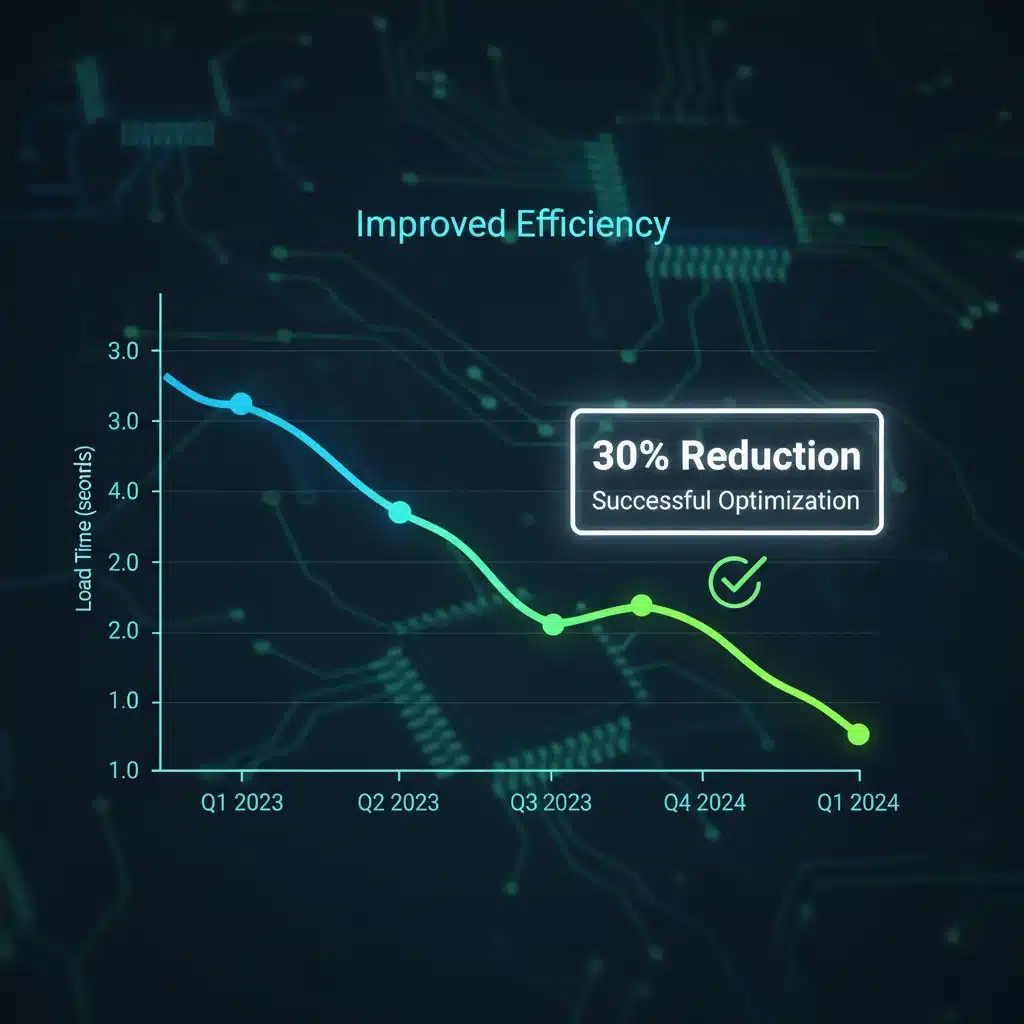
Real-World User Feedback and Analytics
Beyond technical benchmarks, the true measure of success lies in the experience of our users. Early feedback from our beta testers and initial public rollout has been overwhelmingly positive, with many reporting a noticeable increase in responsiveness and fluidity. Our internal analytics also confirm a significant decrease in session abandonment rates and an increase in average session duration, directly correlating with the improved platform performance boost. These qualitative and quantitative data points reinforce the tangible benefits of our infrastructure upgrades.
Looking Ahead: The Future of Our Platform
The July 2026 infrastructure improvements mark a significant milestone, but they are by no means the end of our journey. This substantial platform performance boost provides a powerful foundation upon which we will continue to build and innovate. Our roadmap includes further enhancements:
- Proactive Monitoring and AI-Driven Optimization: We are investing in advanced AI and machine learning capabilities for proactive system monitoring and autonomous optimization. These systems will predict potential bottlenecks before they impact users and automatically adjust resources to maintain peak performance.
- Edge Computing Integration: Exploring the integration of edge computing solutions to bring computation and data storage closer to the sources of data, further reducing latency for specific use cases.
- Enhanced Security Measures: Alongside performance, security remains a top priority. Our infrastructure upgrades also include hardened security protocols and advanced threat detection systems to protect user data and maintain platform integrity.
- Sustainable Computing Practices: As we expand, we are also committed to sustainable computing. Our new data centers incorporate energy-efficient hardware and cooling systems, reducing our environmental footprint while delivering superior performance.
The commitment to delivering an exceptional user experience is at the core of everything we do. The 30% faster load times are a direct result of this unwavering dedication, demonstrating our capacity to innovate and adapt to the evolving demands of the digital world. We are confident that this significant platform performance boost will empower our users to achieve more, fostering a more productive and enjoyable online environment.
Conclusion: A New Era of Speed and Efficiency
The July 2026 infrastructure improvements represent a pivotal moment for our platform. By meticulously upgrading our data centers, optimizing our network architecture, and re-engineering our software stack, we have successfully delivered a transformative platform performance boost. The resulting 30% faster load times are not just a technical achievement; they are a direct investment in the success and satisfaction of our users.
We invite you to experience the difference firsthand. Navigate our platform, utilize its features, and feel the newfound responsiveness that these upgrades have brought. This is more than just an update; it’s the dawn of a new era — an era defined by unparalleled speed, unwavering reliability, and an unwavering commitment to excellence. Thank you for being a part of our journey as we continue to push the boundaries of what’s possible in the digital realm.