Voice Search SEO: Capture 12% More US Organic Traffic by 2026

Voice Search SEO: Capturing an Additional 12% of U.S. Organic Traffic by Mid-2026
The digital landscape is in constant flux, evolving at a pace that demands continuous adaptation from businesses and marketers alike. Among the most significant shifts in recent years is the meteoric rise of voice search. What once seemed like a futuristic concept confined to sci-fi movies is now an everyday reality for millions. From asking Siri for directions to querying Google Assistant for recipes or commanding Alexa to play music, voice-activated technology has seamlessly integrated into our lives. This pervasive adoption isn’t just a convenience; it’s a profound change in how users interact with information, and consequently, how search engines process queries.
For businesses, this shift presents both a challenge and a monumental opportunity. The traditional strategies of search engine optimization (SEO), while still foundational, need a significant overhaul to accommodate the nuances of voice search. Failing to adapt means missing out on an increasingly large segment of potential customers. Industry projections are not just optimistic; they are a stark warning and a compelling call to action. By mid-2026, voice search is expected to account for an additional 12% of U.S. organic traffic. This isn’t a small margin; it represents millions of potential website visits, leads, and conversions that could be directed away from your business if your voice search SEO isn’t up to par.
This comprehensive guide will delve deep into the world of voice search SEO, equipping you with the knowledge and actionable strategies to not only understand this phenomenon but to master it. We’ll explore the underlying technology, the behavioral shifts driving its growth, and most importantly, how to optimize your digital presence to capture your share of this burgeoning organic traffic. Prepare to transform your SEO strategy and future-proof your online visibility.
Understanding the Voice Search Phenomenon: Why It Matters Now More Than Ever
Before we dive into the ‘how-to,’ it’s crucial to grasp the ‘why.’ Why is voice search gaining such momentum, and what makes it different from traditional text-based searches? The answers lie in convenience, accessibility, and the evolving capabilities of artificial intelligence.
The Rise of Conversational AI and Smart Devices
The proliferation of smart speakers (Amazon Echo, Google Home), virtual assistants built into smartphones (Siri, Google Assistant, Cortana), and even smart TVs and cars has made voice interaction ubiquitous. These devices are designed for ease of use, allowing users to perform tasks and retrieve information hands-free and often while multitasking. This convenience is a powerful driver of adoption.
User Behavior Shifts: Natural Language Processing
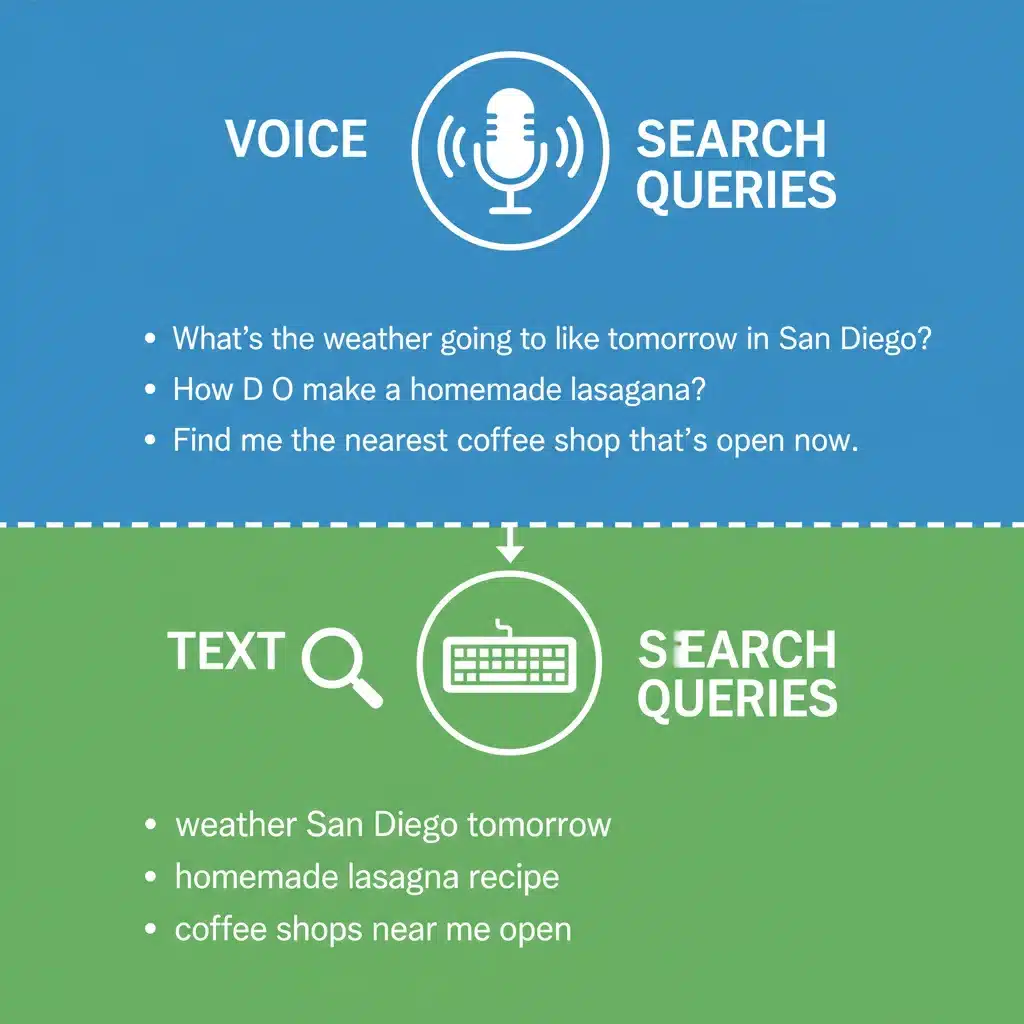
Traditional text searches are often characterized by short, keyword-dense phrases. Users type “best pizza NYC” or “weather New York.” Voice searches, however, mirror natural human conversation. People ask questions as they would to another person: “What’s the best pizza place near me in New York City?” or “What’s the weather like in New York tomorrow?” This shift to natural language processing (NLP) means that search engines are becoming increasingly sophisticated at understanding context, intent, and long-tail queries.
The “Zero-Click” Search and Featured Snippets
A significant characteristic of voice search results is the prevalence of “zero-click” answers. When you ask a voice assistant a question, it typically provides a single, concise answer directly, often pulled from a featured snippet (also known as “Position Zero”) on a website. This means that for many queries, users don’t even need to click through to a website to get their answer. For businesses, this highlights the critical importance of being the source of that featured snippet – even if it doesn’t always lead to a direct click, it establishes authority and brand recognition.
The Impending 12% Organic Traffic Boost
The projection that voice search will account for an additional 12% of U.S. organic traffic by mid-2026 isn’t just a number; it’s a call to action. This growth isn’t simply a redistribution of existing traffic; it represents new search behaviors and new opportunities. Businesses that optimize for voice search SEO now will be well-positioned to capture this expanding market share, gaining a significant competitive advantage. Those who delay risk falling behind in an increasingly voice-first world.
Key Differences Between Traditional SEO and Voice Search SEO
While the core principles of SEO – providing valuable content, ensuring technical soundness, and building authority – remain constant, voice search introduces specific nuances that require a tailored approach. Understanding these differences is the first step toward effective voice search SEO.
1. The Nature of Queries: Conversational vs. Keyword-Driven
As mentioned, text searches are often short, fragmented, and keyword-focused. Voice searches are longer, more conversational, and typically framed as questions. This means your content strategy needs to evolve from targeting individual keywords to answering specific questions and anticipating user intent.
2. Local SEO Dominance
A significant portion of voice searches has local intent. Users frequently ask “near me” questions: “Find a coffee shop near me,” “What’s the best plumber in [city]?” This makes Local SEO even more critical for voice search optimization. Ensuring your Google My Business profile is meticulously updated and optimized is paramount.
3. Emphasis on Featured Snippets
Voice assistants primarily rely on featured snippets for their answers. This means optimizing your content to be concise, direct, and structured in a way that makes it easy for search engines to extract these “Position Zero” answers. We’ll explore specific tactics for this later.
4. Speed and Mobile-Friendliness
Voice search users expect immediate answers. This places an even greater emphasis on website speed and mobile-friendliness. A slow-loading website or one that isn’t responsive on mobile devices will struggle to rank for voice queries.
5. Long-Tail Keywords and Question Phrases
Traditional SEO often focuses on high-volume, short-tail keywords. Voice search pivots this toward long-tail keywords, specifically question phrases. Your content should naturally incorporate these longer, more specific queries.
Strategic Pillars for Effective Voice Search SEO
To effectively capture the growing segment of organic traffic driven by voice search, your SEO strategy must be multifaceted. Here are the core pillars to focus on:
Pillar 1: Optimize for Conversational Language and Natural Queries
This is perhaps the most fundamental shift. Think like your users. How would they verbally ask a question related to your product or service? Your content should reflect this.
- Answer Questions Directly: Create content that directly answers common questions related to your niche. Use “who,” “what,” “where,” “when,” “why,” and “how” questions as headings and provide clear, concise answers immediately below them.
- Use Long-Tail Keywords: Research and integrate long-tail keywords that mimic spoken queries. Tools like AnswerThePublic or simply observing how people ask questions about your industry can be invaluable.
- Embrace FAQs: A dedicated FAQ section is gold for voice search. Structure it with clear questions and direct answers.
- Write Naturally: Avoid overly stiff or robotic language. Your content should flow conversationally, making it easier for search engines to understand the context and intent behind spoken queries.
Pillar 2: Dominate Local SEO – Be Found “Near Me”
As discussed, local intent is huge for voice search. If your business has a physical location, this pillar is non-negotiable.
- Google My Business (GMB) Optimization: This is your single most important local listing. Ensure your GMB profile is 100% complete and accurate, including your business name, address, phone number (NAP), website, hours of operation, categories, services, and high-quality photos. Regularly update it and respond to reviews.
- Consistent NAP Across All Listings: Ensure your Name, Address, and Phone number are identical across your website, social media profiles, and all online directories (Yelp, Yellow Pages, etc.). Inconsistencies can confuse search engines.
- Local Citations and Reviews: Actively seek local citations from relevant directories and encourage customers to leave reviews on GMB and other platforms. Positive reviews significantly boost local ranking signals.
- Location-Specific Content: Create blog posts or landing pages tailored to specific local queries, e.g., “Best [your service] in [your city/neighborhood].”
Pillar 3: Optimize for Featured Snippets and Position Zero
Winning the featured snippet means your content is often the direct answer provided by voice assistants. This is where the “zero-click” magic happens.
- Concise and Direct Answers: Provide short, direct answers (40-60 words is often ideal) to common questions immediately after the question itself.
- Structured Data (Schema Markup): Implement schema markup (e.g., FAQ schema, How-To schema) to explicitly tell search engines what your content is about and how it’s structured. This makes it easier for them to extract information for snippets.
- List and Table Formats: Search engines often pull featured snippets from lists (numbered or bulleted) and tables. If you’re explaining a process or comparing items, use these formats.
- High-Quality Content: Ultimately, Google prioritizes high-quality, authoritative content. Ensure your answers are accurate, well-researched, and provide genuine value.
Pillar 4: Technical SEO for Speed and Mobile-Friendliness
Voice search is inherently mobile and speed-dependent. Users expect instant gratification.
- Page Speed Optimization: Use tools like Google PageSpeed Insights to identify and fix issues slowing down your site. Optimize images, leverage browser caching, and minify CSS/JavaScript.
- Mobile-First Indexing: Ensure your website is fully responsive and provides an excellent user experience on all mobile devices. Google primarily uses the mobile version of your content for indexing and ranking.
- HTTPS Security: A secure website (HTTPS) is a foundational SEO requirement and builds trust, which is important for all search, including voice.
- Clean Code and Site Structure: A well-structured website with clean code is easier for search engine crawlers to understand and index, which indirectly helps with voice search SEO.
Pillar 5: Content Strategy: Creating Voice-Optimized Content
Your content is the fuel for your voice search engine. It needs to be crafted with spoken queries in mind.
- Topic Clusters and Pillar Pages: Organize your content into topic clusters around broad pillar pages. This establishes your authority on a subject and allows for a network of interconnected content that answers various related questions.
- Comprehensive, Yet Concise: While voice answers are often short, the underlying content should be comprehensive. Provide detailed information on your topic, but ensure key answers are easily digestible.
- Natural Language and Tone: Write as if you are having a conversation. Use a friendly, informative tone.
- Anticipate Follow-Up Questions: Think about what questions a user might ask after receiving an initial answer. Structure your content to naturally lead them to more information on your site.
Advanced Strategies for Maximizing Voice Search Organic Traffic
Beyond the foundational pillars, incorporating advanced strategies can help you gain a significant edge in the voice search arena.
Semantic SEO and Entity Optimization
Search engines are moving beyond keywords to understand the meaning and relationships between entities (people, places, things, concepts). Semantic SEO focuses on creating content that demonstrates a deep understanding of a topic, using related concepts and synonyms, rather than just repeating keywords. Optimizing for entities means clearly defining what your business, products, or services are, and their relationships to other relevant entities, helping search engines connect the dots in complex voice queries.
Leveraging Question-Based Keyword Research Tools
Traditional keyword research tools are great, but for voice search, you need to specifically uncover questions. Tools like AnswerThePublic, AlsoAsked, and even Google’s “People Also Ask” section on SERPs are invaluable for identifying the exact questions your audience is asking verbally. Integrate these questions directly into your content strategy as headings, subheadings, or within your FAQ sections.
Optimizing for Actionable Voice Commands
Many voice searches aren’t just informational; they’re transactional or command-based. Think “order pizza,” “book a table,” or “call customer service.” While direct optimization for these commands is more complex and often involves API integrations with voice assistants, you can prepare your website by:
- Ensuring clear calls to action (CTAs) that are easily identifiable.
- Having a robust booking/ordering system that is mobile-friendly and intuitive.
- Making contact information prominently available and clickable (e.g., click-to-call phone numbers).
- Exploring opportunities for direct integrations with voice platforms if your business model allows.
Voice Search and E-commerce: A Growing Frontier
For e-commerce businesses, voice search presents unique opportunities. Users are increasingly asking “buy [product name]” or “add [item] to my cart.” To capitalize on this:
- Product Descriptions: Write descriptive, natural language product descriptions that answer potential questions about features, benefits, and uses.
- Structured Product Data: Implement Schema.org/Product markup to provide detailed information about your products (price, availability, reviews, etc.) in a machine-readable format.
- Voice-Friendly Navigation: While not a direct SEO factor, consider how users might verbally navigate your site if they were using a voice interface. Simple, intuitive categories help.
Monitoring and Adapting: The Iterative Nature of Voice Search SEO
Voice search technology and user behavior are still evolving rapidly. Your voice search SEO strategy cannot be static. Regularly monitor your performance:
- Track “Near Me” Searches: Use Google Search Console and Google My Business insights to monitor local search performance.
- Analyze Featured Snippet Performance: Identify which queries you are winning featured snippets for and which you are not. Refine your content accordingly.
- Stay Updated with Algorithm Changes: Google and other search engines continually refine their understanding of voice queries. Stay informed about updates to adjust your strategy.
- User Feedback: Pay attention to customer service inquiries and common questions from your audience. These are direct insights into how people are seeking information verbally.

The Future of Search is Conversational: Preparing for 2026 and Beyond
The projection of an additional 12% of U.S. organic traffic coming from voice search by mid-2026 is not an end-point but a milestone in a larger trend. As AI continues to advance, voice assistants will become even more sophisticated, capable of understanding complex multi-turn conversations and fulfilling more nuanced requests. This means that the emphasis on natural language processing, semantic understanding, and user intent will only grow.
AI and Personalization
Future voice searches will likely be even more personalized, leveraging user history, location, and preferences to provide highly tailored answers. Businesses that focus on building strong brand identity, consistent customer experiences, and comprehensive data management (while respecting privacy) will be better positioned to capitalize on this personalization.
Multimodal Search
The future isn’t just voice or text; it’s multimodal. Users will combine voice with visual cues (e.g., “show me shoes like these” while pointing at a picture). While currently in its nascent stages, preparing for multimodal search means having high-quality images and video content that are well-optimized with descriptive alt text and captions.
The Importance of Trust and Authority
In a world where answers are often delivered without a direct click, trust and authority become paramount. If a voice assistant recommends your business or provides your content as the answer, it implicitly endorses your credibility. Building a strong brand, earning backlinks from reputable sources, and consistently producing high-quality, trustworthy content will be crucial for convincing search engines that you are the go-to source.
Conclusion: Embrace Voice Search SEO Today for Future Growth
The opportunity presented by voice search is too significant to ignore. The projected 12% increase in U.S. organic traffic by mid-2026 is a clear indicator that businesses must act now. By understanding the unique characteristics of voice queries, embracing conversational content, mastering local SEO, and relentlessly optimizing for featured snippets and technical performance, you can position your brand at the forefront of this digital revolution.
Don’t wait until voice search becomes the dominant mode of interaction. Start integrating voice search SEO into your overall digital marketing strategy today. The businesses that adapt early will be the ones that not only survive but thrive in the increasingly voice-activated future, capturing a larger share of the audience and solidifying their position as industry leaders. The future of search is speaking – are you ready to listen and respond?